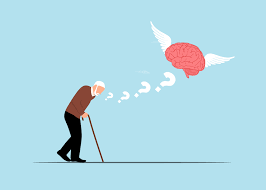
Walking around, scavenging your pantry for something to eat, and having a conversation are all normal activities—except this time, you aren’t awake to remember any of it. Every morning, you wake up to find yourself wrapped in a snug stash of snacks instead of your usual blanket. Your tongue swipes around, and you find a faint but undeniably present sweetness coating your mouth. Desperate and no longer wanting to open your eyes to Oreos when you wake up, you try to recall when you last ate. But to no avail—your mind is as empty as the chip bag perched on your pillow.
Sleepwalking is a strange phenomenon that falls under the category of sleep disorders known as parasomnias. You’re there, acting, talking, and hearing. And your brain is too, but your mind isn’t. A famous sleepwalking case reported by Sleep Forensic Associates tells the story of a man named Kenneth Parks. On May 23, 1987, Kenneth rose from his sleep, drove 14 miles, and attacked his mother and father-in-law. According to his defense, this savage, horror-movie style ambush was all carried out without his consciousness. These kinds of stories suggest that sleepwalking doesn’t just look like a dazed person with their arms stretched forward. It has real complexity, and sometimes, real consequences. Because whose fault is it—Kenneth’s or his brain’s? If his mind was asleep but his body was awake, did he commit the crime?
If you don’t remember anything, who or what is in control of your brain? A documentary by NOVA PBS explores what exactly is going on in one’s head throughout these episodes. Neuroscientists explain that during sleep, brain activity levels fluctuate before settling into a slow, monotonous rhythm called NREM Stage 3. Everything appears normal—until a dramatic brain wave spike makes your eyes shoot open, and suddenly, you’re awake.
When a person sleepwalks, the brain doesn’t require all of its regions to be active at once. The prefrontal cortex—a key region of the brain dedicated to deliberate decision making, memory, and self-awareness—stays asleep. Meanwhile, other segments that power and coordinate movement, hearing, and even speech, such as the motor cortex, are turned on. Due to this, sleepwalkers talk, move, and actively respond to their surroundings without awareness of what they are doing. In this way, we come to understand that self-consciousness is only a small fragment of a much larger and more complex equation.
You may be wondering—if the zone of the brain for decision making is deactivated, who is deciding for sleepwalkers to, well, walk? Researchers at Georgia Tech Institute for Neuroscience estimate that “humans make nearly 35,000 decisions every day.” But besides the tough dilemmas we face about what to wear, eat, or say, the brain struggles too, making decisions for our bodies. According to neuro-researchers and sleep studies, humans are never fully conscious or unconscious. Every passing moment, our unconscious—our brain—decides things for us: breathing, body temperature, when to push that final bit of food into the gut. From this, scientists have probed the question: If parts of our brain act without our awareness, are we really the ones in control?
When sleepwalking, you’re neither awake nor asleep. Regions of your brain flip on, but your consciousness doesn’t always follow. Your body seems to have a mind of its own, completing tasks and activities without your consent. The brain remains in control even when conscious thought is not, but whether it continues to control once consciousness returns is ambiguous.
So, you might not remember raiding your kitchen and having a late-night feast on your bed, but your brain certainly does.