





















































































































































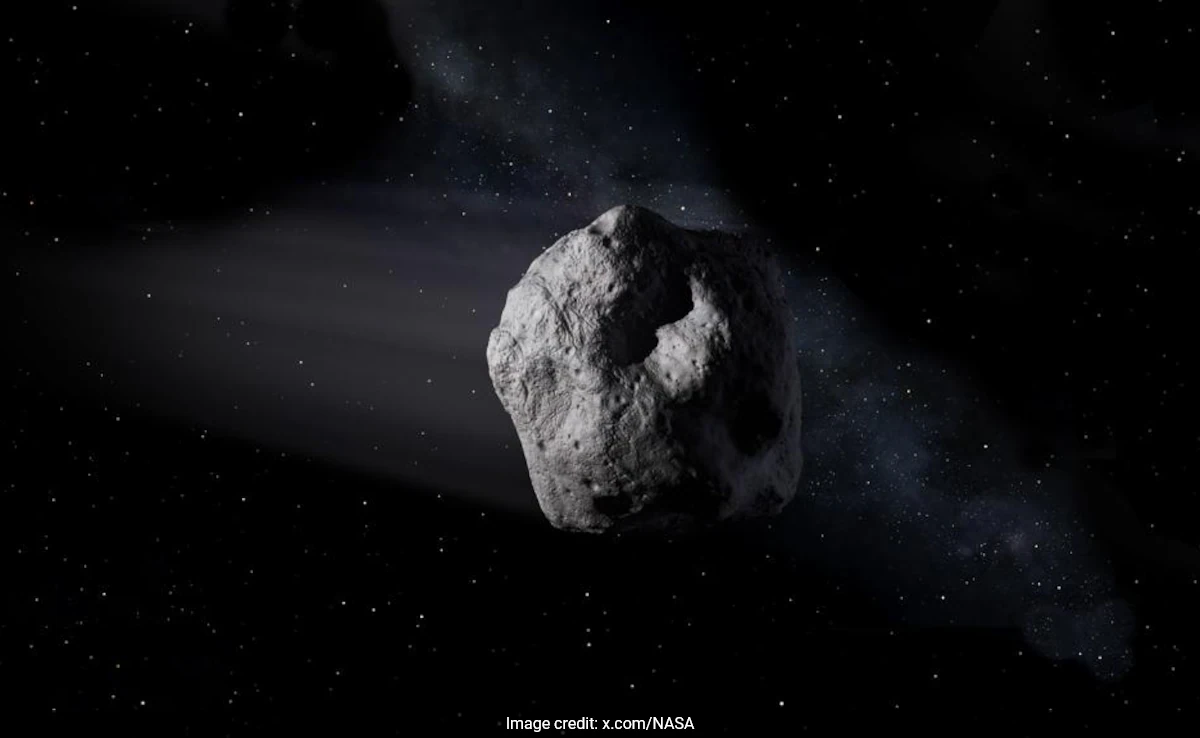
The day was December 24, 2024, when the Asteroid Terrestrial-impact Last Alert System (ATLAS) located in Chile, first detected the 200-foot (60-meter) asteroid 2024 YR4, which is almost the size of a 15-story building, as mentioned in the Smithsonian Magazine. Its popularity soared by February 2025 when it was predicted to have a 3.1% chance of hitting the Earth, which was the largest space object actually caught in advance to have that possibility of hitting Earth. Things calmed down when scientists completely ruled out the idea of the asteroid impacting the Earth, and a new, more interesting discovery was made. 2024 YR4 has an extremely slight chance of hitting our Moon. Even though the chance is a mere 4.3%, the outcomes of an impact of that magnitude would be a sight to behold. An opportunity has recently arisen to reanalyze the asteroid’s chance of hitting the moon through NASA’s James Webb Telescope which has the potential to view 2024 YR4 again sometime this month, as stated in Science News.
According to the Smithsonian Magazine, the asteroid will reach incredible speeds of up to nine miles per second when it nears our Moon on December 22, 2032. The impact and flash from such a collision could be visible with the naked eye from Earth. Tifei Jiao, a planetary scientist at the University of California, Santa Cruz, and Tsinghua University in China, mentioned to Live Science that the event would be “a rare ‘natural experiment’: a forecastable small-body impact whose signatures could be scientifically rich and operationally relevant.”
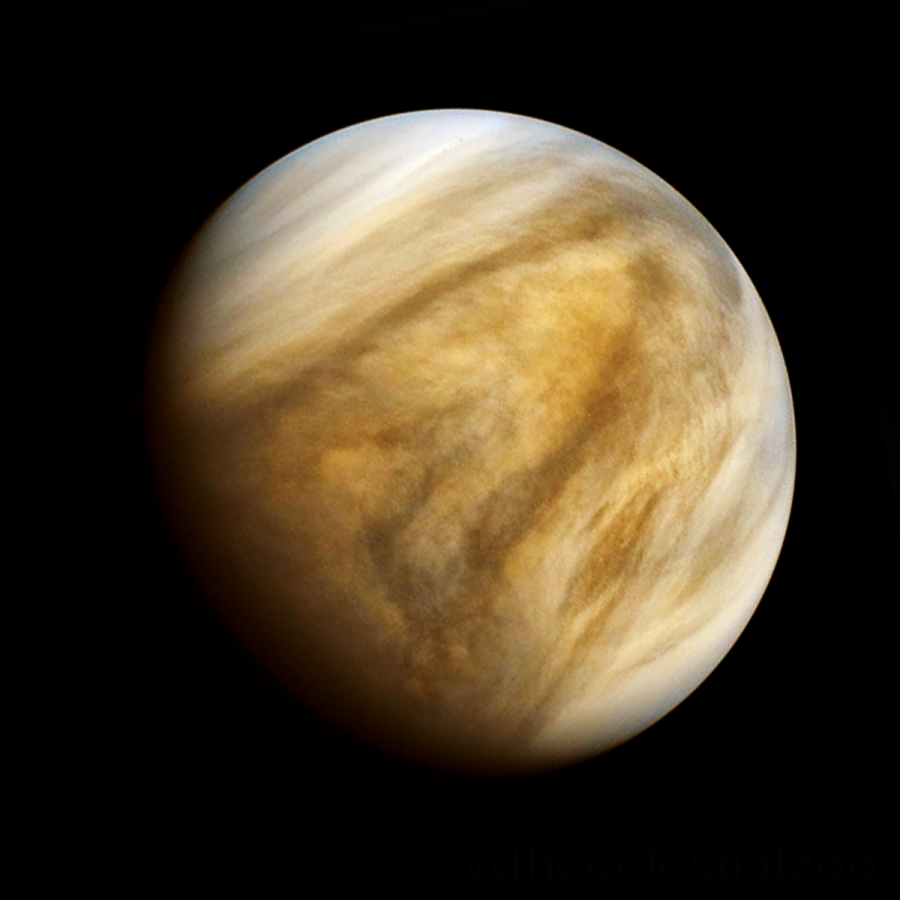
According to Cornell University’s non-peer-reviewed arXiv, the visible part of the event could last a couple of minutes with a visual magnitude of around 2.5 to 3 (a flash as bright as Venus in the night sky), to which glows from infrared light would last several hours from the cooling of the 2,000 Kelvin (around 3,000 degrees Fahrenheit) resulting molten rock. ArXiv describes that the potential collision could be the “most energetic lunar impact event ever recorded in human history.” It would have the power equivalent to a whopping 6.5 million tons of TNT, create a 1-kilometer crater on the moon, and send a level 5 magnitude reverberation throughout the moon. Afterwards, some 100 million kilogram debris could break out of the Moon’s orbit and rain on Earth in the form of hundreds of meteor showers or a “super meteor storm,” as stated by Yixuan Wu, a researcher at Tsinghua University. This would certainly be a sight to experience by avid skywatchers and the general public. However, the debris could potentially harm any space assets in orbit around Earth like satellites as mentioned in a study published in the Astrophysical Journal Letters in 2025.
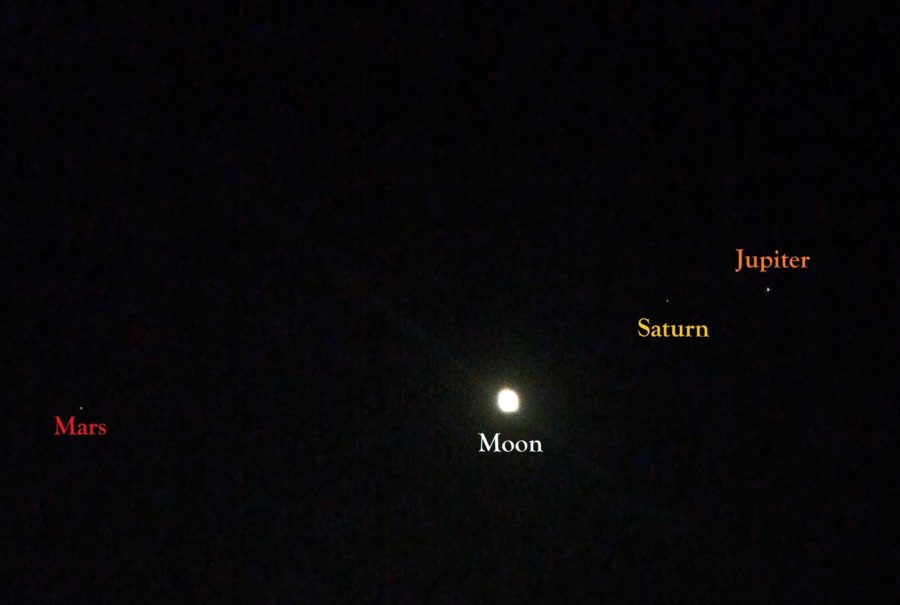
According to Live Science, researchers ran through 10,000 simulated collisions of the asteroid reaching the Moon. They measured different variables such as the debris path and the possible location of the impact. This location is predicted to be near the Tycho crater, which is near the Moon’s lower half for people in the Northern Hemisphere and the upper half of the Moon for the Southern Hemisphere, as stated by The Planetary Society. This makes Oceania, Hawaii, western North America, and East Asia the best places for viewing it. However, there’s a second catch: the impact will only be visible to the naked eye if the asteroid collides with the dark part of the Moon to make the flash more prominent and the day of the possible touchdown is when the Moon would be unfortunately around 70% illuminated. The good news is that even with an amateur telescope, the flash might still be visible.
While there’s no actual guarantee that 2024 YR4 will hit our Moon, it could provide a great deal of information regarding our knowledge of asteroid impacts. However, if this astounding event truly does occur, it will be a moment to watch, learn from, and remember.