

Most organisms are adapted to specific environments; just like how bears can’t live in the ocean, and polar bears would struggle in the Sahara Desert. In the same way, bees are built for life in the air, not in water; at least, this was the common assumption.
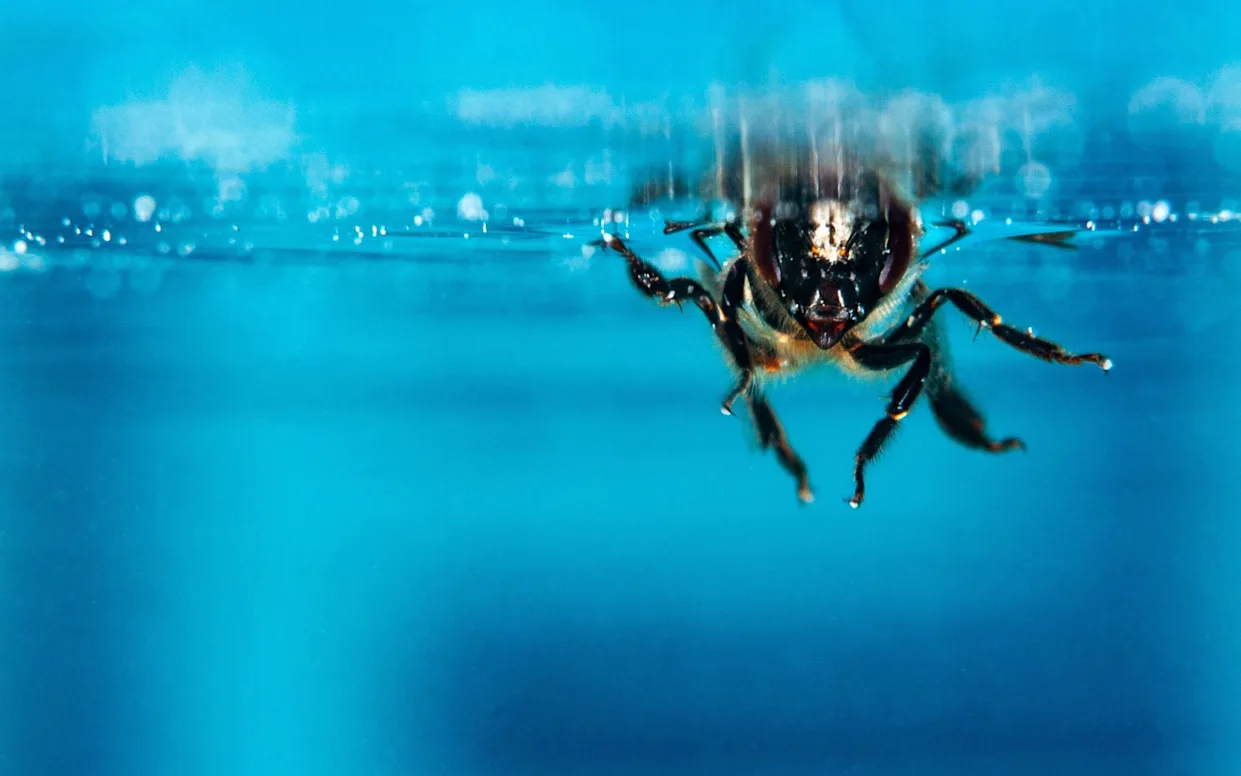
New studies have uncovered a “remarkable” survival tactic used by queen bumblebees (Bombus impatiens): the ability to remain submerged underwater for up to a week. It turns out these garden favorites are much hardier than their delicate wings suggest. According to The New York Times, this discovery offers a vital clue into how these pollinators endure the increasingly volatile seasons brought on by climate change.
The discovery was less of a planned expedition and more of a “lucky accident.” As stated by ecologist Sabrina Rondeau in an interview with Science, the phenomenon was first observed when her frosty refrigerator dripped condensation into the containers of four hibernating bumblebee queens she had stored. To her shock, the bees were still alive when she found them.
“I couldn’t believe it,” Rondeau said. This observation led to a formal study confirming that these land and air-dwelling insects can handle flooded winter and spring months, as reported by BBC.
Queen bumblebees spend the majority of the year in diapause—essentially a state of suspended animation, similar to the hibernation we see in mammals. They hunker down in shallow underground burrows, which are often at risk of becoming waterlogged, The New York Times reported.
But how do they do this? Do they require gills like fish and breathe underwater, or do they just hold their breath for long periods of time? During hibernation, rainstorms and snowmelt may flood their environment, leaving bees vulnerable.
A study by Charles-A Darveau, Sabrina Rondeau, and Skyelar L. Rojas, published in The Royal Society Publishing, studied the topic regarding bumblebee queens and their abilities to remain underwater. According to their research, queen bees survive this flooding through a combination of extreme metabolic reduction and clever physics. They drop their metabolic rate by more than half beyond even their normal hibernating state, which drastically lowers their need for oxygen. Not only this, but the scientists hypothesized that queen bees rely both on underwater respiration and anaerobic metabolism to complete this newfound phenomenon. To prove their hypothesis, they measured O2 and CO2 levels in the water, finding that the O2 levels go down and the CO2 levels go up as time goes on. The bees also produced lactate, which is an end product of anaerobic respiration. As the queen bees came out of diapause, their metabolic rates increased and steadied to normal levels, finding the last piece of evidence to prove their hypothesis correct.
The extent to which the queen bumblebee’s ability to survive underwater is unknown, and may be a potential future study. However, current findings are crucial to challenging the traditional assumptions about bees and their environments, suggesting that survival techniques may be more complex than previously thought. These findings may not be new adaptations; however, their capabilities align with their evolutionary history, as stated in The New York Times. Bumblebees emerged millions of years ago during a period of global cooling. The bumblebees’ ancestors thrived in the freezing, Arctic, and alpine regions, where melting would have exposed them to flooded conditions. As a result, the ability to endure the flooded environments may have been preserved with time in other types of bumblebees, opening further research opportunities.
The surprising resilience of the queen bumblebees not only reshapes our understanding of their environmental limits but also highlights the impact of evolution on survival. As research continues, these small, flying insects may reveal even more about their adaptations to extreme environments, reminding us that nature holds a tremendous amount of unknown capabilities.