On a recent Saturday morning in Tenafly, a town where the crosswalks are orderly, the dogs are tucked in little purses, and latte loyalties are deeply personal, an announcement caused a curious civic tremor that could be felt all along Washington Street. Starbucks, global purveyor of uniform foam and misspelled Sharpie names, is planning to open yet another outpost, this one just two blocks away from Café Angelique, the local institution where regulars have been sipping cappuccinos and local gossip for the better part of two decades. The arrival has prompted a quiet but palpable question among the caffeine faithfuls of the town: since Tenafly prides itself on taste, ritual, and a certain boutique charm, is there room for both the angel of small business success and the siren of big chain profits? And, perhaps more importantly, whose espresso is strong enough to claim the morning rush’s loyalty?
Tenafly residents, for their part, have greeted the development with the kind of mild existential concern usually reserved for parking-meter hikes or rumors of a Whole Foods expansion. Starbucks’ atmosphere represents not just a coffee shop but a cultural checkpoint: where teenagers rehearse adulthood on their MacBooks, remote workers rehearse productivity, and everyone else rehearses the vague sense of being in a “cosmopolitan” setting without the 2+ hour trek to the city. Café Angelique, by contrast, has long served as the town’s unofficial living room, somewhere the fresh pastries lean European, the chatter leans local, and no one has ever been asked their name for a cup only to see her surname reinterpreted as “Varney.”
Inside Café Angelique, the morning rush moves with a quiet choreography. Regulars know which baristas to go to for their orders, and the symphony of grinding machines is paired with the calmingly acrid scent of vinaigrette dressing and steaming milk, reminiscent of similar fall mornings in my hometown an ocean away. The always-bustling café in the front plays host to three miniature tables that are never enough to seat all the weekend caffeine aficionados, tempting more than a dozen to go sit in the capacious dining hall in the back, perhaps grabbing a salad or some pita bread with their meal. One regular in particular, a chatty French woman whose unsolicited opinions get more and more questionable as the number of empty coffee cups at her usual table pile up, truly embodies the lived-in feel of the café, and whose last name, in a twist of coincidence, happens to be the same as mine.
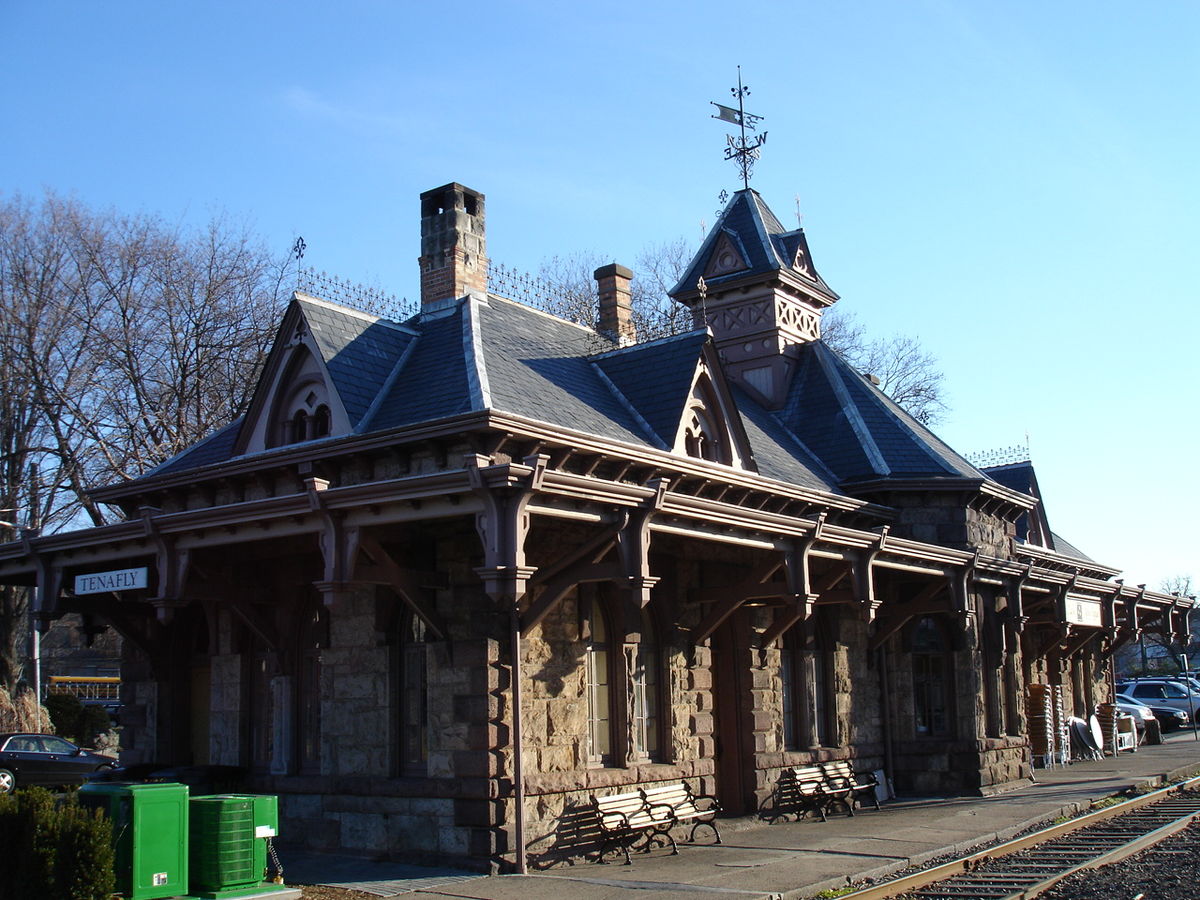
The décor of the wide, high-ceilinged ex-train station embodies the timeless spirit of its 18th century construction date, and preserves the comfortable patina of a place that neither succumbed to trend forecasting nor outright rejected it. Sound never seems to carry far enough across its baby blue walls, with its wood-paned, cathedral-shaped windows casting a light and cozy feel over its textured white stone floors. Like a dream you don’t want to wake up from to go to work, it exists in that elusive sweet spot between timeless and lived-in.
The omnipresent, yet unassuming owner of the café, Isaac Ben-Avraham, knows that the secret to the place’s longevity has less to do with caffeine and more to do with character. “When you’re in a small town like Tenafly, it could easily become just like the hundreds of other suburban towns with downtowns consisting of three or four blocks of chain stores with little personality,” he said, nearly shivering in disgust at the thought. He speaks with reverence about small towns that succeed in this, offering Cold Spring, NY, a long-time small-town retreat for citygoers, as an example of how a lack of booming chains paradoxically leads to more customer interest: “Small towns need unique coffee shops, interesting shopping areas, and original artistic areas that give people a reason to want to stop by.” In his view, Starbucks doesn’t destroy the community so much as flatten it, replacing local nuance and character with corporate comfort.
He speaks with the relaxed authority of someone who has watched fads come and go —matcha lattes, cracking lattes, and even instant powder mushroom lattes—all of which were briefly rumored to be the future before quietly becoming the past. “Trends that barely last a few weeks don’t create an experience for the customer. It’ll never have a long-enough impact to change what we do here,” Ben-Avraham said.
Though he gives Starbucks partial credit for “teaching Americans to think differently about coffee,” confessing its contributions half-heartedly and with a furrowed brow when thinking of the abysmally low-quality ‘diner coffee’ culture that had been common before, in the same breath, he laments its “plastic, cheap American twist, with giant jugs of caramel and sugary junk” on something that was once “the authentic café culture of Italy or Vienna, where you sit, relax, and enjoy being present.”
Presence is, in fact, the point. Café Angelique purposefully does not promote its Wi-Fi network, leading to some customers looking startled, as if told the laws of physics didn’t apply within its walls either. But the intention is simple and rather heartening: to keep people from retreating into screens and coax them into noticing each other. “A café should be a place where you observe and interact, instead of disappearing into devices,” Ben-Avraham said. “You can find and introduce new friends. Kids from school can mix with older regulars, and you can look around and see all the cultures blending together—Israelis, Asians, Americans—with all of the diversity we see in this country.”
Ben-Avraham has felt pressured to rent out the place for private events before and make more money, but he intends to uphold the point that doing so would block the very people he’s worked tirelessly to cater the space to. The café stays open because its openness is the point.
Still, potential for Starbucks’ arrival has introduced a fresh variable into the town’s daily calculus. While some loyalists vow that no pumpkin-spiced libations could seduce them away, others admit (quietly, and sometimes guiltily) that they may wander over for a seasonal Frappuccino if only to see what the fuss is about. Ben-Avraham remains unfazed. “I’m not afraid of new competition, just like how I’m not afraid of the old competition. I believe in my customers’ intelligence and ability to pick what they want, and it’s simply my job to stand out.”
But beneath the humor of it all lies a real question about what people want from a café. Starbucks offers consistency, convenience, and a kind of manufactured peace that, as Ben-Avraham confirmed, is always the same. Café Angelique offers something a bit less easily quantified: a sense of place. Ben-Avraham lovingly describes it as “a spot created for this town, rather than a template shipped in from a corporate office.” Its offerings provide the sort of lazy, yet divinely comforting vibes that channel the European way of life, rather than a rushed caffeine-fueled pit stop made on borrowed time during pitiful lunch breaks.
Ultimately, the choice between Starbucks and Café Angelique may have less to do with coffee than with identity. Ben-Avraham put it best: “Tenafly needs direction in new places that bring heart and passion, not more of the same big chains.” And as the two cafés may begin their new neighborly orbit, residents will continue to navigate their caffeine loyalties with the same quiet intensity they apply to school-board elections or the never-ending debate about whether the eternally unopened Serafina location really is a money laundering front.
For now, the angel of small business opportunities and siren call of profits coexist, with two visions of morning rituals and two competing definitions of comfort. And somewhere between the foam hearts of Café Angelique and the green mermaid’s reliable routine a couple blocks down, Tenafly’s coffeegoers will decide where its mornings feel most at home.