
























































































































There was no warning that anything unusual was about to unfold.
The afternoon light sat heavy on the pavement, bright enough to wash out the edges of the meticulously manicured lawns of suburban Tenafly.
Christina Kim (’26) noticed this sharp glare as she stepped out of her car. It had forced her eyes to squint in reluctant conformity, flattening her view of the world until everything felt slightly unreal. Still, she kept her gaze forward as she proceeded.
The folded cash that sat deep in her sweatshirt pocket brushed against her palm as she walked. The text message from earlier lingered somewhere in her phone’s recent memory. It had been short, almost careless in its phrasing, but she had read it twice before responding at all, then once more before deciding to leave.
As she approached Kitty Lachinaris’s house, Kim immediately recognized the sharp angles of its unassuming facade. After all, she had already been there once that afternoon. It was on that first attempt that she initiated Plan A—wait outside, watch for movement, and take her shot when Lachinaris appeared.
But before Kim could strike, Lachinaris had spotted her car in the driveway, thwarting the effort before it could even take shape. It was in that brief moment of recognition that a different truth solidified: this was the end of Kim’s time in the 2026 Senior Assassin game. Given that she had only until the end of the day to eliminate her target, and with Lachinaris now aware that she was coming for her, any remaining opportunity of a clean kill had been compromised.
At least it had been a good run. Or so she thought.
Then came the message. Most surprisingly, it had been sent by Lachinaris herself.
By then, the game had already begun to develop its own unregulated economy. Certain eliminations carried a peculiar sense of coordination, almost as if they had been settled somewhere outside of the visible flow of play.
Likewise, Lachinaris had proposed an alternative arrangement: Kim could alter the natural struggle of pursuit that separated hunter from prey. Lachinaris offered to cooperate in her own elimination, willing to allow Kim to spray her. However, it would come with a cost.
So, Kim found herself back at that familiar residence, though not as she had been the first time around. Between then and now, the balance of power had tilted against her, leaving her to return with a sense of vulnerability, unknowing what the price would be to secure her survival.
Even so, she continued to climb the steps that led to the entrance of the Lachinaris abode, preparing to negotiate as she fiddled with the wad of bills in her pocket.
It was at that moment that a sharp coldness struck her squarely in the back, immediate enough that there was not even a second to register the attack for what it was. Her hand was still half-raised, the door inches away, when the realization settled.
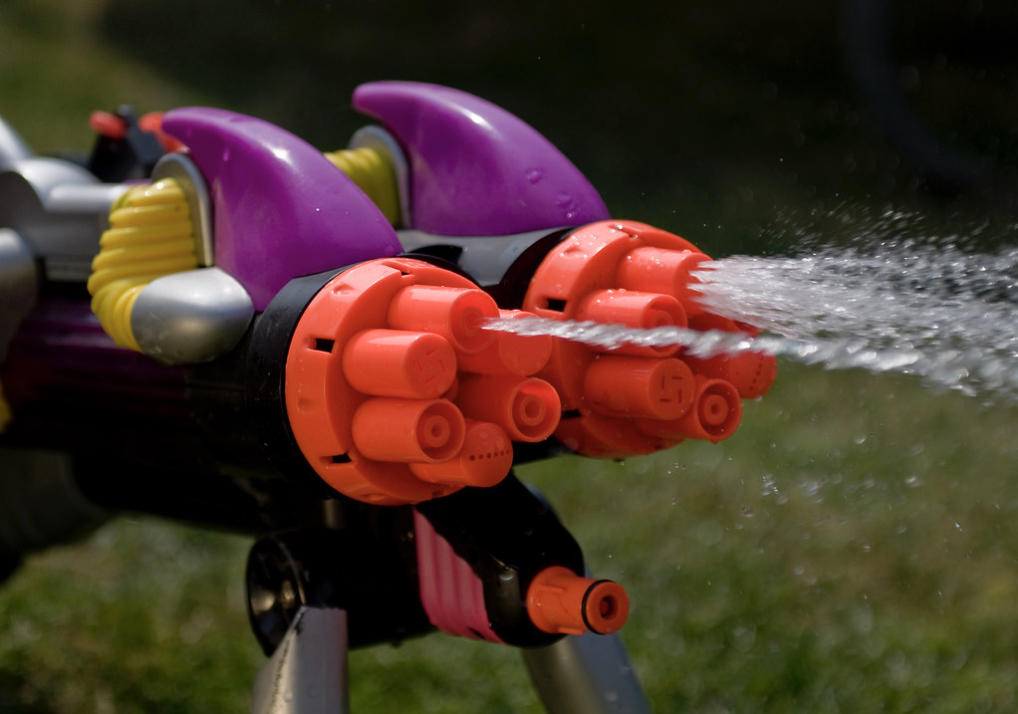
From the edge of the walkway, half-hidden by the side of the house stood Max Gabel. A fluorescent pink water gun was curled loosely in his grip.
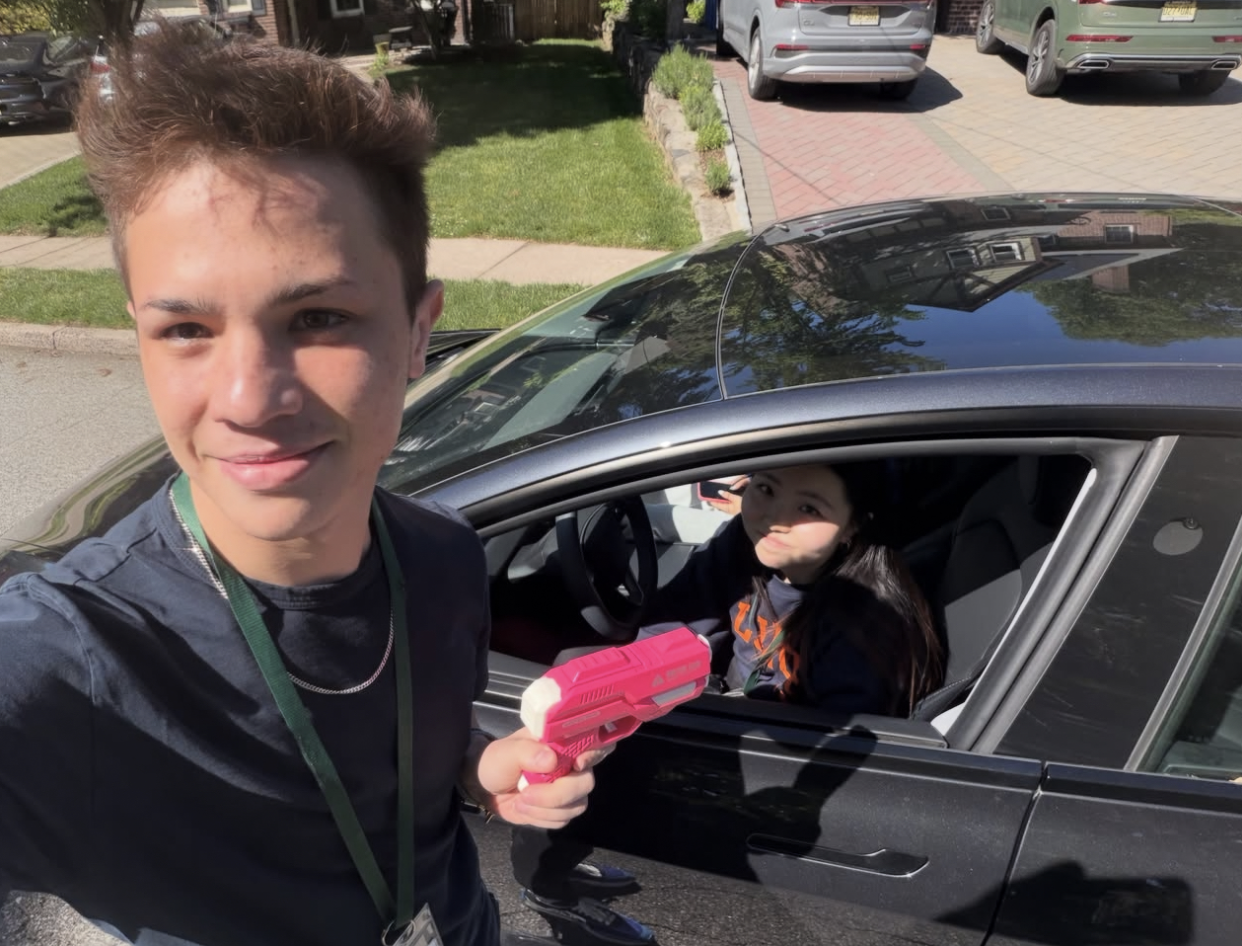
She had been set up.
In the aftermath of the elimination, accounts from participants suggested that outcomes in the later stages of Senior Assassin were increasingly shaped by coordination and stealthy alliances.
Accordingly, Kim later described how quickly the game’s social dynamics turned volatile, stating, “I would not trust anyone.”
Despite her success of making it to the third round of eliminations, she still carries regret, saying, “If I could do things differently, I would not wait until the last minute to kill my target, since you might need multiple tries.”
As the number of remaining players narrowed, what had initially begun as a relatively straightforward competition gradually evolved into something far more strategic, with participants forming overlapping networks that often shifted from round to round.
For Lachinaris, success depended largely on understanding those relationships.
“My strategy for winning the game was just to make a lot of connections with people,” she said. “I managed because people trusted me to tell me who their [target] was.” This illusion of trust had allowed her to “[find] out who every single person had,” which facilitated the creation of her own interconnected map that traced the cycle of who was assigned to whom throughout the remaining players.
Gabel, one of the three winners of this year’s Senior Assassin game, meanwhile, approached the competition with far less intensity.
“I wasn’t really competitive,” he described. “I just kept with the same daily routine as usual, but after school, I would go and try to get my target out for an hour each day.”
Even amid the mounting tension and the lucrative winner’s pot, many participants ultimately noted the social aspect of the game as its most memorable component, with Lachinaris stating, “The most fun was honestly the friends we made along the way.”
Gabel agreed, adding, “I think the most fun that I had was planning with my friends how to get our targets out.”
Taken together, it is clear that Senior Assassin has developed into more than simply an end-of-year tradition. In this context, the game begins to mirror a larger truth of senior year: just as every player eventually meets their end, every student will, at last, turn their tassel and move on.
But regardless of sentiment or the lure of the prize, in Senior Assassin, no one is safe for long.