







































































































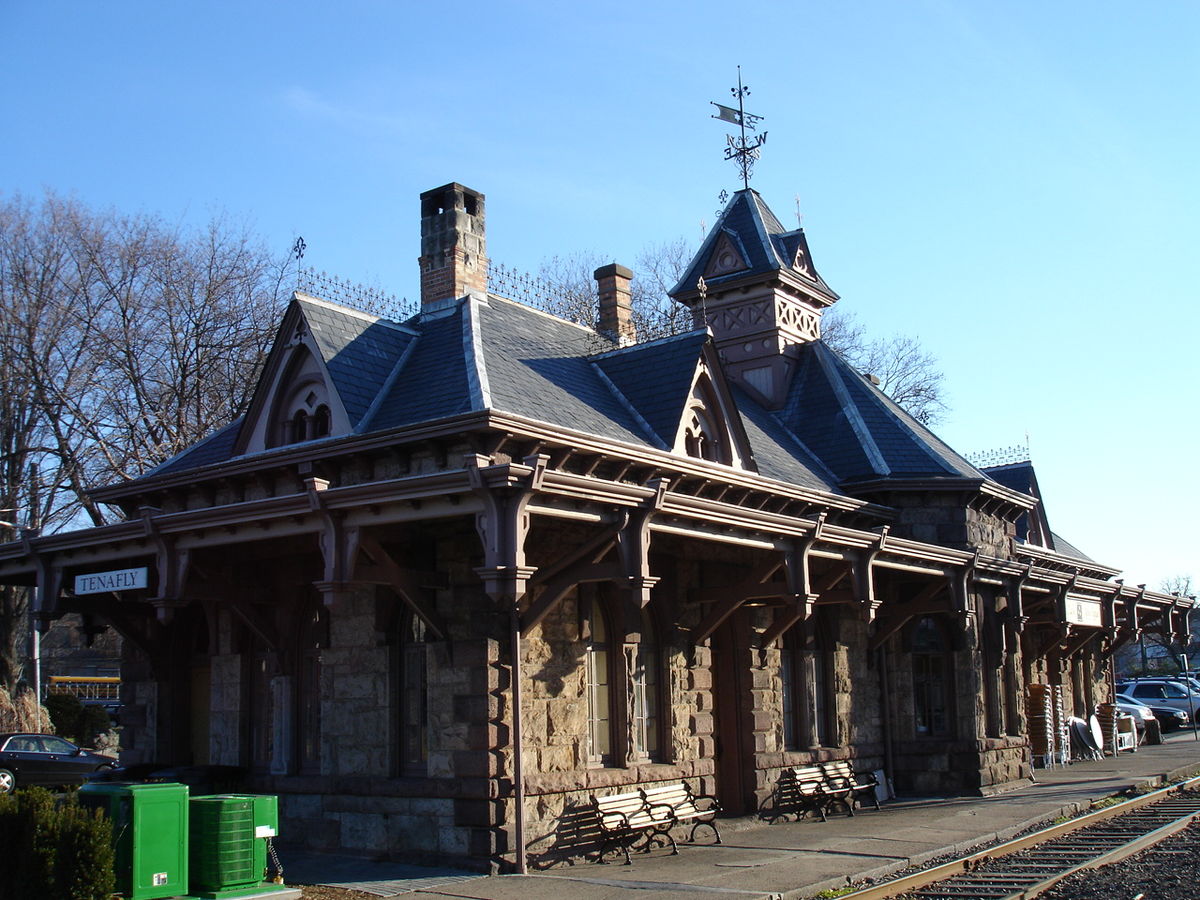



























On certain Saturday mornings in Bergen County, the parking lots outside tutoring centers begin to fill long before most nearby storefronts have opened. Students step out, carrying backpacks swollen with prep books and loose worksheets, then disappear into office suites hidden above nail salons, pharmacies, and cafés. Some are there for SAT prep despite still being in middle school. Others are preparing for admissions interviews at selective magnet schools like Bergen County Academies (BCA) or Bergen Tech.
From the outside, very little about these buildings suggests how deeply they are woven into the academic culture surrounding towns like Tenafly. Their signs are understated, often compressed between dental offices and accountants. Yet inside many of them exists an entire secondary educational structure operating alongside the public school system itself. Bergen County is filled with SAT academies, mathematics centers, essay consultants, enrichment programs, admissions coaches, and tutoring firms that specialize in helping students navigate increasingly competitive academic environments.
The existence of tutoring itself is neither unusual nor inherently troubling.
What becomes harder to ignore is the scale of the ecosystem surrounding it and the extent to which it has become intertwined with wealth, housing, and educational status.
In Tenafly, where median home sale prices hover around $1.7 million according to Zillow housing data, and median household income exceeds $200,000 according to U.S. Census estimates, academic success increasingly exists inside a much larger economic framework. Families are buying far more than homes; they are buying access to the reputations, networks, and opportunities associated with the district. Real estate listings frequently advertise school rankings and college outcomes almost as aggressively as they advertise the homes themselves, reinforcing how tightly education and property value have become linked in affluent suburbs.
As that pressure intensifies, a broader question begins to emerge: how much of academic success in affluent suburbs is actually occurring inside the schools themselves, and how much depends on the invisible industries growing around them?
Nicole Fedan (’29), described preparing for BCA during the summer before eighth grade. By the time applications were due in November, much of her school year had already become organized around tutoring sessions, interview preparation, and admissions strategy. Fedan attended both Mathnasium and MEK Review, a Bergen County tutoring organization known for SAT preparation and selective admissions prep. The structure resembled a parallel curriculum operating outside school hours: weekly assignments, timed review sessions, repeated testing strategies, and structured analysis of mistakes.
What stood out most was not parental pressure. In fact, Fedan explained that her parents were hesitant about BCA because of the workload. The pressure came instead from the surrounding academic culture and from watching peers participate in the same process. Students saw one another preparing, enrolling in programs, and comparing admissions plans long before high school had even begun.
Those advantages are often incremental: earlier exposure to advanced coursework, familiarity with interview formats, access to specialized admissions guidance, or simply the experience of repeated practice. Across an entire district, however, those small advantages accumulate quickly. Students learn algebra before algebra. They rehearse standardized testing structures before encountering them in school. Résumés begin forming years before college applications are ever submitted.
The tutoring economy surrounding Tenafly cannot really be separated from the borough’s larger economic transformation. Rising housing prices and luxury redevelopment have reshaped much of Bergen County over the last several decades, while high-performing school districts have become increasingly tied to real estate desirability. As higher-income families continue entering the district, tutoring centers and enrichment programs expand alongside them. Expectations intensify accordingly.
Meanwhile, conversations about inequality in affluent suburbs often remain strangely muted, perhaps because visible poverty is less common. Perhaps because these systems appear voluntary. Or perhaps because educational competition feels easier to justify morally than other forms of status consumption.
While researching this piece, I reached out to several teachers connected to private tutoring programs. Some declined interviews almost immediately, while others became noticeably cautious when discussing how widespread these systems had become.
That tension reflects the uncomfortable position tutoring occupies within affluent districts. Many programs genuinely help students, and many tutors care deeply about education. At the same time, the scale of the industry raises difficult questions about access and inequality. A growing number of students rely on forms of academic support that exist entirely outside public education but still shape outcomes within it.
This becomes especially visible surrounding admissions to Bergen County Academies. BCA’s reputation throughout North Jersey has produced an entire preparation economy dedicated specifically to the school’s admissions process. Tutoring centers, like Accel Learning, advertise BCA interview preparation, mathematics acceleration, logic training, and admissions consulting directly to middle school families. Students often begin preparing months or years in advance despite the fact that a shockingly high number of applicants will ultimately be rejected.
The result is that middle school itself begins changing shape around the admissions process. Extracurricular activities, volunteer work, academic camps, competitions, and leadership programs increasingly become part of carefully managed applications assembled years before students fully understand the systems they are entering.
Isabella Rainone, a former Tenafly student who is now a freshman at BCA’s Business Academy, described the phenomenon bluntly: “Everybody’s trying to become a product.”
Researchers studying what sociologists call “shadow education” have repeatedly noted that private academic support industries tend to expand most aggressively in high-income communities where families fear losing a competitive advantage. A 2026 study published in Sociology of Education found that wealthier parents increasingly invest in supplemental educational services not necessarily because children are struggling academically, but because admissions systems reward optimization and early preparation.
What makes these systems difficult to analyze is that they are often treated as entirely normal within the communities surrounding them. A public school district may appear exceptionally successful according to rankings and admissions statistics while an enormous amount of unseen labor is taking place elsewhere through private tutoring, academic consulting, and enrichment programs.
Yet, on another Saturday morning, the parking lots across Bergen County will fill again. Students will arrive carrying flashcards and practice tests while parents wait in nearby cafés or circle crowded blocks searching for parking. Tutors will prepare worksheets. Consultants will edit essays. Younger siblings will watch older ones move through the process and slowly begin imagining themselves inside it, too.
Outside, Tenafly’s streets will remain quiet and beautiful, lined with homes whose values continue rising alongside the reputations of the schools nearby. Somewhere inside one of those tutoring centers, another student will sit down at a desk, open a prep book, and begin preparing for a future that already seems to demand acceleration before high school has even begun.