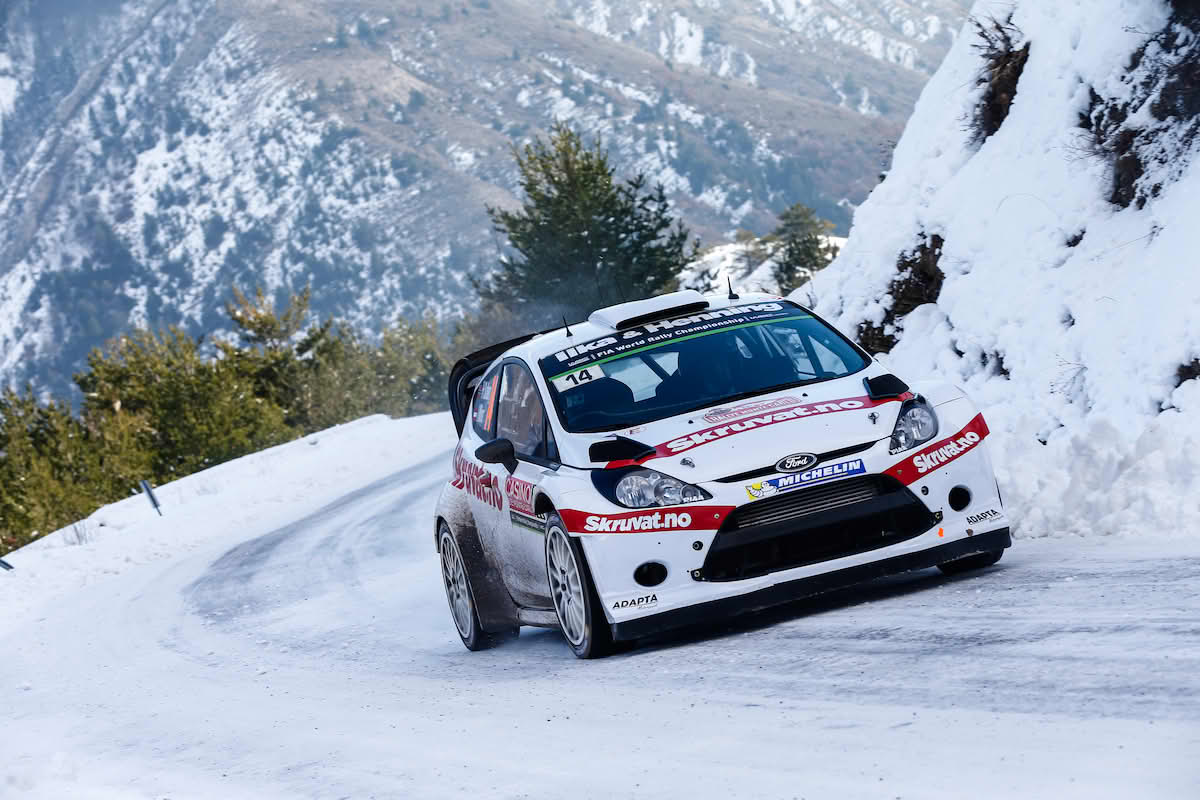
When it’s five in the morning above the rugged Monegasque landscape, the world doesn’t seem quite real. It looks staged: valleys swallowed by inky darkness, silver frost clinging to guardrails, spectators’ breath hanging in the air like smoke signals. Somewhere below, an engine detonates the silence, not smoothly like a circuit car, but violently, impatiently, echoing off rock faces that have watched the same ritual for more than a century. This is rallying: drivers released one by one into the wilderness, racing the clock, the surface, and their own fear. There are no grandstands, no neat runoff areas, no second chances. Just driver, co-driver, road, and consequence.
I believe rallying is the greatest motorsport in the world because it is the only discipline that refuses to be tamed. And because I know someone who lived that truth from inside the cockpit. Long before rallying highlights were compressed into social media clips, Linda Garvin was learning engines from paper manuals, backing the family car in and out of the driveway at fourteen, and choosing mechanical fluency over convention. As she put it simply, “Instead of polished nails, I preferred greasy hands.” Told—implicitly and explicitly—that motorsport was not built for women, she pushed anyway, through journalism, engineering, and finally into the driver’s seat. Rallying did not care who she was supposed to be. It only demanded that she survive.
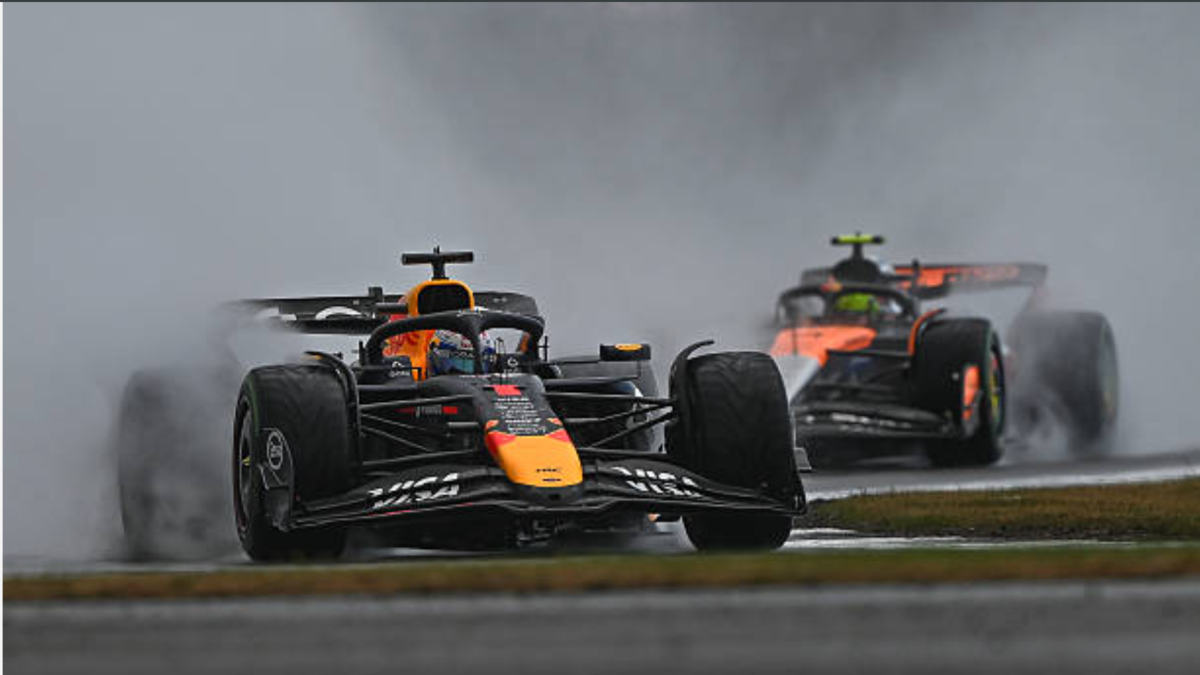
For the uninitiated, rallying doesn’t happen on closed circuits. It unfolds across real roads, through tight mountain passes, rocky savannas, winding deserts, and snowy forests shut down temporarily and stitched together by “liaisons.” Drivers compete in timed special stages, often on wildly different surfaces within the same event: snow to dry tarmac, gravel to mud, sometimes all in a single day. Success depends as much on trust between driver and co-driver as raw speed. One wrong note, one overconfident throttle input, and the rally ends against a tree or down a ravine. That danger, that purity, is exactly why rallying sits above Formula 1, WEC, MotoGP, or any other polished, predictable category.
Part I: The Beginning
The 2025 World Rally Championship began at Rallye Monte-Carlo, and if anyone doubted the majesty of the sport for a second, they would be rendered speechless by a glimpse of this event’s footage. Sébastien Ogier came in as a living legend of the sport with 8 WRC Driver’s Titles at 41 years old, and extended his own astonishing record by claiming his tenth Monte-Carlo victory, piloting his Toyota GR Yaris Rally1 with surgical precision through the Alps’ temperamental icy labyrinth. The Frenchman and his co-driver Vincent Landais finished 18.5 seconds ahead of their Welsh teammate Elfyn Evans, and Adrien Fourmaux showed flashes of brilliance in his brand new Hyundai on a bold slick-tyre gamble before fading back on the tricky last stages. This was as far as possible from the processional norm fans bemoan at F1’s yearly trip to the Principality, but rather a gritty test where veteran craft outshone raw speed.
Part II: The Second Quarter
As the calendar moved into the second quarter, the terrain shifted from Alpine ice to gravel carnage, and the narrative of the season began to unfurl beyond Monte. After Rally Sweden, it was Safari Rally Kenya that truly showcased the unpredictable nature of world-class rallying. At Safari, Elfyn Evans tamed one of the toughest rallies on the planet and claimed his second victory in a row with co-driver Scott Martin, extending a championship lead unmatched after three rounds in modern WRC history. The rugged roads of Kenya chewed up competitors’ machinery and forced leaders to balance aggression with survival, consolidating Toyota’s advantage in the manufacturers’ standings as well.
Safari Rally Kenya’s brutality is not legendary by accident, but is earned. Long before the modern hybrid era, the event demanded a mindset closer to survival than sprinting. Linda Garvin experienced that reality firsthand while competing in the WRC African Kenya Nairobi Safari Rally, a ten-day, 5,000-kilometer endurance test designed to break both machinery and resolve. She described the course as “a safari of a different breed of animal,” where “unforgivable dirt, deep mud holes, hidden boulders and narrow edges were waiting at every turn.” Cars were not merely raced; they were engineered to endure, and drivers were expected to read terrain as carefully as pace notes. The event underscored what still defines modern Safari Rally Kenya: winning is secondary to finishing, and respect for the road is non-negotiable.
Meanwhile, across the gravel swing in events like Rally Islas Canarias and Rally de Portugal, other drivers began asserting themselves: Kalle Rovanperä captured the win in Spain’s Canary Islands before Ogier added wins in Portugal and Italy, demonstrating Toyota’s depth and strategic strength. In contrast, Hyundai struggled for consistency, with Thierry Neuville and Ott Tänak experiencing mixed fortunes that underscored reliability concerns and strategic missteps. These rallies revealed that rallying is not just about speed but about engineering resilience and adjusting to terrain that can shift from predictable to treacherous in moments.
Part III: After the Summer Break
Following a brief summer interlude, the season tackled arguably its most culturally iconic tests: Greece and Finland. At the Acropolis Rally in Greece, Ott Tänak showed veteran might by claiming a hard-earned victory, confronting punishing heat and rock-strewn roads that deter even the boldest crews. While some fans grumble that rallies held in the peak of summer, like Rally Greece in August, are too hot for peak performance, that challenge is precisely what fans relish: it separates prowess from wishful thinking.
Finland and Estonia then offered a contrasting spectacle of speed with Rovanperä shining on the fast flowing roads that define Baltic rallying, capturing wins that displayed fearlessness blended with minimalist error. These events solidified narratives around driver styles, where some thrive in precision and pace, others succeed through calculated mastery of unpredictable surfaces.
Part IV: The Final Stretch
As the season approached its final quarter, the championship picture evolved into a dramatic test of consistency, endurance, and mental strength. Sébastien Ogier and Elfyn Evans continued to trade wins, with Ogier dominating events like Rally del Paraguay and Rally Chile, while Rovanperä collected victories at the Central European Rally, injecting unpredictability into the title calculations. With Ogier’s bursts of pace contrasted against Evans’ early momentum and Rovanperä’s midseason surge, the points race became a masterclass in balancing risk with reward. Even crews further down the order contributed to the richness of the season. Young drivers like Oliver Solberg scored victories at Rally Estonia, affirming that emerging talent can shine against seasoned veterans.
Rallying asks more of its competitors than speed alone. It demands fluency in chaos, mechanical sympathy, and the humility to know that finishing can matter as much as winning. Linda Garvin understood this long before modern fans rediscovered it through onboard footage and championship battles. “Being a driver is more than getting behind the steering wheel of a race car,” she said. “You need to understand the bigger picture, know your car, yourself, your team and the best way to communicate amongst all of the chaos.” That philosophy is written into every stage of the World Rally Championship.
Nowhere was that clearer than in the Safari Rally Kenya, one of the very events Garvin herself called “a safari of a different breed of animal,” where deep mud, hidden boulders, and unforgiving terrain made survival the first objective. “Amongst the racing competitions, road rally races are unique,” she explained. “Half of the battle in stage rally is to get to the finish.” That truth still defines the sport in 2025, as drivers balance ambition against endurance across continents and conditions.
Rallying endures because it refuses to compromise with comfort. It does not sanitize danger or flatten competition into predictable patterns. Every stage is a negotiation with terrain that does not care about reputation, budget, or legacy. The World Rally Championship’s 2025 season has made that unmistakably clear: titles are shaped not by dominance alone, but by judgment under pressure, adaptability across continents, and the ability to survive when the road actively resists. This is motorsport stripped to its fundamentals: man, machine, and environment locked in conflict.
While Formula 1 chases spectacle through precision and control, rallying thrives on uncertainty. Tires are gambles, pace notes are lifelines, and victory is but provisional until the final kilometer is completed. The sport rewards engineers who build for resilience, drivers who respect chaos, and teams that understand speed without survival is meaningless. That is why rallying produces moments that linger: battered cars limping across finishes, battle-hardened crews emerging exhausted, and championships decided by terrain as much as talent.
In a motorsport era increasingly defined by polished predictability, rallying remains defiantly raw. It does not ask to be made accessible or easy to understand; it asks only that you pay attention. For those willing to look beyond grandstands and floodlights, the World Rally Championship offers something rarer than entertainment: proof that competition still has consequences. Rallying does not exist to be convenient, consumable, or controlled; it exists to decide who can adapt when nothing goes according to plan. In 2025, the World Rally Championship proves that when motorsport is pushed back onto real roads with real consequences, rallying doesn’t just survive the comparison—it wins it.