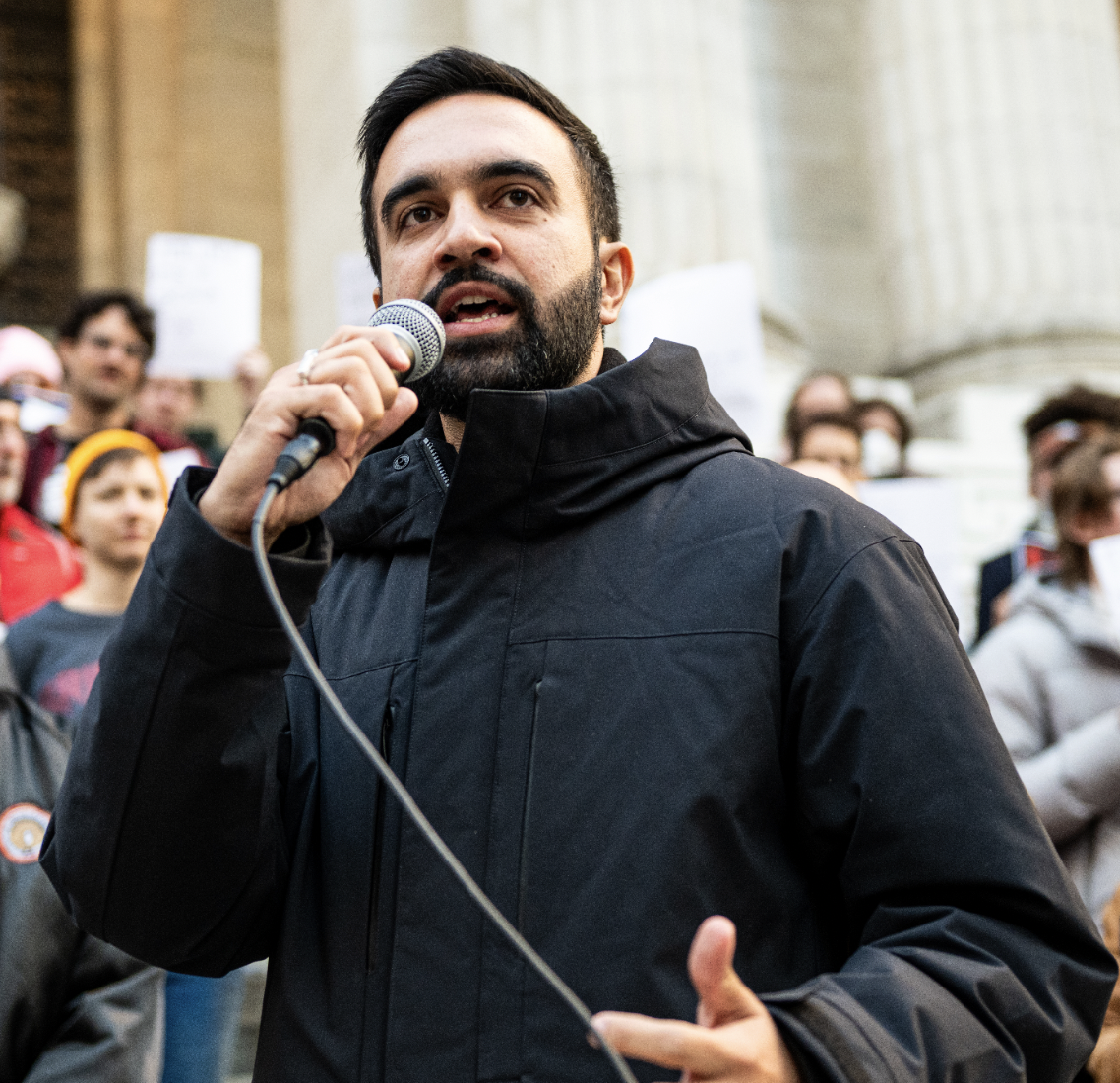
On his first day in office, New York City Mayor Zohran Mamdani revoked the city’s adoption of the International Holocaust Remembrance Alliance (IHRA) working definition of antisemitism, immediately sparking controversy across the entire city and across the country. This decision was primarily made to undo the executive orders issued by former mayor Eric Adams. With this, it has become one of the most debated actions of Mamdani’s start in administration, raising questions about antisemitism, free speech, and the safety of Jewish New Yorkers.
The IHRA’s working definition of antisemitism is a widely used, nonbinding agreement adopted by governments, universities, and other institutions around the world. It includes a general definition of what antisemitism is, as well as examples of how anti-Jewish hatred can be seen today, including the hatred of Israel. As stated on the IHRA website, “Antisemitism is a certain perception of Jews, which may be expressed as hatred toward Jews. Rhetorical and physical manifestations of antisemitism are directed toward Jewish or non-Jewish individuals and/or their property, toward Jewish community institutions and religious facilities.” This definition helps institutions recognize modern antisemitism.
Mayor Mamdani defended the revocation as a part of showing his commitment to “civil liberties” and “free expression.” Supporters of this move argue that the IHRA’s definition has been used in some cases to “suppress” political activism or label criticism of Israel as antisemitic (which it is!). This ideology promotes the usage of antisemitic slurs and the bombardment of Jews.
On the other hand, many Jewish organizations and community leaders view the decision very differently. Several major Jewish advocacy groups criticized the elimination of the IHRA’s definition, warning that, because there is now no vital identifier tool for antisemitism, especially during a time of immense rise, the Jewish people are in a risky position as they now face the fear of being harassed while walking in the streets of New York.
Jewish teenagers are some of the most at-risk, causing them to walk through the hallways with their heads down, hoping not to be recognized as being Jewish. “With the removal of the IHRA’s definition of antisemitism, a lot of modern-day antisemitism isn’t considered antisemitic anymore, which is a huge issue—not only as a high school student, but also as a New Yorker,” Jonathan Y. (’27), a high school student in New York, said. Being both Israeli and Jewish, he feels that the decision has affected how comfortable he feels expressing who he is.
Jonathan’s concern reflects a broader fear that without a definition, antisemitism may become a lot harder to recognize, especially when it appears in modern or indirect forms.
Internationally, the reaction to the decision further intensified the debate. Israeli officials condemned the move, and Jewish newspapers warned that New York City, home to the largest Jewish population outside of Israel, was deteriorating from a widely accepted standard without explaining how it would address antisemitism in the future.
Mayor Mamdani has insisted that revoking the IHRA’s definition does not mean his administration is ignoring antisemitism. He continues to state that his main priority is “protecting Jewish New Yorkers.” However, by taking away the one thing that the Jewish people fell back on for protection, he is not showing how he can protect them.
Moving forward, students and families must understand that Mamdani’s first day decision is more than a political statement. It directly affects how safe people feel expressing who they are, and the world will be watching closely for when the new approach to combating antisemitism will emerge, and whether it will restore confidence among Jewish and Israeli New Yorkers.