Welcome to the Triple C’s—proof that reading can turn into reading for fun (and vice versa). Whether inspired by social media hype, a Barnes & Noble display, a Goodreads email, a syllabus, or pure curiosity, this weekly review is where my honest thoughts end up. Suggestions are always welcome, and the next review is already underway.
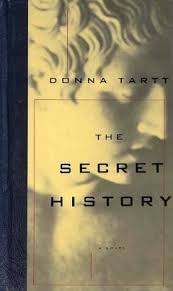
The Secret History by Donna Tartt might be the greatest book ever written. That sounds dramatic—I know—and similar to every other comment made about it, but it’s the most honest way I can put it. When I think about the novel, I feel my chest swell with an emotion I can’t quite put my finger on—almost like an epiphany, but the opposite because I’m still riding the high this book has instilled in me weeks after finishing it. At its core, the book is little more than an arrogant, out-of-touch account of rich kids at a small New England university. What separates it from every other novel is how the story is told: beautifully written and unique in adding depth to otherwise shallow characters.
Tartt builds a world revolving around six students bound by their study of Greek, and narrates it through Richard Papen, an outsider desperate to belong. Fundamentally, the characters are normal: they acknowledge each other’s faults and their own, understand right from wrong, and see how their behavior is problematic. Classical knowledge is the sacred foundation for entering this insular and selective reality. That exclusivity is part of the appeal. To be chosen is to feel transformed. But that transformation comes at a cost: a growing distance from ordinary life and ordinary people.
The setting itself plays a bigger role than I expected. Hampden College—fictional, but modeled after Bennington College, Tartt’s alma mater—feels isolated. There’s a constant sense that the outside world barely exists. I picture the campus as quiet to the point of discomfort, as if everything important were happening in small, closed rooms rather than out in the open. That atmosphere makes it easier to understand how the group becomes so self-contained. It’s just them, their books, and their own ideas echoing back at each other.
The group itself is so sharply defined that it’s hard not to fixate on each of them. Henry Winter stands out the most: controlled, distant, almost unnervingly calm. He feels less like a student and more like someone who already believes he’s operating on a different level than everyone else. Then there’s Edmund “Bunny” Corcoran, who at first seems careless and irritating, but slowly becomes something more complicated as the story progresses. Camilla and Charles Macaulay add a Southern charm to the group, Francis Abernathy feels like he’s constantly balancing between confidence and fragility, and Richard is just trying to find a way to fit in.
What I found interesting is that none of them are hidden behind mystery for long—you see who they are pretty clearly. But that doesn’t make them easier to understand. If anything, it makes their choices harder to accept. Plot-wise, the novel does something unusual by revealing early on that Bunny will die, which completely changes how you read everything that follows. It forces the reader to look deeper into the book as it progresses for insight into why Bunny’s death is so impactful on Richard’s life. The central turning point—the bacchanal the group attempts in pursuit of some kind of ancient, transcendental experience—felt almost surreal to read about. It’s where their obsession with Greek ideals stops being intellectual and becomes physical and dangerous. From there, the story isn’t driven by action as much as by tension: secrets building, relationships shifting, and the realization that they can’t undo what they’ve already set in motion.
At this point, the novel begins to feel almost intoxicating, because that distance doesn’t just exist, it deepens, quietly at first and then all at once. The characters begin to live a reality detached from everything outside of their niche academic pursuits. Their world narrows until it feels complete on its own, self-contained and self-justifying. That is where this unsettling feeling takes root, how easily morality fades into the background because they begin to believe those rules don’t quite apply to them anymore.
When that belief takes hold, the consequences don’t arrive in the way you expect them to. There’s no moment of clarity, no clean punishment that restores order. Instead, everything lingers. Guilt shifts between the characters unevenly, almost unfairly, attaching itself more heavily to some while barely touching others. It’s frustrating, but strangely honest: not everything resolves the way it should, and not everyone pays the same price. What makes the novel stay with me, though, isn’t the violence. In fact, The Secret History doesn’t reside in my mind as a psychological thriller. It’s the slow, almost imperceptible shift from admiration to superiority, from curiosity to quiet disdain. The characters just lean further and further into what they already are. Their love of knowledge, their obsession with intellect—it doesn’t make them better. If anything, it gives them the language to excuse themselves.
Because in the end, The Secret History doesn’t just ask what knowledge can do—it asks what people are willing to justify. And that question lingers long after the last page, heavier than anything else. The tragedy isn’t just what happens, but everything that disappears before it ever does—the empathy, the restraint, the sense of being human in the first place.