Welcome to the Triple C’s—proof that reading for school can turn into reading for fun (and vice versa). Whether inspired by social media hype, a Barnes & Noble display, a Goodreads email, a syllabus, or pure curiosity, this weekly review is where my honest thoughts end up. Suggestions are always welcome, and the next review is already underway.
Lately, I find myself sitting a few pages deep into a book and suddenly losing interest. Knowing it will be harder for me to continue reading, I end up starting a new novel with hopes of getting myself out of this slump. Unfortunately, the past few attempts have all been unsuccessful. So, instead of trying to find something new, why not look back on the old?
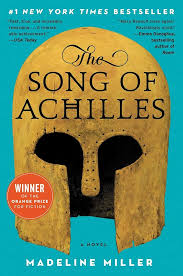
The Song of Achilles by Madeline Miller is one of those books that feels almost impossible to talk about without sounding dramatic: you either love it, or think it’s massively overrated. If you grow fond of it, it’s the kind of story that settles somewhere in your chest and stays there, not loudly, not urgently, but persistently. If you grow uninterested, you become apathetic to any of Miller’s literature.
The novel retells the myth of Achilles, but calling it a “retelling” is reductive. Miller reframes the mythology entirely, shifting the focus away from glory and battlefield triumphs to something much more intimate. By choosing Patroclus as the narrator, the story becomes less about legend and more about common perception. Achilles isn’t introduced as a near-god; he’s introduced as someone seen, someone known, changing how his entire tale is told. What struck me most wasn’t the plot—I already knew, in broad strokes, how things would end—but the way the story unfolds. Unlike other Greek myths, there’s no attempt to escape fate, no illusion that things might turn out differently. Instead, the novel leans into that inevitability.
The first half of the book feels deceptively gentle. There’s a softness to it, the way Achilles and Patroclus grow up together, the way their relationship develops without spectacle or urgency. It doesn’t announce itself as something monumental, which is exactly why it becomes so significant. Miller illustrates their connection as a natural, ordinary relationship no different from any other across human history. That realism is what makes everything that follows hit harder.
When the story shifts into the Trojan War, the tone changes. The intimacy of their earlier life is replaced by emotional and physical distance. Achilles becomes harder to reach, more consumed by the idea of who he’s supposed to be. There’s something frustrating about that transformation, but it more so reflects reality—getting so lost in the idea of yourself that you lose all originality and truth. This forces you to confront the cost of becoming a legend, and how easily identity can be swallowed by expectation. Miller intentionally writes, “I’ll tell you a secret…I’m going to be the first [happy hero],” showing humility within Achilles; a hope that spans across millennia that the inevitable somehow won’t touch you.
The novel keeps returning to this idea of glory—what it means, who it’s for, and whether it’s worth it. In traditional mythology, Achilles’s choice is almost celebrated: a short life, but eternal fame. Towards the end, that choice feels heavier, stripped of its heroism. It’s not just about what he gains, but who he leaves behind.
The ending is exactly what you expect, and still, it lands with a kind of quiet devastation. Not because it’s shocking, but because it feels inevitable in a way that you’ve been trying to ignore the entire time. Just the full weight of everything the story has been building toward. What makes The Song of Achilles linger isn’t just its tragedy and perspective. It asks you to question the value of greatness. By the end, the story isn’t really about Achilles at all—it’s about what it means to be seen by someone, completely and without illusion, and what it costs when that kind of understanding is lost.