Welcome to the Triple C’s—proof that reading for school can turn into reading for fun (and vice versa). Whether inspired by social media hype, a Barnes & Noble display, a Goodreads email, a syllabus, or pure curiosity, this weekly review is where my honest thoughts end up. Suggestions are always welcome, and the next review is already underway.
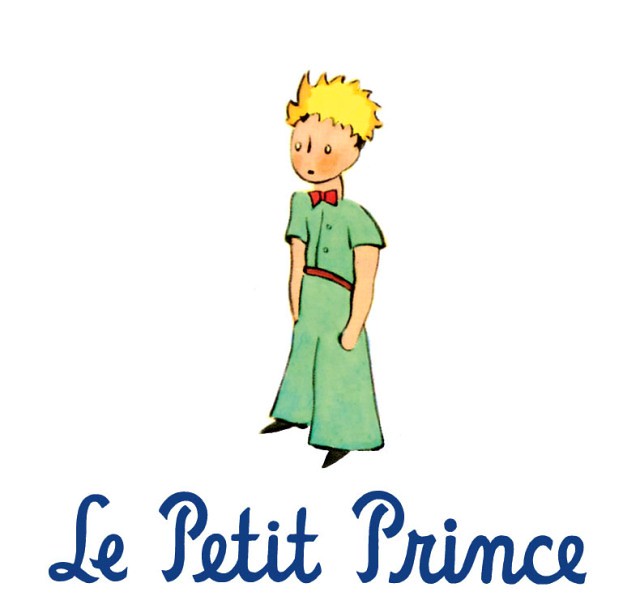
“On ne voit clairement qu’avec le cœur. L’essentiel est invisible aux yeux.” It is only with the heart that one can see rightly; what is essential is invisible to the eye. From my childhood, I recall listening to my father read from a repetitive list of books before bed: A Light in the Attic, The Giving Tree, Where the Sidewalk Ends, Goodnight Moon, Curious George, Fancy Nancy, Amelia Bedelia, Angelina Ballerina, Madeline, and Dr. Seuss. And while Le Petit Prince has a rightfully deserved seat amongst this table, it is more than just a child’s fable.
Translated in 550 languages, The Little Prince has reached readers across generations, but reading it now feels different than it might have then. It doesn’t simply return me to childhood—it makes me aware of how I have changed since then. “Toutes les grandes personnes ont d’abord été des enfants. (Mais peu d’entre elles s’en souviennent.)” All grown-ups were once children… but only few of them remember it.
At the start of the story, a pilot finds himself stranded in the desert, alone with his broken plane, and suddenly encounters a small boy who asks him to draw a sheep. “S’il vous plaît… dessine-moi un mouton!” Please… draw me a sheep! Faced with survival, the prince’s concern is not urgency but imagination. That contrast immediately softens the scene, turning what should feel desperate into something almost intimate. As the prince begins to speak about his home—a tiny asteroid, quiet and contained—and the rose he left behind, the narrative shifts inward. “Et si je connais, moi, une fleur unique au monde, qui n’existe nulle part, sauf dans ma planète…” Suppose I happen to know a unique flower, one that exists nowhere in the world except on my planet….
As his journey unfolds, the prince moves from one planet to the next, encountering figures who at first seem exaggerated, almost distant in their singularity. A king with no subjects insists on his authority, “il faut exiger de chacun ce que chacun peut donner” (one must require from each what each can give). A man demands admiration without offering anything in return. A businessman devotes himself to counting stars he cannot truly possess, repeating, “Je suis sérieux, moi” (I am concerned with matters of consequence). A lamplighter follows orders without question, and a geographer records the world without ever experiencing it. Yet over time, these encounters feel less like fiction and more like reflection—of habits, of priorities, of ways of thinking that quietly shape everyday life.
When the prince arrives on Earth, the scale expands, but so does the sense of isolation. The desert stretches endlessly, mirroring the emotional distance that has been building throughout his journey. His encounter with a garden of roses unsettles him in a quiet but significant way. “Je me croyais riche d’une fleur unique… et je ne possède qu’une rose ordinaire.” I thought I was rich with a unique flower… and I only have an ordinary rose. It’s a moment of doubt that feels deeply human—the realization that what we once believed to be singular might not be, after all.
It is only through his meeting with the fox that this uncertainty begins to shift. “S’il te plaît… apprivoise-moi,” the fox asks—please… tame me. What follows is not a grand revelation, but a gradual understanding. “On ne connaît que les choses que l’on apprivoise.” You only truly know what you tame. The idea reframes connection as something built over time, through attention and care. “Tu deviens responsable pour toujours de ce que tu as apprivoisé.” You become responsible, forever, for what you have tamed.
By the time the story returns to the desert, the tone has shifted. What once felt curious now feels heavier, shaped by everything the prince has come to understand. His decision to return to his rose is not explained in a way that feels complete or comforting. “J’aurai l’air d’être mort et ce ne sera pas vrai…” It will seem as though I have died… and that will not be true. The moment resists clarity, leaving the pilot—and the reader—with something unresolved, something that cannot be easily defined.
That ambiguity is what lingers most. The story does not close so much as it fades, leaving behind fragments rather than conclusions: a sky full of stars, a quiet laugh, a question that remains unanswered. “Regardez le ciel. Demandez-vous: le mouton… oui ou non, a-t-il mangé la fleur?” Look at the sky. Ask yourself: has the sheep… yes or no, eaten the flower?
Le Petit Prince doesn’t demand to be understood all at once. It allows for growth and reinterpretation. Each reading feels slightly different, shaped by time and perspective. And in that way, it becomes less of a story you finish and more of one you carry—with certain lines, in French or in translation, echoing long after the final page.