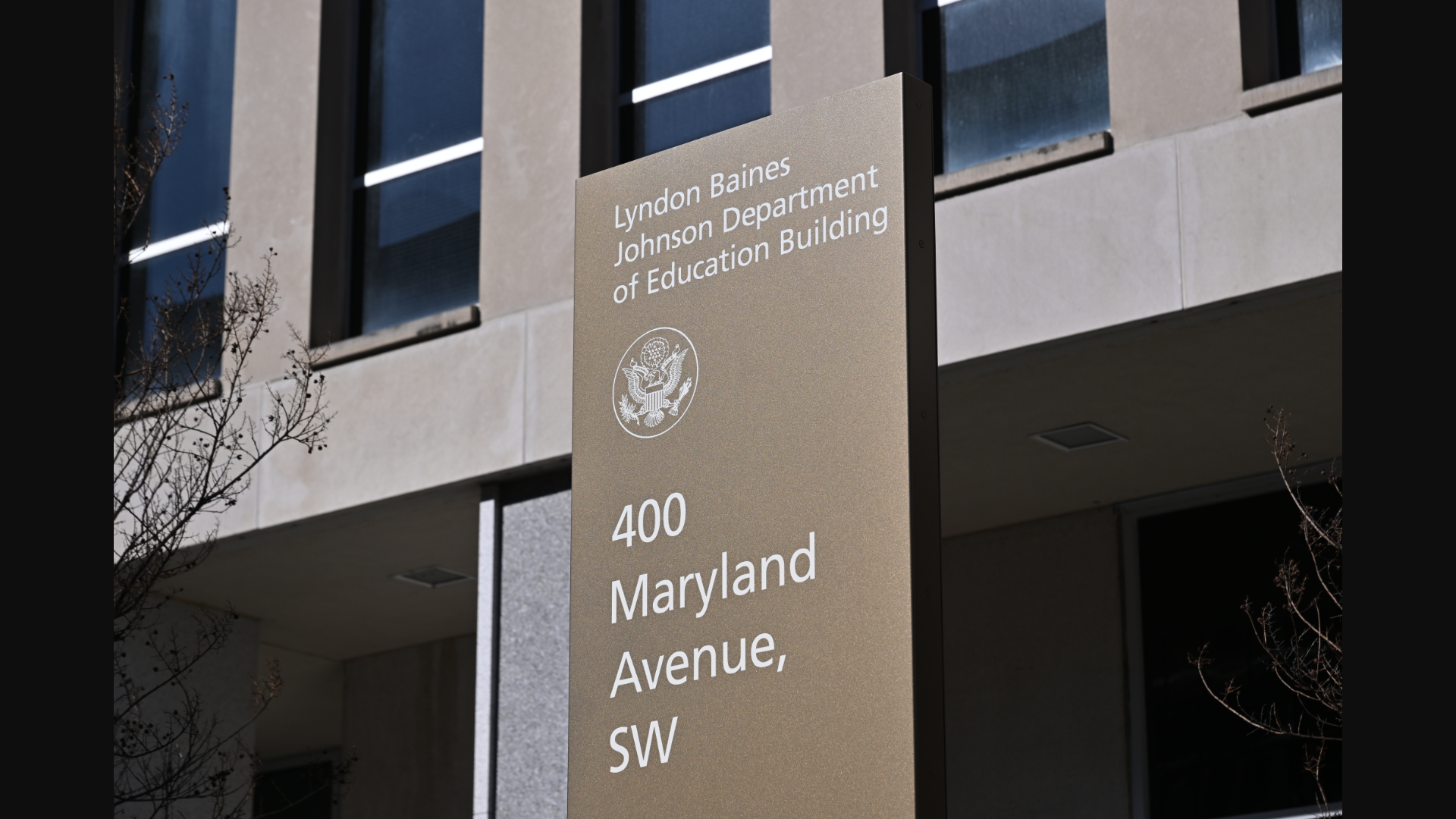
On March 20, 2025, President Trump signed an executive order which would, “to the maximum extent appropriate and permitted by law, take all necessary steps to facilitate the closure of the Department of Education,” according to the White House. The Secretary of Education followed through by initiating a mass reduction of force, resulting in half of the Department of Education (DoEd) being terminated. With this, agencies will soon begin taking over responsibilities currently held by the Department of Education—for instance, the Federal Student Aid currently managed by the Small Business Administration. Below are two opinions on the decision.
Opinion #1:
The Department of Education is an inefficient government bureaucratic political tool used by many presidential administrations. State education is an effective system that worked before the federal government stepped in. The department is a political tool of many administrations, an excuse to bloat the national debt, and create a failed system of federal government intervention in state education.
The department’s goals are not a responsibility of the federal government. The federal government should only manage state affairs when the state is incapable of providing that duty. Take the Department of State, for example. A state cannot conduct foreign affairs by itself, so the government of the United States is obligated to conduct foreign policy. Each state has its own education agencies, and they have the ability to provide for their students. A federal bureaucracy will only create tendencies for states and local boards of education not striving to improve.
Furthermore, the DoEd’s control on universities is a detriment to the education they claim to foster. For instance, under the Biden administration, it fined the conservative “Liberty University” $14 million for not reporting sufficient crime statistics, the highest fine ever issued for the infraction, according to AP News. Even up to now, the powers of the DoEd are still seen by the Department’s legal battle of how Harvard operates its admissions data in regard to student protests. The DoEd’s ability to hold the universities hostage won’t lead to a free-thinking higher education.
The federal government has doubled spending, according to students, since the DoEd was founded, but the results have not doubled, according to the Heritage Foundation. The NAEP reported that 70 percent of 8th graders are not proficient in reading, and 72 percent were not proficient in math. The DoEd has never employed teachers. Change in test scores is not because the DoEd hands out money to failed schools, change happens by hiring great teachers who care about their children.
The Department of Education is not a vital organ of the education system. Its important functions should be distributed to other governmental agencies to be better managed. The DoEd has spent more for worse results.
Opinion #2:
The Department of Education is a beneficial and necessary government agency that ensures the education of millions of Americans each and every year. According to the NEA, the loss of this crucial department will lead to over 420,000 educators losing their jobs, 7.5 million children with disabilities losing their support, and over 10 million students losing access to grants/student loans.
The abolishment of the DoEd is one of the key cornerstones of Project 2025, adding to cuts to the permitted curriculum. Firstly, as mentioned, cutting the DoEd will lead to the loss of 420,000 educators. This will cause higher class sizes (in all levels), less support for students in need, and the overworking of the remaining educators. Furthermore, the loss of educators will not only impact the “average” student, but also students with disabilities who rely on specialized teachers to remain on par with the rest of their classmates.
One of the most influential parts of this executive order, however, is the cut of federal student loans, which will impact over 10 million students who rely on the program for college funding. With the average cost of college in the United States being $38,270 per year, according to the Education Data Initiative Many academically able students simply cannot afford to pursue higher education without governmental assistance. With the loss of the DoEd, millions of students will be forced to abandon their dreams just because of their financial situation.
As made evident by my argument, the loss of the Department of Education has the potential to be one of the worst decisions ever enacted by the US government. Its dissolution will lead to millions of students being left behind by schools because of their disabilities or even a lack of resources. Millions more will have their sole means of collegiate education ripped away just so the government can twiddle their thumbs saying they “did something” to curb the national debt. Simply put, the loss of the DoEd will be detrimental to the American school system, making the rich richer and the poor poorer as access to college is limited only to those that can pay for it.
Both opinions believe education is a critical priority. The Department’s existence is a subject of contention. The department’s existence won’t affect this: the priority for all is the education of the future generation.