For a while now, I’ve been thinking about how I wanted to start this piece. Did I want it to sound sentimental? Did I want it to flaunt flowery language? You would think that by now, over 36,000 words later, I’d have mastered the art of storytelling—that I’d know exactly how to open, how to hook, how to make something feel complete. The truth is, I’ve never felt like a natural storyteller. I’ve listened to people recount moments of their lives with ease—stories that spark laughter, invite interruption, keep conversations alive. When I try, mine feel quieter, a little more uncertain. I finish speaking and think, that sounded better in my head. It’s a strange contradiction, considering this is the 50th time I’ve tried to tell a story through The Echo.
My journey with The Echo didn’t start in high school. My discovery of the club was purely accidental. In eighth grade, I was mindlessly scrolling through Instagram, stopping on a post tagged from an account I didn’t recognize: @thethsecho. I clicked without thinking. There was a link in the bio, and behind it, an entire world I hadn’t expected—articles stacked on top of each other, voices layered across categories: opinions, news, features, fragments of a school I hadn’t even stepped into yet. High school, which had always felt distant and indistinct, suddenly had texture. And just like that, without much deliberation, I decided: I was going to be part of it.
At the time, I thought joining meant learning how to write better. What I didn’t realize was that it would teach me how to notice. Journalism has a way of sharpening your attention—not just to big events, but to the small, easily overlooked details. It asks you to listen more carefully, to question more often, to sit with something a little longer before turning it into words. Writing stopped being just an act of expression and became a way of thinking, of processing, of understanding.
At some point, it stopped being something I did on my own. Teachers would mention an article in passing, my inbox would fill with bolded emails from staff responding to my thoughts, friends would bring something up in conversation. My parents would send messages with quiet encouragement, and even my grandparents’ friends would comment on my writing as if it belonged to them, too. Suddenly, the words I had written in isolation didn’t feel so isolated anymore. There’s something disarming about realizing people are not only reading what you write, but carrying it with them—responding to it, questioning it, connecting to it in ways you didn’t expect. It made writing feel less like a solitary act and more like an ongoing exchange, one that extends far beyond the page.
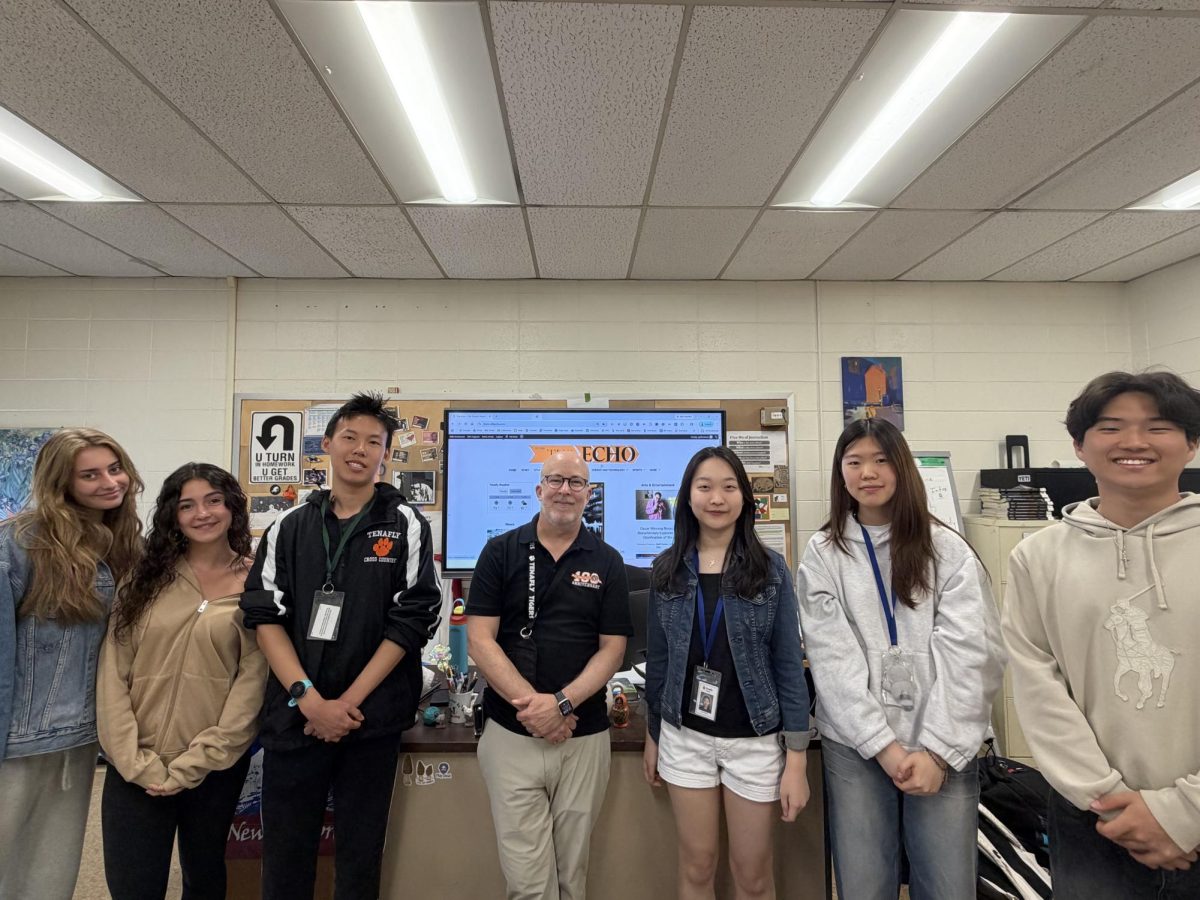
If anything, The Echo has given me a community, one that exists in passing comments, inbox notifications, and conversations I never planned to have, but now can’t imagine missing. I’ve learned more about people through working with them than through simply conversing. I’ve observed their interests through the genre of stories they publish. I’ve observed how quickly they respond when an article is requested. I’ve observed how their voices shift depending on what they care about most. And slowly, without meaning to, I’ve started recognizing not just what people write, but who they are becoming through it.
And still, even now, I hesitate to call myself a “storyteller.” My anecdotes don’t always land the way I want them to. I still rewrite sentences in my head long after they’ve been published. I second guess my speech hours after the conversations have ended. But somewhere between the first article and the fiftieth, that discomfort started to feel less like failure and more like a part of the process. The Echo, rather than asking for perfection, actually demanded presence—showing up, putting something on the page, trusting that even unfinished thoughts had value.
Fifty articles later, I can’t pinpoint a single defining moment in my journey, but rather a collection of them. Late nights spent chasing a deadline that always seemed closer than it was. Cracking under pressure and hoping that the editor would have sympathy (it tracks considering that I’ve never been a wonderful test-taker). Blank documents that stayed blank longer than I’d like to admit. The quiet, almost surreal satisfaction of seeing something published. Something that, hours before, existed only in my head. Each article carries two stories: the one that’s written, and the one behind it: the process, the doubt, the small decisions that shaped it into what it became.
I used to think writing was about arriving somewhere, that eventually, I’d reach a point where everything felt effortless and certain. But it doesn’t work like that. If anything, writing for The Echo has shown me that uncertainty doesn’t disappear; it just becomes more familiar. You learn how to sit with it, how to write through it, how to trust it. My writing will never be fully satisfactory to me. Even now, with some of my most accomplished pieces, I find myself imagining what it would sound like if I just fiddled with it a little longer.
So no, this isn’t the most sentimental piece. It doesn’t tie everything together neatly, and it doesn’t pretend that I’ve figured anything out. But it is honest in the way the past fifty articles have been honest, not perfect, not always confident, but real. Because in the end, The Echo didn’t just give me a place to write. It gave me something quieter, but more lasting: the awareness that my voice exists, even when I’m unsure of it. And maybe that’s what these fifty articles amount to—not proof that I’ve mastered storytelling, but proof that I kept telling stories anyway.