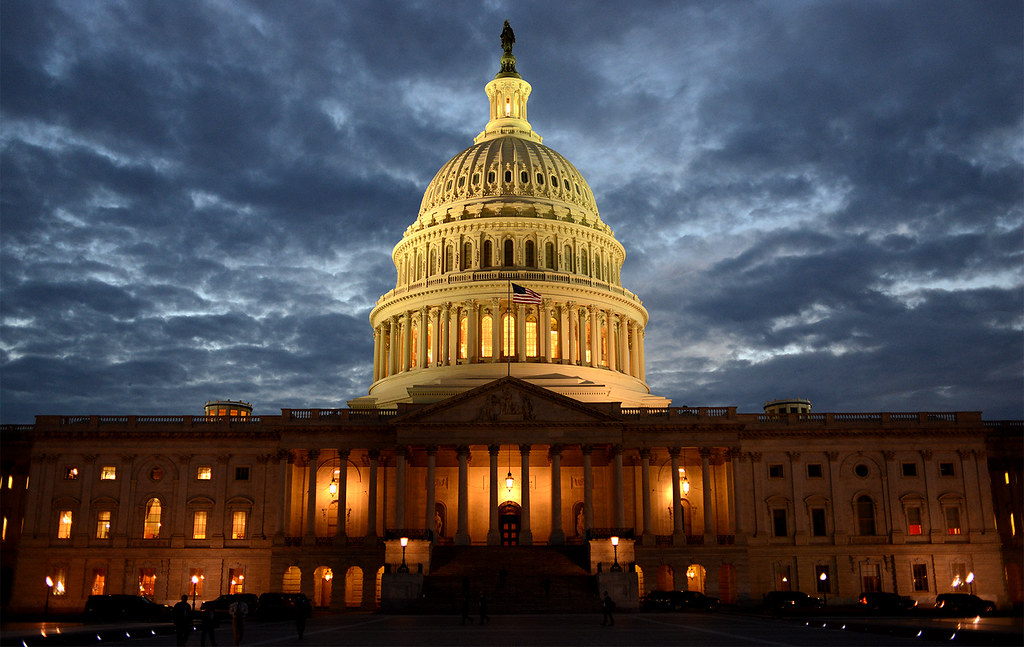
As Congress works to keep the federal government funded in early 2026, the United States continues to grapple with a growing fiscal imbalance. On Tuesday, lawmakers passed a short-term funding agreement ahead of the January 30, 2026, deadline, circumventing another government shutdown.
Under Article I, Section 9 of the Constitution, Congress regulates federal finances through its power of the purse: the capacity to spend and delegate public money for the federal government. In theory, lawmakers pass twelve annual appropriations bills before the new fiscal year begins on October 1. In practice, Congress often relies on continuing resolutions (what we are currently in), temporary measures that, by running off of the past fiscal budget, extend funding when agreements cannot be reached. This pattern has increased the risk of shutdowns since the 1990s.
In the 2025 fiscal year, the federal government recorded a budget deficit of approximately $1.8 trillion, pushing the national debt beyond $38 trillion. While deficit spending spiked during national emergencies such as the 2008 financial crisis and the COVID-19 pandemic (2020), elevated spending levels have continued even after those crises subsided.
A major agent of today’s budget strain is the cost of interest on the debt. With higher interest rates and increased borrowing, the government now spends more than $1 trillion annually on interest payments. According to Fiscal Data, this limits Congress’s ability to fund discretionary programs (e.g., National Defense, Education, and Law Enforcement) without further borrowing or tax increases, a clear example of incrementalism, where past policy decisions constrain current options.
Mandatory spending programs also add long-term pressure. Social Security, created in 1935 and Medicare established in 1965, both grow automatically as the population ages and are not subject to annual appropriations. Meanwhile, defense spending, a major category of discretionary spending, remains high due to ongoing national security concerns.
Government shutdowns occur when Congress fails to pass appropriations or continuing resolutions by the start of the fiscal year on October 1. Since 1980, the federal government has experienced more than 20 funding gaps. The longest shutdown lasted 43 days, from October 1, 2025, to November 12, 2025, closing federal agencies, furloughing workers, and disrupting services nationwide.
The budget debate is further complicated by the debt ceiling, a statutory limit on federal borrowing. Political standoffs over raising the ceiling in 2011 and 2023 brought the United States close to default, unsettling financial markets and leading to credit rating concerns, even though default was ultimately avoided.
Federal budget decisions directly affect Americans through fiscal policy, which shapes interest rates, inflation, student aid, and employment. Persistent deficits increase the likelihood of future tax hikes or reductions in government services, especially for younger generations.
The United States is not facing an immediate fiscal collapse, but its reliance on short-term funding fixes raises serious concerns about long-term fiscal stability. Whether Congress can move beyond temporary solutions and address structural budget issues will help determine the nation’s economic future.