











































































































































Districting
As midterm elections approach, states are scrambling to define districts that would affect the representatives they are sending to Congress.
State ruling parties can often draw district lines to further their political agenda, rather than fairly represent the State population—this is known as gerrymandering. To prevent gerrymandering, there are laws for how a state can district.
For example, Section Two of the Voting Rights Act, protects minority voters from racial gerrymandering. According to the U.S. National Archives, this provision requires district maps to be redrawn if they are proven to be based on racial discrimination.
Louisiana v. Callai
On April 29, disputes over the Louisiana district maps, known as Louisiana v. Callai brought significant changes to the interpretation of Section Two.
In summary, Louisiana was forced to redraw their district maps twice. The first time was because they were accused of unfairly limiting minority voices by gerrymandering a majority-black district. The second time, Louisiana was too lenient with protecting minority voices.
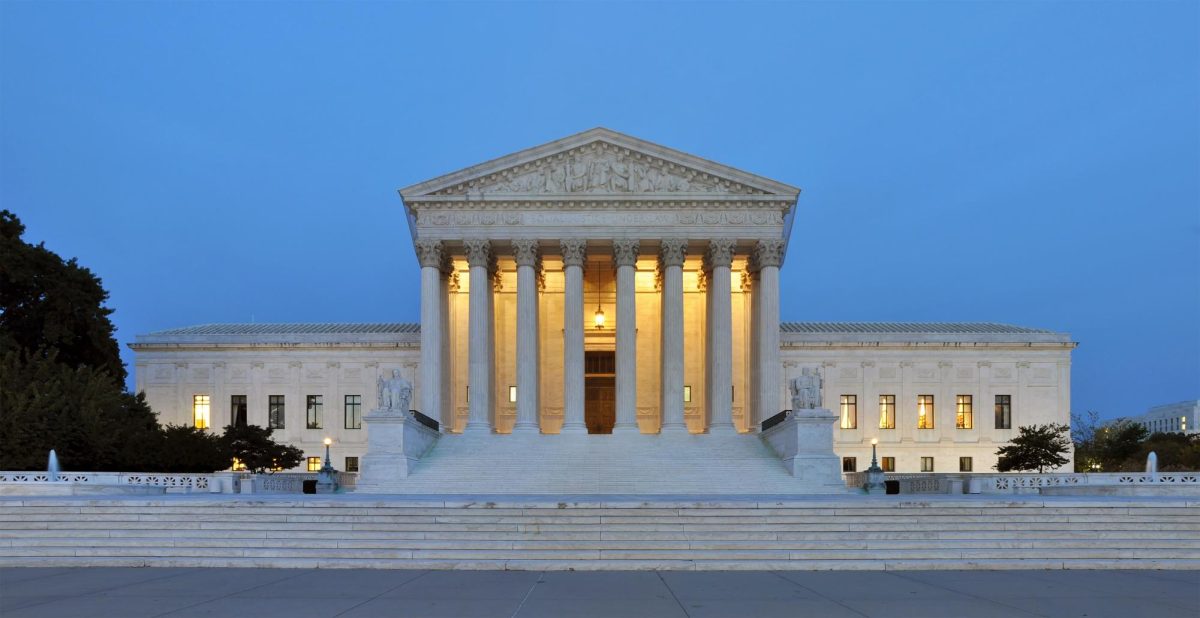
This conflict was brought to the Supreme Court, putting them in a difficult position. From one perspective, States should always ensure that minority voters are not unfairly disenfranchised. On the other hand, the Constitution hasn’t interpreted how race can be used in districting.
According to The Guardian, the majority opinion, written by Justice Samuel Alito, states that Louisiana’s map was “an unconstitutional racial gerrymander” and that “allowing race to play any part in government decision-making represents a departure from the constitutional rule that applies in almost every other context.”
As a result, the Supreme Court revisited how Section Two should be applied in redistricting cases. Invalidating a redistricting map now requires more than just evidence of minority exclusion. Rather, plaintiffs must prove that such disenfranchisement was intentional.
Eventually, by a vote of 6-3, the court raised the standard of proof for racial gerrymandering accusations. The Voting Rights Acts initially stated district maps only needed proof of racial discrimination in order to be redrawn. The Supreme Court changed it so that proving racist intent was necessary, too.
Reactions
This decision had different reactions from the Right and the Left. In general, the Right was supportive, as Louisiana Attorney General’s Office celebrated this decision: “We win in Louisiana v. Calais! The Supreme Court has ended Louisiana’s long-running nightmare of federal courts coercing the state to draw a racially discriminatory map. That was always unconstitutional.”
The New York Post agrees, calling the ruling justified as “it only limited obsessive government use of race when no one can point to any actual wrong to be righted: Some statistical incongruity isn’t evidence of discrimination, period.”
The Left’s criticism was that intent is extremely difficult to prove and this decision makes it nearly impossible to challenge discriminatory maps.
According to the SCOTUS blog, Justice Elena Kagan wrote a 48-page dissent where she stated that the Section Two was “bringing this Nation closer to fulfilling the ideals of democracy and racial equality” and this bill renders Section Two “all but a dead letter.”
The Guardian argues that because of the bill, all states have to do is insist their maps are designed with “partisan politics” in mind, and they are immune from accusations of racial discrimination.
Effects on Upcoming Midterm elections
This new ruling is especially pivotal considering the midterm elections, as many states are already applying the new ruling to redraw district lines to the political advantage of their ruling parties.
According to Reuters, Louisiana purposefully delayed its elections in order to redraw districts after the ruling was issued. Other southern states, including South Carolina and Tennessee, have also started redrawing districts, which, according to The Guardian, serve to gut the power of black and other minority voters.
Research from the Pew Research Center shows that 83% of African Americans are Democrats, providing an explanation of why black-majority districts often get unfairly gerrymandered in Republican–rather than Democratic–states.
Democratic states like Illinois, Colorado, and New Jersey have been working on new district maps that give Democrats more power. According to Axios, this is to potentially counteract the Republican gerrymandering.
As states redraw lines, this case brings a complicated issue to light. On one hand, the government should do its best to support minority voices; however, it often becomes a problem when race becomes too much of an issue in government decision-making. Ultimately, the effects of Louisiana v. Callais will continue to be discussed and shape upcoming elections.