





































































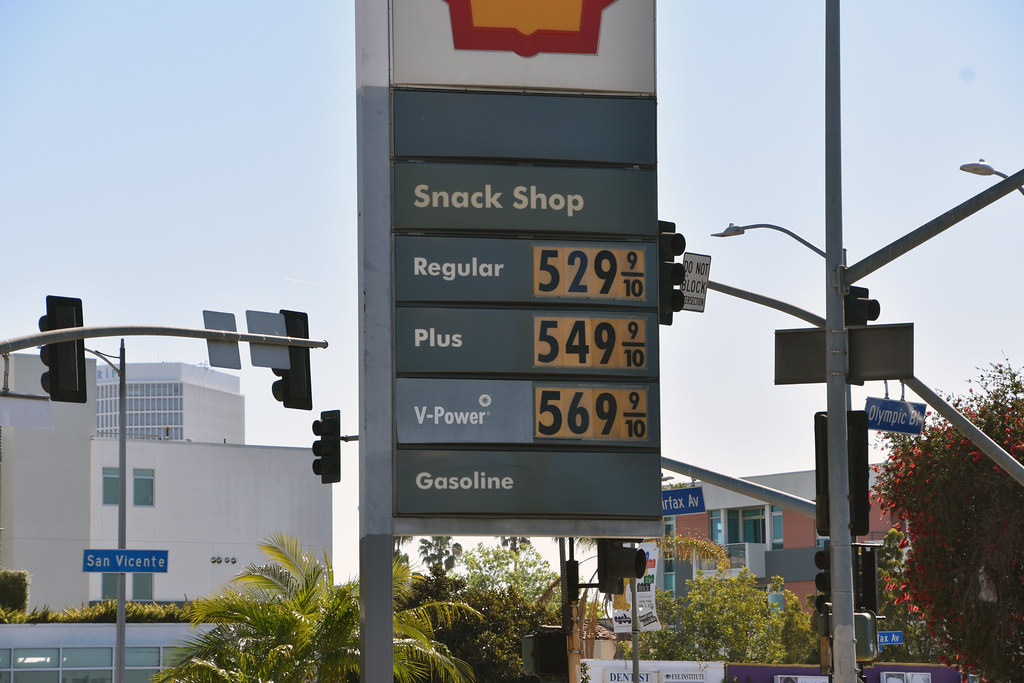
















































































As The Echo reported earlier this year, gas prices have jumped through the roof since the Iran-US conflict began on February 28. Iran has restricted tanker traffic through the Strait of Hormuz, a narrow passage where a large share of the world’s oil normally travels. But with that route now being blocked and unsafe, the global oil supply is becoming uncertain, and prices are rising quickly.
This raises several questions: If the US is currently the largest oil producer in the world, why do events in the Middle East impact gas prices in the country? Why does the US import any oil if it produces more than it consumes?
The answers to these questions are rather simple. Not all oil is the same. Oil comes in different types, and they are not interchangeable. The US primarily produces light, sweet crude, which flows easily and is ideal for making gasoline. However, much of the oil imported from abroad is heavy, sour crude, which is thicker and contains more sulfur. This type of oil is better suited for producing diesel, jet fuel, and other important products for the economy.
For the US economy to function properly, it needs a variety of these oils. However, many US refineries, particularly those located on the Gulf Coast, were designed decades ago to refine heavy crude, as stated by the US Energy Information Administration. The reason for this lies in the assumption at that time that US oil production would not increase to such an extent due to shale, which mainly produces light, sweet crude.
Due to this situation, light crude, a major component of US exports, may not be refined by some refineries efficiently; simultaneously, heavy crude from countries such as Venezuela may face the same issue. Refining facilities require tremendous costs to adjust their capabilities to refine a different type of oil, and it takes years to do so.
The West Coast adds another reason. Refineries in the West often import crude from other countries because it is cheaper and easier than bringing oil from Texas or North Dakota, according to the American Petroleum Institute. The Rocky Mountains block direct pipeline routes, and there is no major pipeline crossing them. Shipping oil by rail is possible, but it is much more expensive than moving it by oil tankers, specialized ships designed to carry large amounts of oil in bulk. Since West Coast refineries sit right on the Pacific Ocean, it is often cheaper for them to receive oil from Canada, the Middle East, or South America by ship or other means of transport.
This brings us back to the Strait of Hormuz. While the US does not depend on Middle Eastern oil as much as in past decades, many countries still depend on it significantly. According to the BBC, about one‑fifth of the world’s oil supply normally passes through that strait. When Iran blocks or threatens it, countries in Asia and Europe worry about running short and start buying oil from other regions, including the Americas, directly increasing global demand and pushing up the world price of oil.
The price of oil is thus set by international markets. That means American oil companies sell their oil at the global price, not a special lower price just for the US. So when the world price rises, the price of US oil rises as well. Even if we produce enough oil for ourselves, we still pay the global price.
As a result, being the world’s largest oil producer does not protect the US from global events. Oil is a global commodity, and its price is set by global supply and demand. As long as the world depends on routes like the Strait of Hormuz, disruptions there will continue to affect gas prices here in New Jersey.