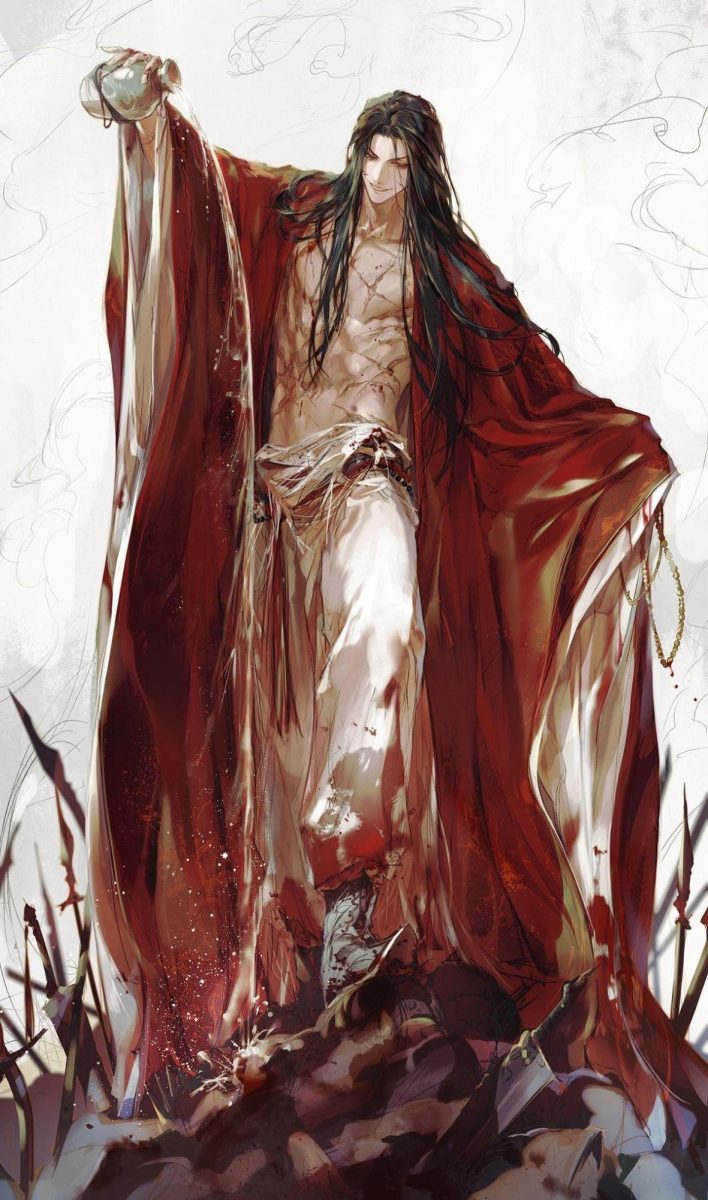
































































































































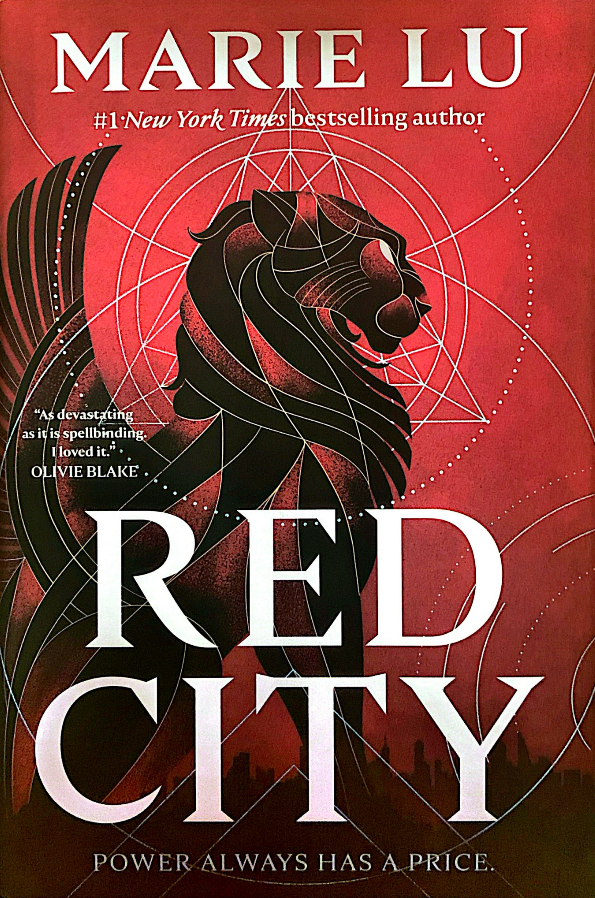
When I pick up a book I want to read next, I’m almost always drawn to the bestselling, most-reviewed book. The accumulation of positive reviews assures me with the thought that I won’t be wasting my time with something I don’t like. This was not the case with Red City by Marie Lu, which was published last October. While Lu, as an author, is popular and highly rated, I heard nearly nothing about her new release. Unfortunately (or fortunately), I did judge a book by its cover and assumed this book would be a smashing hit only because I wanted to have a physical copy of this breathtakingly beautiful edition. But I am so glad I did, because Red City by Lu is one of my favorite reads of the year.
This story is set in an alternate Los Angeles, named Red City. In this world, the most lucrative business is the production and selling of Sand, which is an alchemical, addictive drug that enhances everything about a person—their strengths and weaknesses alike. The companies producing this drug are a multitude of different crime syndicates, but we specifically follow the rival syndicates in Red City, Grand Central, and the Lumines. Only agents of these syndicates have the magical ability to create Sand and are trained in other magical capabilities.
The magic system is one of my favorite aspects because it’s heavily based on alchemy, which is what scientists called chemistry before realizing that what they were seeing wasn’t magic but pure science. In Red City, an Alchemist can make chemical reactions without the bonding of any other substances or a form of heat. For example, they can construct a metal gun out of a brick wall simply by touching the wall. Reading other fantasy books has made me come to expect vague explanations for magic systems, but I was delighted to see the refreshing detail Lu put into explaining the way alchemy in this world works. I suddenly found myself reading about chemical reactions with a focus and speed I’d never had for assigned work.
The plot revolves around two childhood friends, Ari and Sam, who are polar opposites. Ari is charismatic and always draws the eyes of everyone in his vicinity. In contrast, Sam always seems to stay in the background. As the pair grow older, Ari joins The Lumines, and Sam becomes a vital part of Grand Central, unbeknownst to each other.
This book is known to be a combination of The Godfather and Romeo and Juliet, which I find very accurate.
Contrary to my former boasting of the novel, I wasn’t enamored with it from the beginning. While I now love this novel, I don’t think it’s without its flaws. In the past, Lu has only written books within the young adult genre, and it shows. At times, her tone and writing style felt very YA to me, while the subject matter definitely was not meant for young adult audiences. This created an odd combination that wasn’t the most enjoyable as it produced an out-of-place feeling. That being said, the tone was no longer a problem once the characters aged into adulthood and the prose felt more natural and well-suited to the events happening. Not to mention, Lu’s prose is addictively fast-paced, and enchanting.
Aside from the writing, Lu incorporates vital themes such as addiction, privilege, inequality, and the cost of perfection. Seeing how these themes are inflicted on the characters and mirrored in their experiences was one of the biggest causes for this book’s profound emotional depth. Lu’s most recent publication further proves something that has also been apparent in her other novels—she has always been capable of writing upstanding social commentary on world issues and internal psychological matters that make her readers think.
All in all, I was shocked by how much I loved this book. Coming off the high of it was nearly as hard as I imagined coming off the high of Sand would be. Regrettably for me and all lovers of this story, Lu finishes off this novel with a teeth-gritting cliff-hanger that sets the stage for the next book in the series. And while judging books by their covers is a literary offense, it worked for me this time. So believe me when I say this book is as good, if not better, than its cover.