
































































































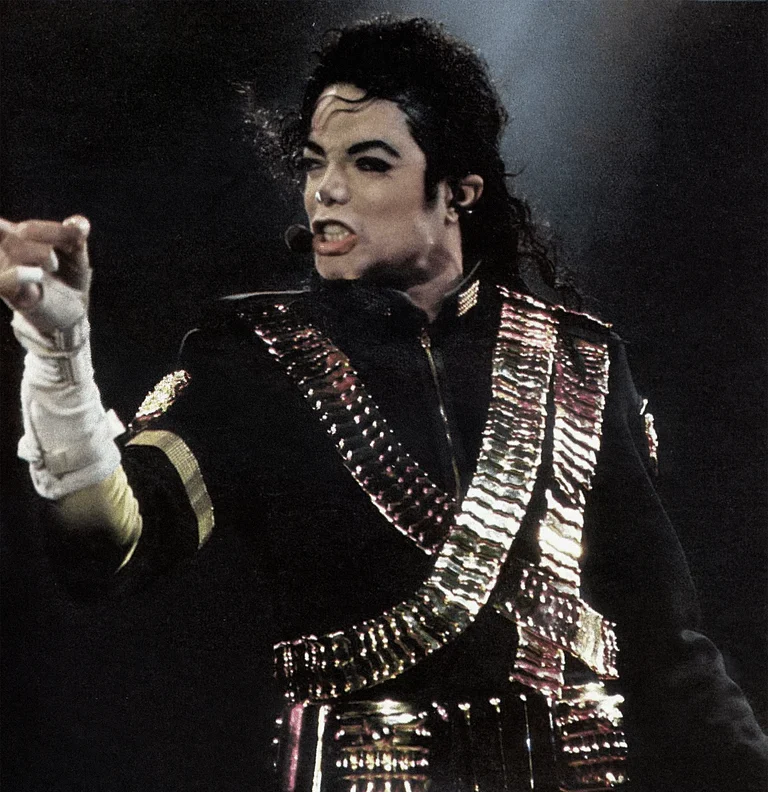
On April 24, Michael hit theaters, reigniting the global obsession with the King of Pop, nearly two decades after his death. The film is, in many ways, flawless and breathtaking. But it’s what the movie chooses not to show that leaves room for criticism.
The story follows young Michael Jackson (Juliano Valdi) from his years as a child star in The Jackson 5 to the height of his career in 1988, portrayed by 29-year-old Jaafar Jackson. At its core, the film centers on Michael’s turbulent relationship with his father, Joe Jackson (Colman Domingo), whose physical and economic abuse looms over much of Michael’s rise to fame.
The emotional foundation works wonderfully in this movie, primarily due to how convincingly it’s brought to life on screen. The acting is nothing short of phenomenal. The decision to cast Jaafar Jackson, Michael Jackson’s nephew, sparked debate, but the moment he appears on screen, all doubt disappears. There were multiple times when I completely forgot I was watching an actor because I felt like I was watching the Michael Jackson himself.
While Jaafar has received most of the praise, Juliano Valdi’s performance as young Michael deserves just as much recognition. His portrayal is emotional, raw, and deeply convincing. Meanwhile, Colman Domingo delivers a chilling performance as Joe Jackson, instilling fear in both Michael and the audience every time he appears on screen. Every emotion Michael felt—joy, fear, sadness—was mirrored by the audience watching him.
Even for viewers less interested in the plot, the movie offers something undeniably good: two hours of listening to some of the greatest music ever made. What surprised me most was learning that both Jaafar and Juliano performed the songs using their own voices. I had assumed they were lip-syncing or layered over original recordings, but their vocal performances only add to the film’s authenticity.
Seeing how Michael’s most iconic performances were created was one of the most captivating aspects of the movie. Watching the choreography come together piece by piece felt surreal, like witnessing the creation of a masterpiece in real time. At moments, I caught myself nodding along to the beat, feeling less like I was watching a movie and more like I was at a live concert resisting the urge to stand up and dance.
However, despite all its strengths, the film is far from perfect. The narrative builds toward Michael finally standing up to his father, positioning Joe as the clear antagonist to Michael’s knight in shining armor. That conflict is handled incredibly well, but once it reaches its climax in 1988 with Michael performing “Bad”—the peak of his career—without warning, the screen cuts to black. Credits roll. The ending is shockingly abrupt, leaving the story feeling unfinished without any resolution.
This sudden cutoff becomes even more frustrating when considering everything the film leaves out. With a family member as the lead, it’s clear why the movie avoids Michael’s more controversial moments, but the omissions are impossible to ignore. Janet Jackson—Michael’s little sister and present-day singer—is completely absent from the narrative. There’s no mention of Diana Ross, whom Michael openly admired and confessed to loving. The film focuses so heavily on his conflict with Joe that it leaves no room to explore tensions within the Jackson brothers themselves.
But, most significantly, the movie avoids the darker chapters of Michael’s life: his struggles with addiction, which ultimately led to his death by overdose, and the child sexual abuse allegations that defined much of his later public image. By ending in 1988, the film cuts off two entire decades of his life—two decades that are essential to understanding the full complexity of who Michael Jackson really was.
Regardless of whether you agree with the film’s selective storytelling, Michael proves one thing: Michael Jackson’s legacy is still very much alive. His influence, his music, and his fandom continue to grow, even years after his passing. With a second part of the biopic already in development, there’s hope that the next installment will dive deeper and present a more complete portrait of the man behind the legend.