
















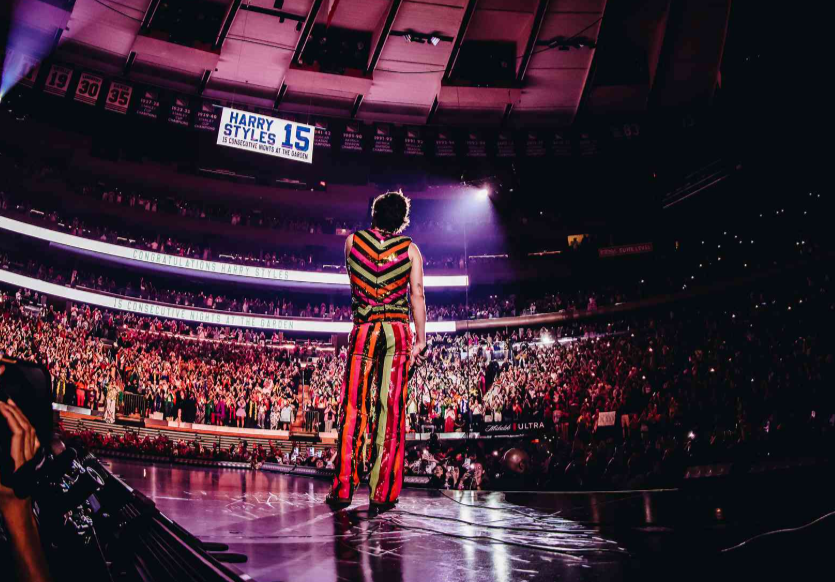



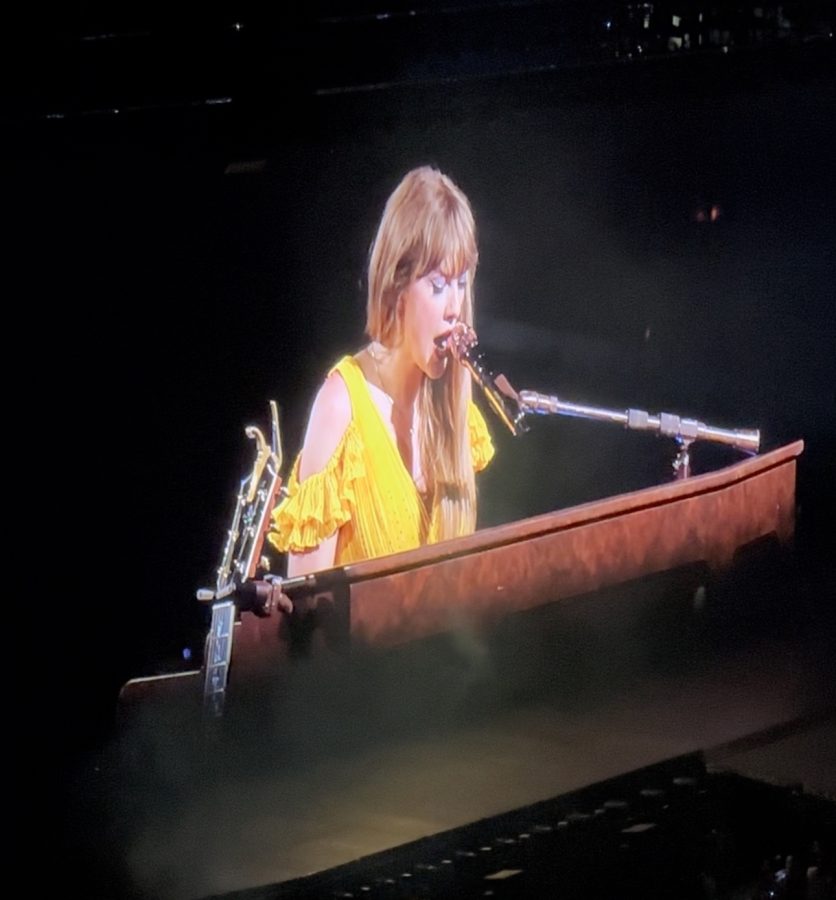
































































































By settling in Madison Square Garden for a months-long residency, Harry Styles is redefining what a modern pop tour can look like. Instead of racing from city to city, he is building momentum in one place. He treats New York not as a stop on a map but as the centerpiece of his return to live performance.
Styles’s run at Madison Square Garden is a part of a broader shift in the music industry toward extended residencies rather than traditional touring. Residencies have been used in part to minimize costs and health risks, and they also create opportunities for custom, venue-specific touches. Styles is performing every Wednesday, Friday, and Saturday from Aug. 26 to Oct. 31, and by the final show, he will have played 52 times, according to The New York Times.
Beyond logistics and economics, Styles’s Madison Square Garden residency reflects how live music has become as much about atmosphere as performance. By constantly returning to the same stage, Styles can refine his show, develop inside jokes with his audience, and create a sense of continuity that a traditional tour rarely allows. Fans are not just attending a concert; they are participating in an evolving event, where each performance feels connected to the last. At the same time, the Garden benefits from the cultural energy Styles brings, transforming the arena from a neutral venue into a destination associated with his artistry. Together, artist and arena reinforce each other’s identities, suggesting that residencies may shape the future in the music industry.
“He gets better every time I see him, which naturally feels impossible, but somehow he does it,” Jai Phillips, a Styles fan said, according to Pop Dust. “Every concert features new note changes, a full horn brigade, and every new outfit change sends the crowd into certain pandemonium. It’s Harry Styles’ world and we really are just living in it.”
However, many European fans feel betrayed. Since most of his world tour is going to be spent in New York, the majority of his European fan base is at a disadvantage. With exorbitantly high ticket prices and the cost of travel, many fans do not want to make the trip. Some fans have taken to social media to express frustration over the lack of accessible concert dates. For many fans, the residency feels less like an opportunity and more like a reminder of how unreachable the tour has become.
One Reddit user expressed her frustration to Newsweek, saying, “I love Harry Styles, but as fans we are still allowed to criticize him and not put him on a pedestal. These prices are robbery.”
While Styles’s residency offers a unique experience, it also shows the growing tension in live music between accessibility and exclusivity. Limited runs and fixed locations can turn concerts into coveted events. They narrow the audience to those with the money and proximity to attend. As a result, live music is starting to follow a larger trend in which limited access is what makes an experience feel special.
Styles’s Madison Square Garden residency shows how music is evolving beyond the traditional tour. By committing to one venue, Styles will be able to create a deeper, more continuous experience for fans while also reshaping expectations for artists. As residencies grow more popular, they may redefine live music not just by how memorable the event is but by who is able to be a part of it.