






































































In Los Angeles, the street lamps along Beverly Boulevard bear a bittersweet message: “Gracias Gustavo.” Meanwhile, 3000 miles east of LA, the marquee at Radio City Music Hall erupted in a roar from the crowd, usually reserved for rock stars.
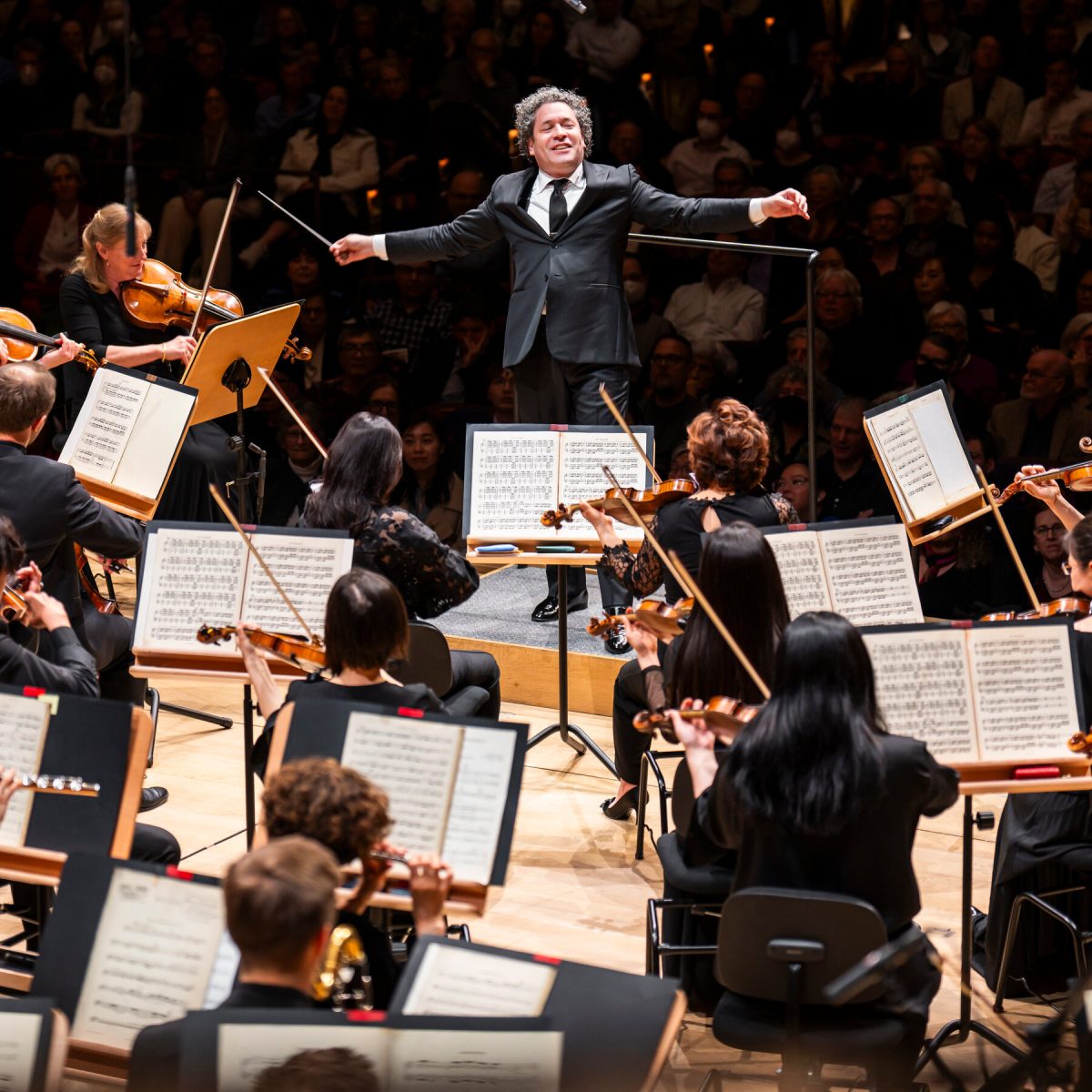
Gustavo Dudamel, the 45-year-old conductor who has become as synonymous with Los Angeles city as the Hollywood sign itself, is in the middle of one of the most high-profile transitions in the music world. According to The New York Times, he prepares to conclude his 17-year tenure with the Los Angeles Philharmonic this summer and take the podium as Music and Artistic Director of the New York Philharmonic in September 2026. He describes his current state of mind with a shrug, stating, “I am in two waters.”
The contrast between Dudamel’s two worlds was recently captured in a grand fortnight of performances. In New York, he led the NY Philharmonic at Radio City Music Hall, debuting a new sound with a program of American staples like Bernstein and Gershwin, joined by Broadway legend Bernadette Peters. Two weeks later, he was at his musical home—the Walt Disney Concert Hall—collaborating with Academy Award winner Cate Blanchett for a reimagined “Egmont.”
The vibe of the cities, Dudamel notes, is the primary difference. As stated by The New York Times, he describes NYC as “prestissimo”—a very fast tempo—while Los Angeles has been his site for a deep, 17-year growth as both a musician and a person.
For Southern California, the departure is more than a change in leadership; it feels like the loss of a legend. Former Mayor Eric Garcetti noted that Dudamel is a “cultural pillar” who helped define the city’s identity for almost two decades. To honor this history, Dudamel has filled his remaining schedule with tributes to the region, including programs devoted to Judy Baca’s “Great Wall of Los Angeles” mural and a final Disney Hall performance of Wagner’s Die Walküre, featuring sets made by his late friend, the architect Frank Gehry. His tenure will officially end in August at the Hollywood Bowl with Beethoven’s Ninth Symphony—the same work that marked his debut early in 2009.
While Los Angeles prepares to find a successor—with Esa-Pekka Salonen returning as creative director in the interim—New York is already feeling the “Dudamel Effect,” according to The New York Times. The New York Philharmonic, which has not seen this level of superstardom since Leonard Bernstein, is planning an ambitious welcoming event.
“Gustavo’s extraordinary imagination, his passion for the New York Philharmonic, and his love for New York City come together to shape a season that embodies his artistic vision,” said Matías Tarnopolsky, the orchestra’s president and chief executive.
In a move that unites two of the city’s most prestigious institutions, Dudamel has already announced a five-year Opera-in-Concert project with Carnegie Hall. This initiative will bring annual operatic presentations to the Stern Auditorium, beginning with Puccini’s Tosca in November 2026, featuring a powerhouse cast including Marina Rebeka and Jonas Kaufmann.
Despite the commemorative T-shirts in Los Angeles and the high-stakes planning in Manhattan, Dudamel remains grounded as he always has, performance after performance. Just as he did when he arrived in California as a young visionary, he insists on letting the relationship with New York evolve naturally. “Everything happens in a very natural path,” he said. For now, he remains the musical bridge between two coasts—carrying the warmth of the West to the high-paced energy of the East.
Having followed Dudamel’s career for years, I find it impossible not to be swept up in the energy and excitement of this move. Walking past David Geffen Hall every Saturday during my studies at Juilliard as a violinist, it’s inspiring to realize that one of the most dynamic conductors and someone I have watched since starting music will very soon be just a few doors away. When November arrives, I know I will be in that audience—not just witnessing a debut, but the beginning of a new musical chapter unfolding in real time.