

















































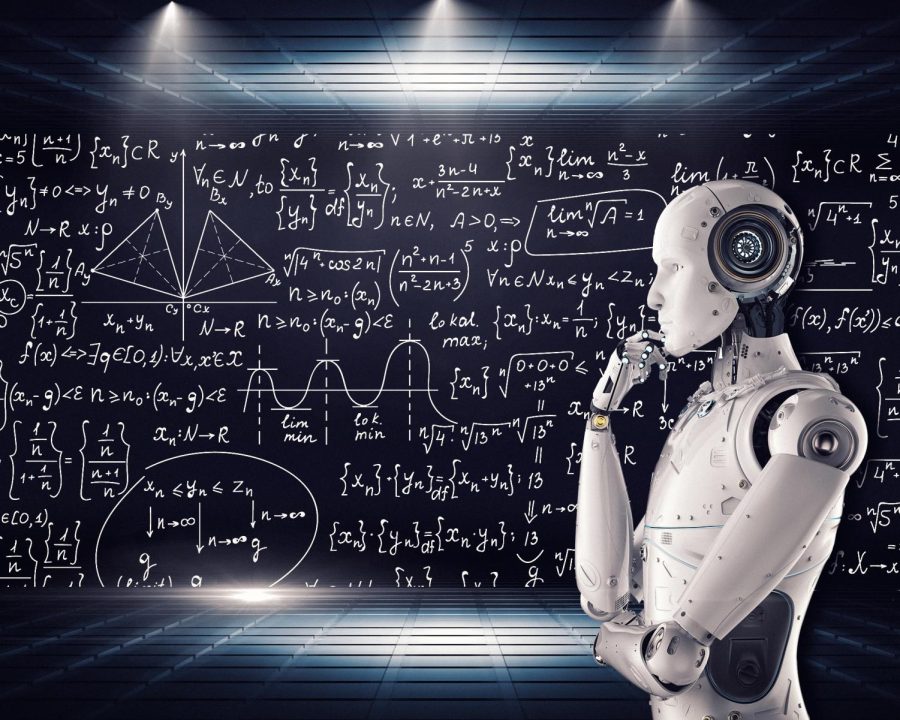






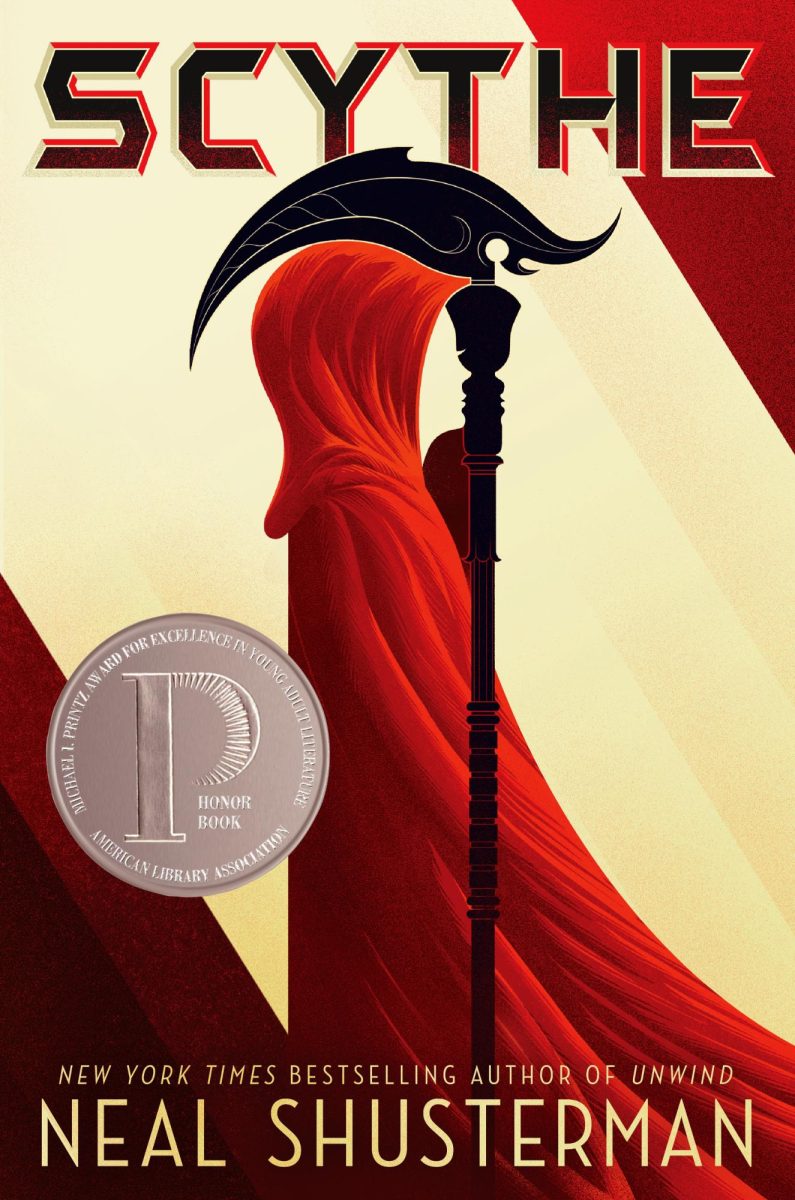
















































Scythe by Neal Shusterman is a fascinating dystopian novel that possesses both action and suspense. The story takes place in the future during a time when humanity has gotten rid of all disease, aging, hunger, and even death through natural causes. A powerful artificial intelligence called the Thunderhead governs society peacefully, and people can be revived after accidents or injuries. However, because the population would grow endlessly in a world without death, a group called the Scythedom is given the responsibility of gleaning, or permanently killing, people to maintain balance. The book has two main characters, Citra Terranova and Rowan Damisch, two teenagers who are chosen to be apprentices under Scythe Faraday, a respected scythe. Although neither of them wants the position, they are forced into a dangerous, dark, and hidden world that changes their understanding of morality and power.
One of the most impressive aspects of Scythe is its distinct story plot. Many dystopian novels focus on societies destroyed by war, poverty, or dictatorship, but Shusterman creates a world that seems almost perfect. People are free from suffering, and technology has solved nearly every problem humanity once faced. This unusual setting makes the novel more interesting because the main conflict is not a protagonist trying to survive in a ruined world, but the problem of deciding who deserves to die in a world where no one dies naturally. The idea of the Scythedom raises difficult questions about justice and morality. Even though scythes are supposed to act fairly and without bias, the novel shows how power can corrupt people and how different individuals interpret morality in different ways.
The characters are another key part of the novel. Citra is intelligent, independent, and compassionate. She constantly questions the system around her and refuses to lose her humanity, even during difficult situations. Rowan, on the other hand, begins the story feeling invisible within his own family and society. Throughout the novel, he struggles with self-worth and the heavy burden of being an apprentice of the scythe. Their personalities are very different, but both characters develop significantly over the course of the story. Readers become emotionally invested in their journeys because their fears and emotions feel realistic.
The scythes themselves are also complex and memorable characters. Scythe Faraday believes gleaning should be done with dignity and compassion, while other scythes view killing as entertainment or a way to gain influence. This difference in views reveals one of the book’s themes: that power can either be used responsibly or abused. Scythe Goddard, in particular, represents corruption and cruelty within the Scythedom. His actions throughout the novel treats human lives as meaningless like mere objects of entertainment.
Another reason Scythe is so engaging is its pacing and writing style. The story moves quickly, balancing action scenes with deeper philosophical discussions. The journal entries written by different scythes between chapters are especially effective because they provide insight into different viewpoints about death, morality, and humanity.
Overall, Scythe is an exciting novel that stands out from other dystopian books because of its unique premise and deep moral issues. Neal Shusterman successfully creates a world that feels both futuristic and believable while exploring timeless questions about power, justice, and the value of human life. The novel’s characters, suspenseful plot, and philosophical themes make it an enjoyable read. It is a book that leaves a lasting impression long after the final chapter.