
























































































































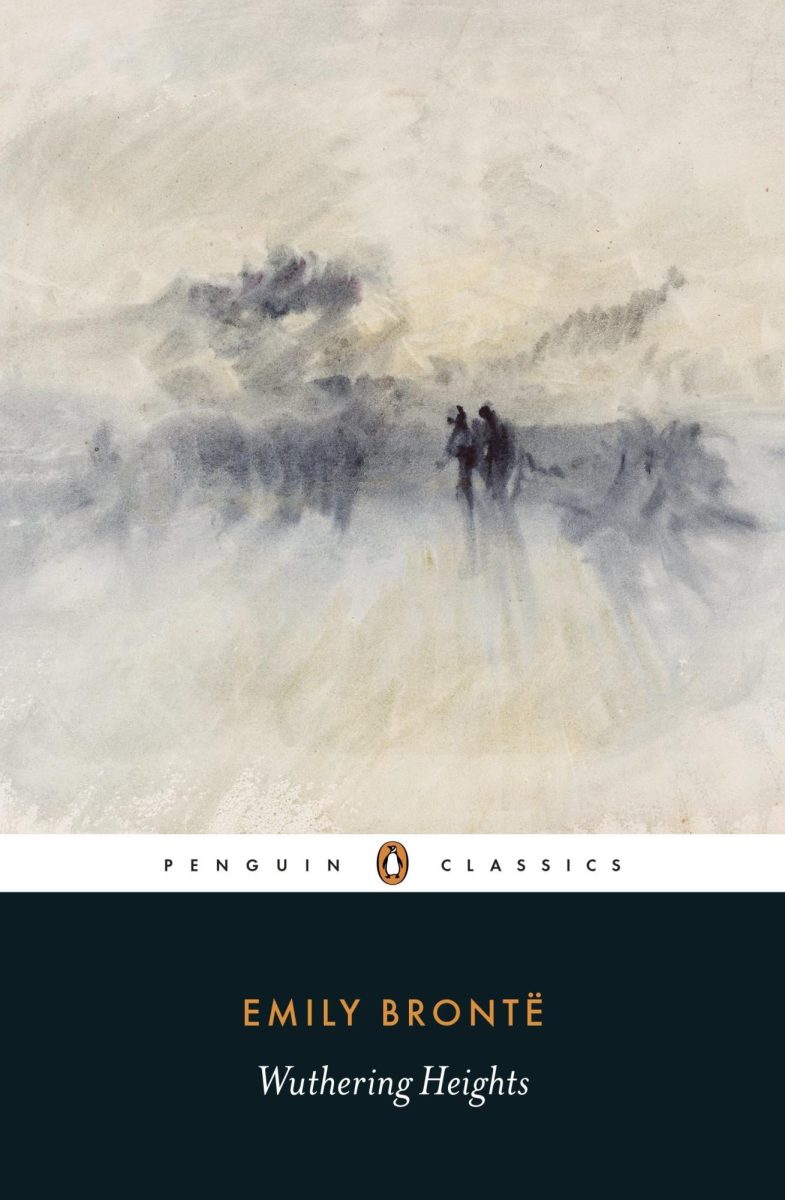
Wuthering Heights has completely changed how I view classic literature. I expected it to be the kind of book you read because you have to, but Emily Brontë’s novel broke through the label of “boring” that most classic books seem to have.
Brontë creates characters who are deeply flawed, emotionally complex, and difficult to organize into the simple labels or “tropes” that modern literature often seems to perpetuate. Brontë’s characters are unpredictable, messy, and human in a way that feels real to the readers. Their choices, desires, and mistakes are portrayed candidly without any sugarcoating. As a reader, this drew me in more. I found myself deeply engaged with the challenge of fully understanding the characters and how my perception of them shifts with every read.
Wuthering Heights follows the lives of two families living in the isolated Yorkshire moors and the love story of the characters Catherine Earnshaw and Heathcliff. The story is told through multiple narrators and passes through different generations, giving readers an understanding of different family dynamics and relationships. The moors are a reflection of the character’s emotions, which makes the story feel even more alive.
Emily Brontë’s sister Charlotte Brontë, the author of Jane Eyre, may be the more familiar of the two, but both sisters challenged the strict expectations placed on women in Victorian society through their novels. Jane Eyre is a clear staple of feminist literature; yet, Wuthering Heights is also not to be overlooked. While Jane Eyre shows a clearer journey towards independence and self respect, Emily Brontë takes a darker and more unconventional approach that makes the novel all the more intriguing. She allows her female characters, such as Earnshaw, to be characterized as passionate, defiant, and outwardly messy in a way that doesn’t fit the mold of a perfect heroine in Victorian times. Through Catherine, Emily shows that women’s emotions are complex and that female characters are not easily understood, as they come with multiple layers that need to be peeled off.
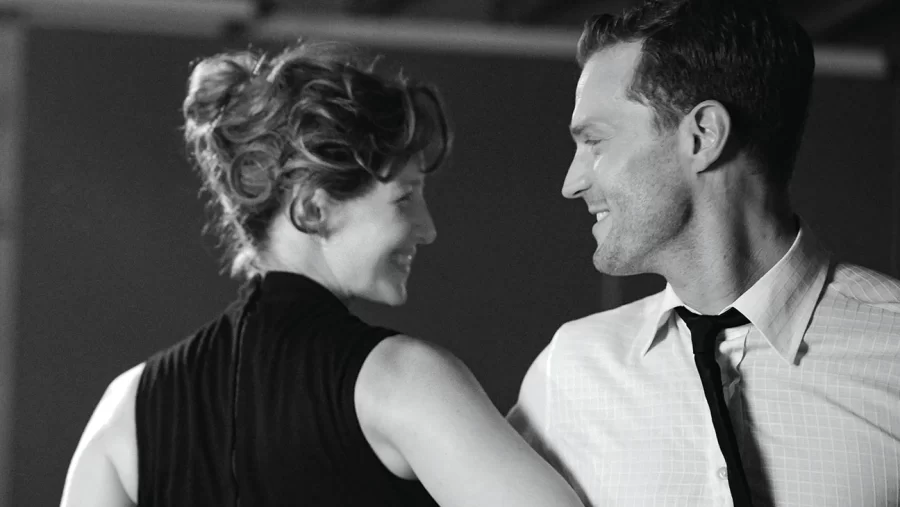
This boldness is why Wuthering Heights still feels relevant nearly 180 years later and continues to be adapted in modern mediums, with a new film directed by Emerald Fennell set to be released on February 13. Actors such as Margot Robbie and Jacob Elordi will take part in her creative vision. The fact that people are still revisiting the story shows how ahead of her time Emily Brontë truly was.
Wuthering Heights is not an easy or comforting read, but that’s what made it so memorable for me. As a high school student, it was refreshing to read a classic that didn’t talk down on its audience or feel overly stuffy, and Wuthering Heights is a testament to how classic literature can still feel both exciting and dramatic.