














































































































































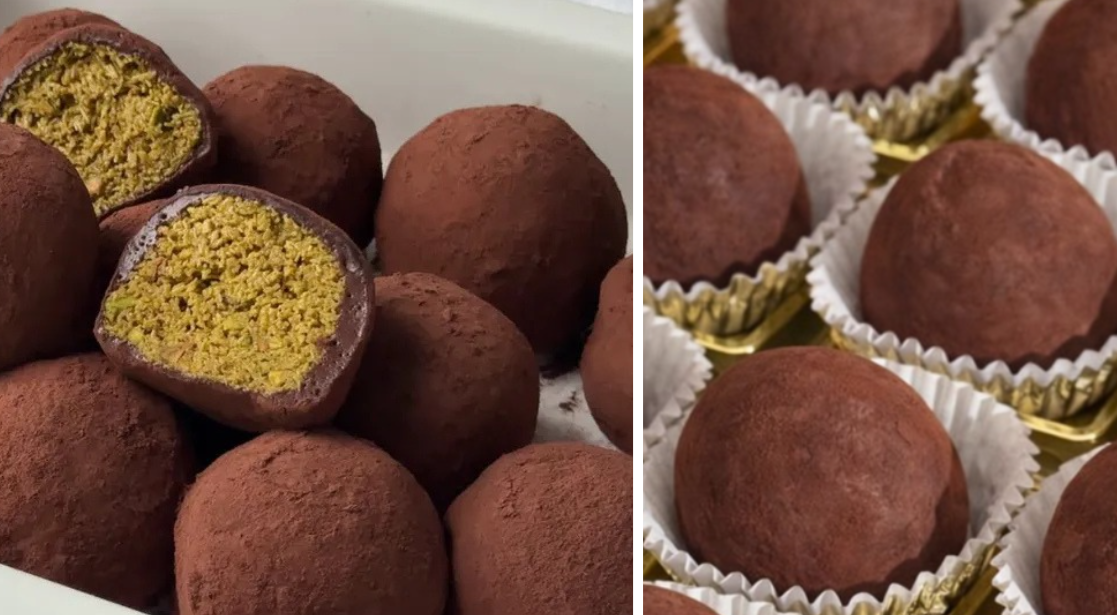
An indulgent, pistachio-filled confection shelled in a rich chocolate casing: sound familiar? The original debut of “Dubai chocolate” has been rewarded with international acclaim and a devoted following that continues to applaud anything Dubai, even today. These treats are not the usual fleeting phenomenon, however, but have cemented themselves in the food industry as an enduring presence. Whether consumers stroll through grocery aisles, shop at the mall, or even scroll through social media, they’re bound to see some interpretation of this pistachio dessert. In times such as these, “Dubai” seems to be stuck onto every single item on a food vendor’s menu. Now, a new twist on the decadent bar is spreading like wildfire in South Korea. A Dubai-style chewy cookie (dujjong-ku) basks in worldwide praise and is yet another sensation that keeps the Dubai craze alive and thriving.
Dujjong-ku features a crunchy kataifi and rich pistachio cream core wrapped in melted marshmallow and dusted with cacao powder, a satisfying bite that strikes the perfect balance of sweetness and chewiness. Even before it reaches your mouth, your nose is met with a nutty, chocolatey, and warm aroma you wish you could bottle up as a perfume. The treat is like a chewy cloud in your mouth; a unique texture that might charm even the most loyal fans away from the Dubai bar’s crunch. It’s a treat that delights and satisfies both you and your taste buds.
If anything, it resembles and tastes more like a traditional rice cake than a cookie, but this sticky delight has lifted South Korea from its recent slump in consumer spending. According to the South China Morning Post, a 21-year-old college student named Lee Seo-eun traveled two hours from her campus just to get a taste of the cookie. Before the sun even rises, buzzing mobs of people are already lined up, longing for one thing: a Dubai chewy cookie. This cookie has singlehandedly sparked passionate hunts, turning into lucrative opportunities for companies. With demand soaring, dujjong-ku’s availability is scarce, evident in reports such as The Korean Herald, which have noted that an overnight batch of 200 to 300 units sells out within a few short minutes of opening. Scoring a chewy cookie is a rare gamble; by the time you reach the front of the line, you can only hope they haven’t all vanished.
The national frenzy and clamor for dujjong-ku have triggered supply chain shortages and inflation. Star ingredients, such as pistachios, have seen significant price hikes, with The Korean Herald describing an increase from $8 to $12 per pound. Ingredient expenses alongside the cookie’s growing fame have forced many businesses to stop selling it. In Seoul, one dujjonku is now sold for between 7,000 won ($4.75 US) and 13,000 won ($8.85 US)—an all-time high in prices. It’s an irresistible treat and an equally irresistible business opportunity for bakeries, cafes, and companies. Yet, dujjong-ku’s success hasn’t left a sweet aftertaste for everyone to enjoy.
Dujjong-ku’s skyrocketing reputation is another heir to South Korea’s viral food culture lineage alongside tanghulu and honey butter chips. Trending Korean desserts share a common hallmark: they are visually overwhelming, grand, and heavy. To be successful as a food, even a single image or post of you must be sensational in itself. Exaggeration, abundance, or anything that captivates the camera, sends social media abuzz, and steals the public eye is a sure winner. Accordingly, the food industry invests in the largest, most plentiful, most expensive players. As of recently, this Dubai chewy cookie has been dominating Instagram and social media feeds–and garnering fans all across the globe.
Whether dujjong-ku fizzles out as a quick trend or secures a permanent spot in South Korea’s dessert hall of fame, one thing’s for certain: the Dubai frenzy continues to grow–one pistachio-stuffed sweet at a time.