



















































































































































“Oh, teen boys don’t like reading; that’s just how things are.” That sentence summarizes one of society’s most popular perceptions about boys, and honestly, who can blame it? From personal experience, as readers mature, most books, especially fantasy novels, gradually begin to incorporate more romance into plots that would have otherwise worked perfectly without it. In fact, some novels, such as Fourth Wing or A Court of Thorns and Roses, center the entire plot around the romantic relationship of the main character. That is another issue with YA fantasy books; as readers grow older, female perspectives are prioritized by the publishers/writers of the genre. While I believe that this is not necessarily a bad thing, it leaves boys who are new to reading stranded with a main character that they do not necessarily relate to and a plot line that does not cater to readers looking for a more action-driven story.
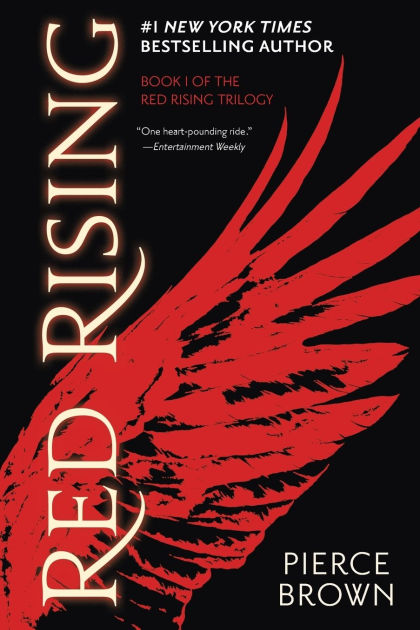
That, however, is where Red Rising comes in, which is the first novel in the trilogy by the same name. It is an excellent beginner book in the dystopian/fantasy genres, packed with action and world-building throughout. While romance does play a part in the trilogy, it does not take center stage like in many other novels, which is something I really appreciated. For me, Darrow was the first character whose personality I could relate to, which contributes to my overall belief that Red Rising is one of the greatest pieces of dystopian literature ever written. In my book (pun intended), it ranks well above more popular series, such as The Hunger Games or Divergent, simply because of how real it is with the reader, making it feel more like a realistic future than either of those novels.
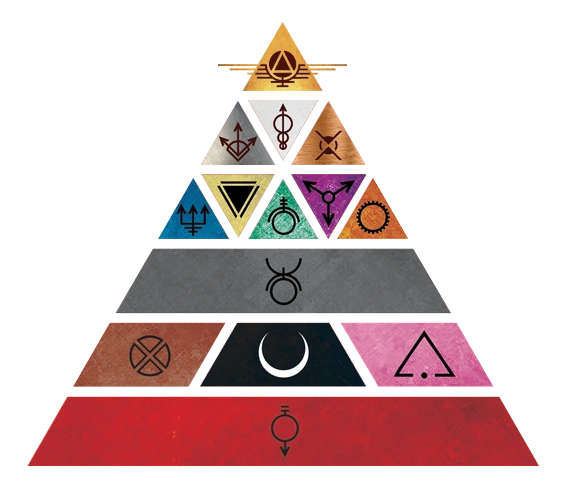
Silver: Businessmen
White: Priests/Clergy
Copper: Lawyers & Bureaucrats
Blue: Spaceship Crew
Yellow: Doctors
Green: Programmers & Technology Specialists
Violet: Artists & Creatives
Orange: Mechanics/Engineers
Gray: Soldiers/Police
Brown: Servants
Obsidian: Elite Military Forces
Pink: Concubines/Pleasure Slaves
Red: Laborers & Miners
Now, enough with my rambling, let’s get to the actual plot. In the world of Red Rising, the main governing body of the Solar System is based on the Roman Empire, with all citizens being separated by an inherited caste/color which determines their rank and profession in the Society. The story follows Darrow O’Lykos, a helldiver in the mining colony of Lykos on Mars, a job that requires him to dive into helium-3 deposits (a fuel used in spacecraft). Just like the rest of the LowReds, Darrow is indoctrinated by the Gold elite, who use propaganda to convince the Reds that they are the pioneers of Mars, responsible for making it habitable for “less resilient” colors.
Originally, Darrow consumed all of these lies willingly. This all changed after he and his wife, Eo, were caught by the Grays (security/military) and brought forth for a whipping, which the Archgovernor Neo au Augustus attended. At the lashings, Eo was then sentenced to death by hanging for singing the forbidden song. Stricken by grief, Darrow attempts to commit suicide by hanging, but he is kidnapped and recruited as a spy by the Red resistance movement, the Sons of Ares.
In this new chapter of his life, Darrow, motivated by his wife’s last wish to bring down the Republic, is tasked with infiltrating the Republic’s Military Institute, the Academy, where he is to help undermine the government from the inside out. In order for the infiltration to happen, the Sons modify Darrow’s body to look like a Gold (i.e., 7 feet tall, muscular, blonde hair, golden sigils) through extensive surgery and his mind through speed tutoring. All of this (and more) makes Red Rising different from other dystopian novels, especially when tackling heavy topics such as morality, handling grief, and class oppression.
As I’ve mentioned before, Red Rising has everything a good book needs: a well-developed theme, interesting characters, and a plot smothered with action. While the beginning can be described as a bit slow at times, the Academy is filled with new challenges, adversaries, changing loyalties, a hint of romance, and yes, betrayal from those who you’d least expect (no spoilers!). Furthermore, it does all of that while emphasizing an allegory to racism, the effects of limited free speech, and the inevitable decline of all “golden” (pun intended) empires. If you’re in a reading slump, are new to fantasy, or are simply having trouble finding a new book to read, I highly recommend reading this novel.