
































































































Every year, as the pumpkins glow and crisp leaves crunch underfoot, Halloween creeps closer. During this special holiday, the goal is simple: maximize your haul of Halloween candy. This year, instead of relying solely on sheer luck and the kindness of your neighbors, why not lean into a little science? Here’s your fun, data-driven guide to trick-or-treating like a pro.
First, let’s talk about routes. Mathematically speaking, the problem resembles what computer scientists call the traveling salesman problem: how to visit the most destinations while minimizing total distance. According to Wired’s analysis of Halloween data, the number of houses you can reach matters far more than the number of streets you walk. Dense neighborhoods like apartment complexes or townhouses can yield over ten times the candy of the spaced-out suburbs.
To illustrate, one example calculation found that a dense city block with five apartment buildings per acre could produce roughly 420 pieces of candy, compared to just 36 in a spread-out suburb. As The Stute explains, graph theory—commonly used in logistics and network science—suggests that plotting houses as “nodes” and choosing the shortest, candy-rich paths between them maximizes your yield.
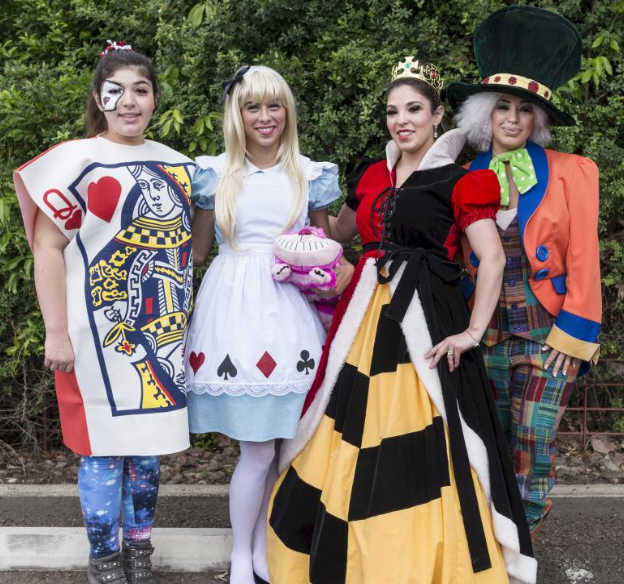
Next, we must consider the psychology behind costumes. Turns out, your costume might be just as important as your route. Psychologists have found that how you present yourself influences how much candy people give. According to Psychology Today, dressing up affects both the wearer’s behavior and how others perceive them. People in costumes feel freer to express themselves, and that enthusiasm is contagious.
A national survey by Talker News found that trick-or-treaters with clever, creative, or effortful costumes consistently collected more candy than those with simple store-bought ones. Homeowners also tend to reward costumes that make them smile. Costumes with funny puns, nostalgic references, or family-themed group outfits all tended to do better.
Once you’ve optimized your path and perfected your look, there’s one more factor that can make or break your haul: your candy carrier. Let’s compare some of the most popular carriers that people use to collect candy.
- Plastic Pumpkin Bucket
- Advantages: structured, stable, easy to open, visually appealing
- Disadvantages: limited space, becomes heavy quickly
- Pillowcase
- Advantages: massive capacity, lightweight, flexible
- Disadvantages: lacks structure (candies shift and clump), tiring to hold
- Tote Bag
- Advantages: durable, good balance between structure and flexibility
- Disadvantages: can cause uneven posture and strain on shoulders
- String Bag/Backpack
- Advantages: even weight distribution, hands-free
- Disadvantages: thin straps can strain the shoulders over time
From an ergonomic perspective, a hands-free option, such as a cross-body or drawstring tote, keeps your candy balanced and allows you to move between houses more quickly. Candy can settle naturally in bags with flat bottoms, avoiding crushing and increasing volume. Even weight distribution matters a lot, even though it sounds a bit excessive. You can trick-or-treat for longer if you keep candy closer to your center of gravity because it lessens fatigue.
Combining all of our analysis, obtaining the most candy requires strategy, ingenuity, and endurance in addition to luck. Choose a carrier that complements you rather than detracts from it, start in high-density areas, and dress in a costume that makes people smile. By night’s end, you’ll have more than a full bag of sweets—you’ll have proof that even Halloween follows the laws of science.
At the end of the day, however, the most important part of trick-or-treating is to have fun. The best Halloween nights aren’t defined by how much candy you get, but how much you laugh with friends, how special your costume is, and how many memories you make wandering under porch lights after dusk. Ultimately, that’s the real reward, and no equation will ever measure up to it.