






























































































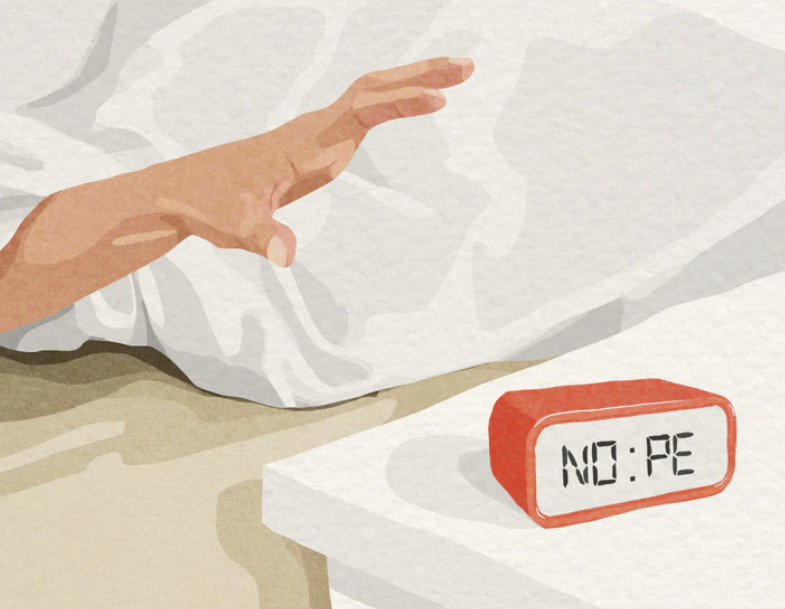




























































Have you ever just scrolled on your phone for hours, procrastinating doing something? You wouldn’t be the only one. It’s so easy to mindlessly scroll, distracting ourselves from responsibilities and hard things we don’t want to do. It’s much easier to focus on the media instead of the challenges we face. But with the media’s tendency to share negativity, prolonged use of social media often leads to something called doomscrolling, which happens to be one of Oxford English Dictionary’s words of the year. Doomscrolling, put quite simply, is the continuous action of scrolling through depressing and worrying news online. Besides being simply unproductive, doomscrolling has detrimental effects on health.
Nowadays, news travels faster than ever before. People are constantly kept up to date with world events through their devices. Unfortunately, although many positive changes are happening in the world, many heartbreaking and tragic events also happen, like wars, corruption, natural disasters, and mass shootings. The media tends to cover these bleak events, with many videos online and articles spotlighting such things.
Who’s Susceptible to Doomscrolling?
Everyone with access to the internet is susceptible to doomscrolling. According to Harvard Health, the brain’s limbic system is the driving cause of the urge to doomscroll. This part of our brains is responsible for emotional and behavioral responses. It is also responsible for the fight-or-flight response, which causes people to scan for threats.
“Stress stokes our primary urge to scroll. We’re hypervigilant and scanning for danger. The more you scroll, the more you feel you need to,” Dr. Nerurkar from Harvard Health said.
Specifically, women and people with a traumatic history are more vulnerable to doomscrolling. Women are especially affected by doomscrolling because the harsh reality is this–most violent media involves the harm of women and children.
“They don’t feel safe in the world and want to get a handle on what’s going on so they can calm their anxiety. But in these same people, doomscrolling acts as a trigger,” Dr. Richard Mollica, director of the Harvard Program in Refugee Trauma at Massachusetts General Hospital, said.
Effects on Health
When people receive bad news, it is common for people to feel their stomach drop, or feel nauseous, but these are certainly not the only possible effects of doomscrolling. In fact, there are many physical effects that doomscrolling can have, which is not surprising, since scrolling for long periods is also inactivity. Brown Health reports that doomscrolling for hours on end can lead to joint stiffness, muscle tightness, headaches, dizziness, and neck and upper back pain. Some long term consequences include changes in posture, persistent neck and back pain, and recurring headaches.
According to the University of California, “A recent study of young adults found higher levels of pessimism and less trust of others after immersion in negative news. Other studies have found that people who take in more negative news report lower well-being and life satisfaction.”
In addition, being online in general causes one to be overstimulated, which causes attention spans to be shortened.
“Then it’s hard to engage with the real world, which moves at a much slower pace,” said Dr. Aditi Nerurkar, an expert from the Division of Global Health and Social Medicine at Harvard Medical School.
Conquer Scrolling
What type of content are we consuming? Are we consuming knowledge? Or are we consuming the digital equivalent of junk food? The most important thing when it comes to having self-control with social media is mindfulness and balance. It isn’t just about completely cutting out media and being uninformed, but rather about limiting. You can try replacing scrolling habits with something healthier, like exercise or a hobby. Setting screen time limits and having someone hold you accountable for them is also effective. They let you set boundaries for yourself and your screen time, giving you back time that can be used for productivity.
So, don’t just mindlessly pick up your phone and start scrolling, but rather do so purposefully and consciously. Are you even absorbing the content you’re seeing, or are you just carelessly scrolling?