


















































































































































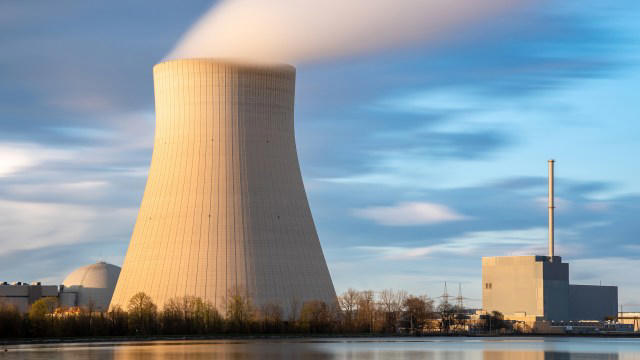
AI is taking the world by storm for the better and for worse. According to the International Energy Agency (IEA), data centers that help run the program use about 1.5% of the global electricity as of 2024, a statistic reported in the Nuclear Business Platform (NBP). By 2035, those data centers are predicted to release 300 million tons of carbon emissions unless another alternative energy source is presented. It requires an unending “appetite for electricity.” These unsettling numbers prompted Big Techs, including Google, Amazon, and Microsoft, to promise to vastly reduce their carbon emissions. That’s where nuclear power comes in.
As stated in the NBP, other sustainable energy sources, such as solar and wind power, only run at 20-40% of their full potential, but nuclear power runs at 90-95%. Weather fluctuations decrease the amount of energy that is produced by sustainable sources compared to their full potential in ideal circumstances, whereas nuclear power is largely unaffected by weather. Additionally, uranium prices are far more predictable than natural gas prices and are a safer option for guaranteed costs.
As a result, the government, along with private investors, has already invested around $9 billion on small modular reactors (SMRs), a nuclear powered reactor on a smaller scale only capable of 300 megawatts of energy each, to fuel the “AI boom.” The goal is to both decrease pollutants and emissions caused by AI. However, it may be too expensive to be a practical option. Compiled data from 2019, as reported in the The Financial Times, stated that the US government had already committed around $6 billion for the development of SMRs, and private investors had also invested a whopping $3 billion. Investor enthusiasm for what nuclear power could promise is fueling the share prices and causing many to gamble on companies that haven’t made many breakthroughs. Consequently, they are raising the worth of those companies without those institutions actually providing anything in return.
Now, the big question on the practicality of this energy source: Is it really cost-effective?
Many nuclear projects have been plagued by delays and rising expenses. The Financial Times noted that one company, NuScale, had to cancel one of its projects after costs jumped to 120% its original price. Similar nuclear projects based in Russia and China also had their prices rise to around 300% to 400% the original fee.
The levelized cost of energy is another factor to consider. Wood Mackenzie, a global insight business for energy sources, predicts the cost will reach from around $133 to $182 per megawatt hour in 2030. However, natural gas costs around $126 per megawatt hour. Solar and wind energy sit even lower than that. This means that the cost to produce one megawatt of power per hour is more expensive through nuclear energy than through other forms. However, certain nuclear companies, like NuScale and Oklo, argue that their costs will only reach $90 or even $64 per megawatt hour.
The chief executive of Terrestrial Energy, Simon Irish, insists, “any first plant will have challenging economics… But from there we roll downhill.”