
















































































































































Since the beginning of time, video games have always been an exciting experience and an opportunity to bring people together with a common interest. The evolution of games and their connectivity is staggering. Dating way back, it all began with the Early Home Consoles, which eventually modernized into the first Super Nintendo, bringing us to current times, where we can converse with people on our cellular devices from all over the globe via our video games.
Without a doubt, many children have made unforgettable memories, whether it’s staying up late to game with their friends or finally beating a challenging level that required considerable commitment. Games have the power to entertain, excite, and connect. However, has the evolution of games reached a point where it can pose a mental or even physical threat to innocent children? If so, how are gaming platforms addressing this issue effectively?
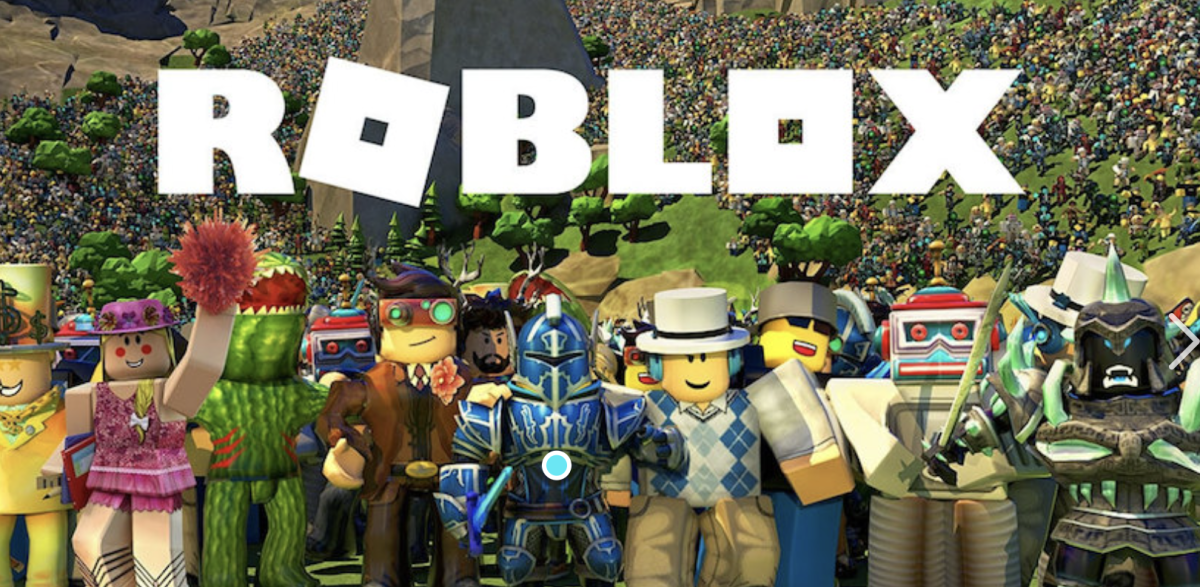
Roblox is a gaming platform with a chat feature that lets users converse in both public and private channels. This is a great way for players to be fully engaged with both the game and fellow gamers. However, with fun comes risks. iPads are in the hands of thousands of children across the world, and with this device comes its freedoms of downloading new apps without age restrictions, Roblox being one of them. Kids are then exposed to open communication with every user, including those on the game for alternate intentions, putting them in danger. Many accounts of older individuals grooming children through these chats, as well as inappropriate language, have been recorded and continue to be and ongoing issue. The platform has implemented safety precautions to decrease the risk of this occurring, and a recent article from The New York Times, it was stated that “the company says that it has long employed a host of safety measures that help protect children using the in-game chat function, including parental controls, A.I. monitoring of voice and text messages, and chat filters that block profanity and information that can be used to identify people.”
In addition to these safety precautions, a new age verification feature of face-scanning has been implemented. This feature requires users to capture a vivid image of their forward and side angles. These images are processed through a separate system called Persona and are immediately deleted after the age has been verified. Users are placed into age brackets and are permitted to chat with users within their bracket. For example, a user placed in the 18 to 20 bracket will not be authorized to chat with users outside of this range. Though not a perfect system, it yields mostly accurate results and is a step towards a safer virtual community.
Though currently voluntary, Roblox has announced that, in early January, it will be a mandatory procedure in order to be granted access to the chat, which requires a minimum age of 13 according to Roblox Investor Relations. Some countries, such as Australia and New Zealand, have already enforced this as a mandatory system.
Roblox’s release of this new feature proves that every problem has a solution, even if it is imperfect. As these games with security as well as privacy risks emerge with greater amounts of precautions, it can only decrease future exploitations of vulnerable users that could arise. With technology advancing at a rapid speed, virtual protection and security will only become stronger, protecting every user as well as enabling a fun and safe experience for all. Open the Roblox app to test out this new implementation. To my surprise, my results were exact, proving how far the technological community has come.