





























































































































































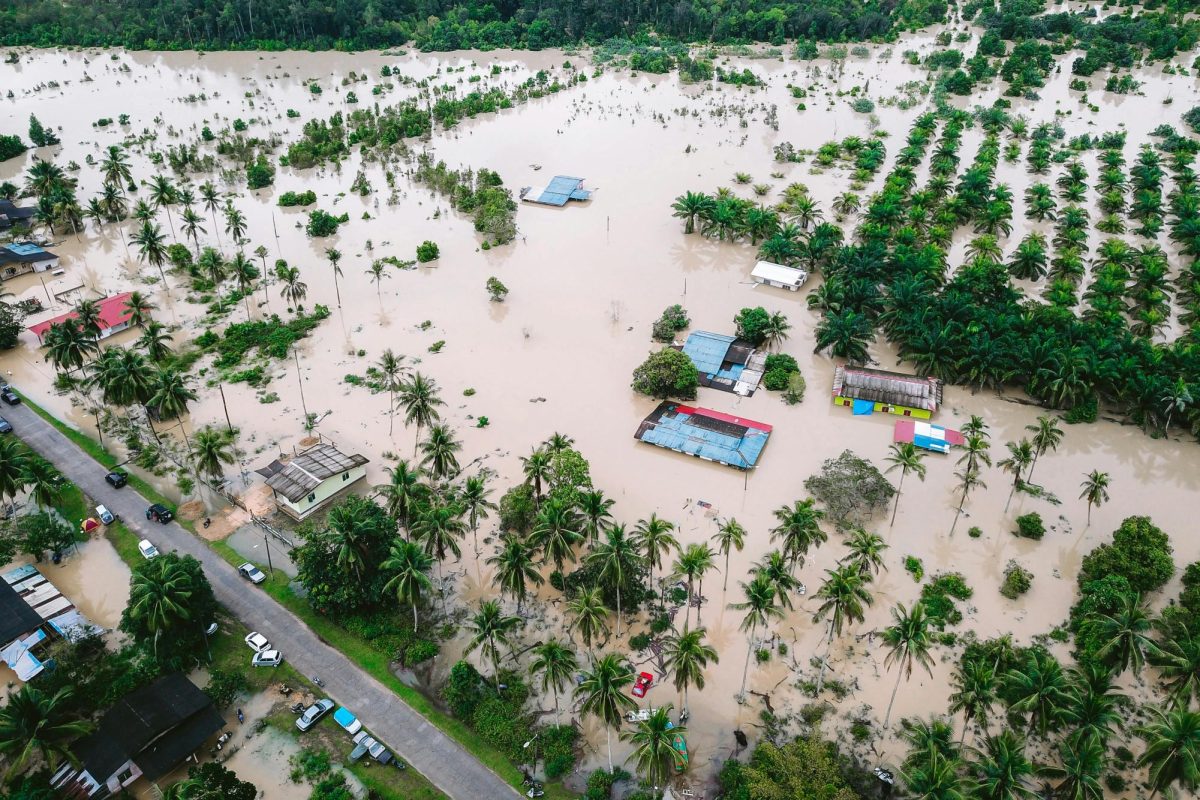
Over the past week, multiple countries in Southeast Asia including Thailand, Indonesia, and Sri Lanka have experienced mass flooding and landslides as a result of an unusually powerful monsoon season. The total death toll across all nations recorded so far is at least 1,350.
The scope of the damage from the flooding is extremely large, with quite a few countries being affected by the disasters. According to The New York Times, flooding in Sri Lanka has killed roughly 400 people, with up to a million people being displaced. Indonesia has also been heavily affected, with at least 700 people killed and nearly 600,000 displaced. Thailand was another country gravely affected, with 160 dead and a staggering two million people displaced from their homes.
Many of the national governments have not been able to adequately respond to the flooding, due to many of them that have been hit the hardest having their own domestic problems that have been taking a toll on their ability to properly respond. Back in September, the Philippine government faced protests due to surfacing accusations that funds supposed to be used for flood relief projects were being embezzled. Sri Lankans, on the other hand, have been in the midst of an economic crisis for around three years.
According to Al Jazeera, the multitude of tropical storms, including typhoon Koto and cyclone Ditwah, have intensified the flooding and worsened the landslides. The amount of rain from these storms has also been more intense than has been seen in previous years. According to The New York Times, this year the Pacific countries have had to deal with the weather event La Niña, which helped create the perfect conditions for multiple storms to form. In addition, although tropical storms rarely form in equatorial regions, some storms have formed in that very region this year. For instance, typhoon Senyar formed just off the equator, where, according to Al Jazeera, it went on to make landfall in Indonesia.
Many scientists have pointed to climate change as a potential reason as to why this year’s storms and flooding were so destructive. According to The New York Times, the heating of the world’s oceans has contributed to conditions that make tropical storms more likely to form and strengthen. The warmer oceans and air also means that the amount of rainfall is greater and more unpredictable, a factor which heavily contributed to the flooding. Furthermore, the amount of extreme weather events that have happened in both South and Southeast Asia has increased significantly over the past half-century.
With the flooding and storms still affecting millions of people in the region, government response needs to be swift. These catastrophic disasters highlight the persistence of climate change in our world, and a need for governments around the world to step up their efforts to fight it, instead of letting it destroy our communities.