
























































































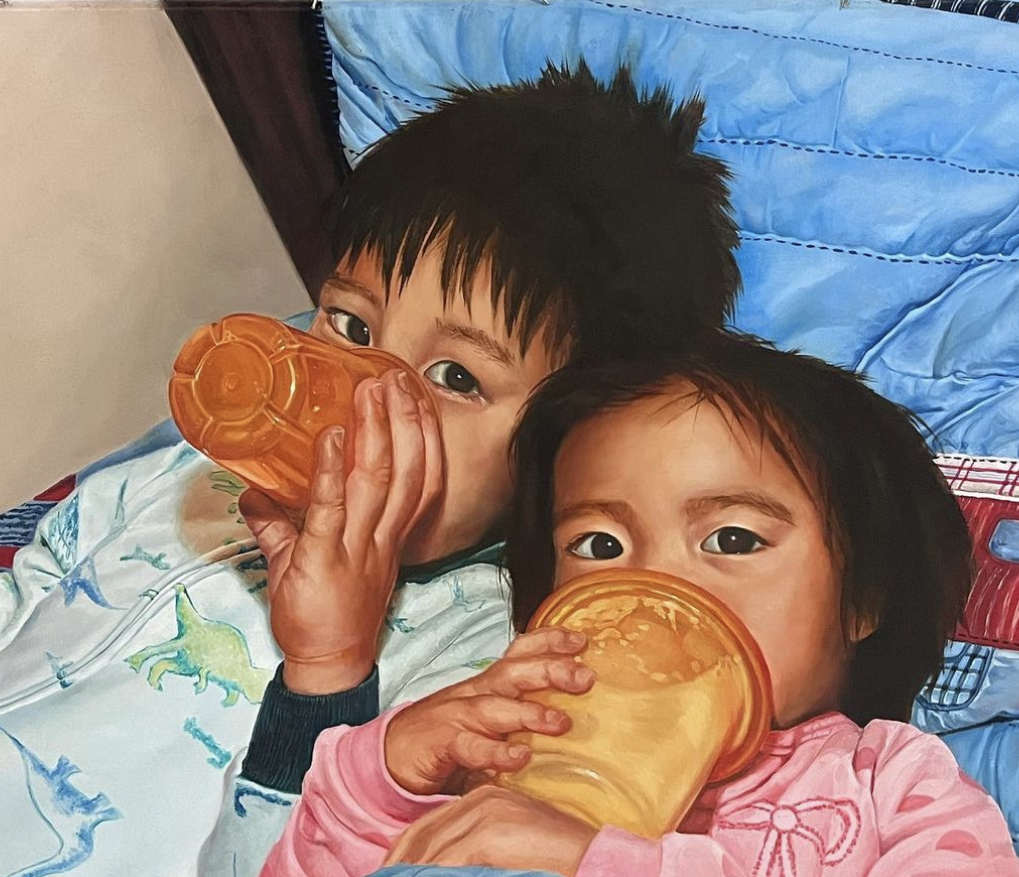





























































As much as we argue with our siblings, we also recognize that we love them and can’t imagine a life without them. Sibling relationships can be a big factor in the way kids develop. But how crucial are they? And do people with no siblings develop differently in some way?
As we explore these questions, I want to acknowledge that this is not meant to be an attack on anyone with or without siblings. Every family is different, and there are many exceptions to the generalizations made here.
Siblings play a large role in people’s lives. Whether you end up getting along or not, they can teach you important life skills. For example, arguments over simple things like sharing and chores can help develop important conflict-resolution skills for the future.
Additionally, there are many theories describing how the order you are born in can determine your personality. For example, according to Katie Couric Media, if you’re born an older sibling, you tend to be more responsible. Additionally, the middle children are considered to be “forgotten” and tend to become “people pleasers.” Lastly, younger siblings are referred to as “overly pampered” and irresponsible. These are all just speculations and not actual confirmed theories.
The term “Only Child Syndrome” is a stereotypical way to describe characteristics associated with only children. These characteristics include: being lonely, socially unaware, spoiled, and self-centered. However, there are many exceptions, and these traits can be seen in anyone, not just only children.
The term was first introduced in the 19th century by psychologist Granville Stanley Hall. After conducting surveys, he came to the conclusion that children without siblings have a lot more negative traits than children with siblings. According to Healthline, he went as far as to call being an only child a disease. Today, this theory has been disproved.
During the 20th century, the one-child policy in China produced almost an entire generation of only children. Despite the initial skepticism, according to the National Library of Medicine, studies showed that these children developed similarly as those with siblings and even excelled academically.
Today, the existence of the “only child syndrome” is up for debate. According to Psychology Today, some argue that being an only child gives you perks, such as being able to entertain yourself, as well as being more independent, confident, and ultimately more mature. However, others continue to insist that only children tend to be more stubborn, spoiled, and socially unaware.
Loneliness is a distinct factor, mentioned by only children themselves. Camille Kuroiwa-Lewis, from the University of Portland, who writes for The Beacon, explains her struggles with loneliness as an only child: “it’s not that I desire to be near just anybody, but near someone who gets what it’s like to have grown up in the same household.”
There are many factors besides the presence or lack of siblings that can affect a child’s development, such as the parents’ characteristics, home environment, socio-economic status, etc. If people feel that they are lacking certain skills or development due to having or not having siblings, there are many things they can do. Only children can actively search for opportunities to build sibling-like connections with their friends and learn how to resolve conflict outside of their family. Meanwhile, people with siblings can search for opportunities where they can learn how to be independent, such as by attending sleepaway camps. Most importantly, people with and without siblings should try their best to learn from each other, since these interactions can lead to invaluable life experiences.