





























































































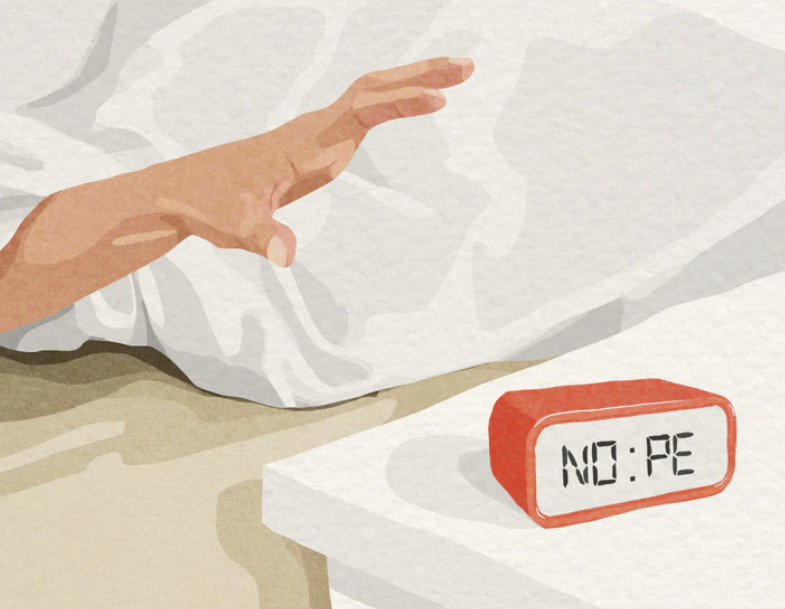





























































On December 31, 2025, millions of people around the world take out a pen and paper (a practice engraved into global tradition that, for many people, has most likely been replaced by a phone) and jot down their personal goals for the new year. Although usually done with nothing but good intentions, the creation of new year’s resolutions oftentimes falls short.
January 1 is not just New Year’s Day—it is probably the busiest day at the gym, the library, and other locations where typical New Year’s resolutions tend to occur. People convince themselves they will make a change in their lives, that they will better themselves in the new year. Do they actually follow through with it for the next 365 days? Usually not.
According to a study done by Drive Research, a full-service market research company that gathers data on various subjects, less than 10% of Americans maintain the resolutions they came up with in the beginning of the year all the way through December 31.
But is it worth giving up? I do not think so.
The hopefulness of the new year naturally fosters a growth-oriented, positive atmosphere. But I have noticed that the presence of this optimistic environment seems to be dimming as each year passes. The reason for this might be that people are becoming more realistic with themselves; they realize that, in their minds, January 1, although traditionally symbolic of renewal, is merely any other calendar day. Maybe they no longer feel that the encouraging essence affiliated with the new year has any significance. I think, however, the reason why New Year’s resolutions have become less appealing is simply because an essential characteristic is absent: motivation.
Without reason, it is nearly impossible to achieve a goal. Logically, there is no point to start just about anything if you lack purpose. When people write down their resolutions, they have a reason for doing so in mind—even if it is somewhat far-fetched. But when the time comes to bring the words on paper to life on the first of January, or the second, or the third … that purpose feels so far out of reach that it begins to seem realistically unattainable. Besides, it is much easier to say you will do something than to actually do it. So people lose motivation. They realize that their life is perfectly fine the way it is, and that they do not need to make any drastic changes, therefore giving up whatever aspirations they previously had without even attempting to pursue them.
Other people start the new year with a confident mindset, but quickly abandon it as they begin to realize they hardly made any progress with the goal they once strived to accomplish. They claim they “forgot” or decided that it was too difficult of an objective to achieve. So they too abandon the milestone they had previously aimed towards.
The crowds at the local gym, for instance, will begin to lessen by February of this year. I can guarantee it. People will put down their heavy weights and replace them with the comfort of their home couch. And on December 31, 2026, they will claim that they will “really do it” in 2027. Will they? Probably not.
But the cycle of claiming you will do something—and never actually doing it—can end. Just because the crowds are smaller does not necessarily mean that the place is empty. There is still the 10%: the minor percentage of people who follow through with their New Year’s resolutions for the full 12 months of the year. The desire for a reset and the spirits of a new year can still exist: with action.
Although a resolution set for oneself might not be fulfilled to the best possible extent, it does not mean that it will not be achieved at all. Having a growth mindset 365 days of the year, rather than solely for the first few weeks, is one of many factors included in achieving a goal.
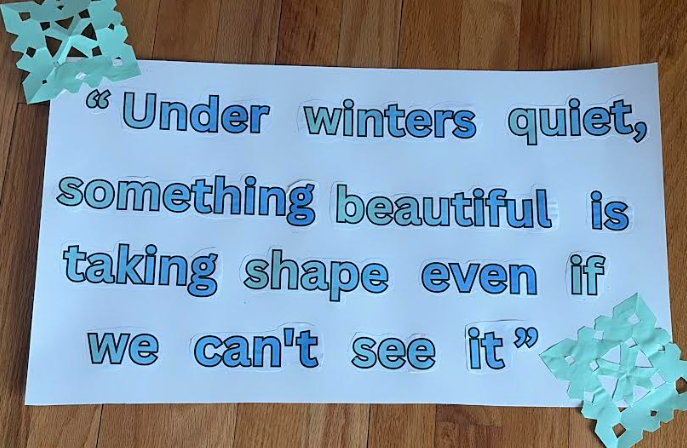
The morale linked to New Year’s resolutions should remain, and the ambition people have in themselves to reach their milestones should continue to be preserved. More importantly, the concept of New Year’s resolutions actually being achieved should become normalized rather than seen as infeasible: all it takes is action. A New Year’s resolution does not have to be wishful thinking. By implementing genuine effort and a growth mindset into each checkpoint of an overarching objective, a goal can easily be met. On December 31st, 2026, those who embrace this outlook can reflect on the previous year and be proud of what they have accomplished, rather than feeling hopeless for the year to come.