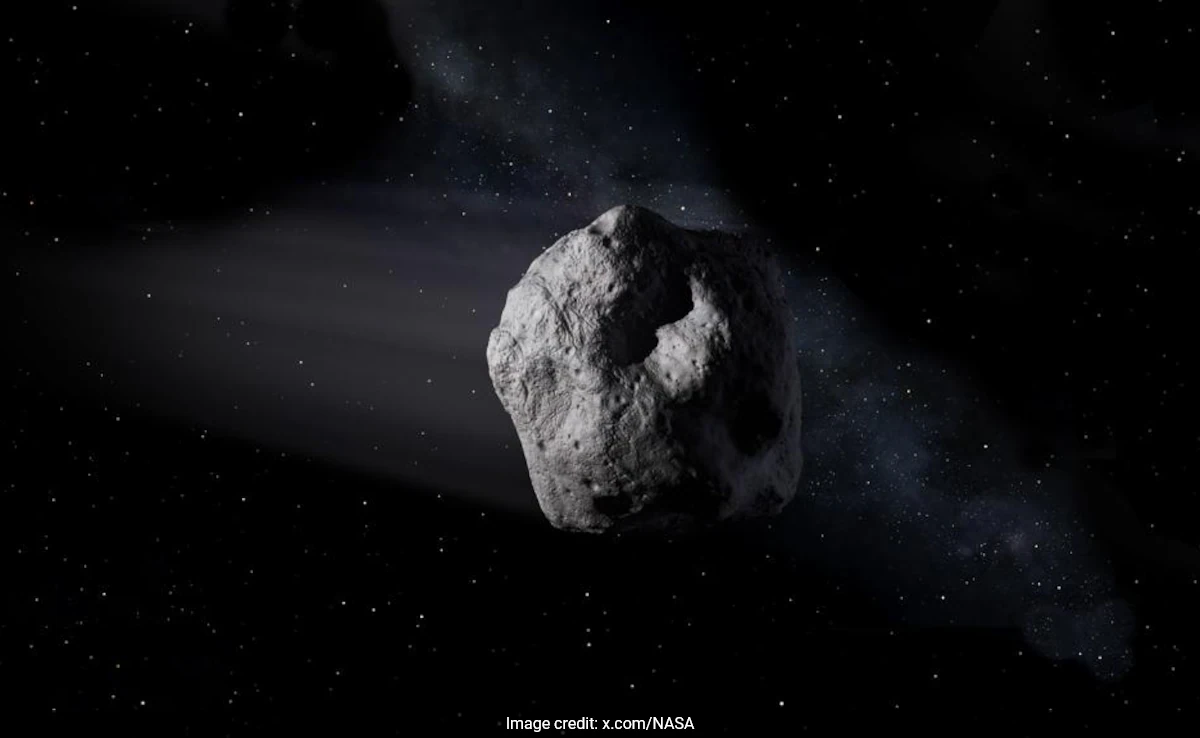



























































































































































On September 8, 2025, a comet was spotted by the Panoramic Survey Telescope and Rapid Response System, or Pan-STARRS, reflector telescope in Maui, Hawaii, located at Haleakalā. When astronomer Yudish Ramanjooloo from the University of Hawaii first viewed the comet, it was relatively faint. However, it is currently projected to be the brightest comet of 2026 and could be titled “Comet of the Year,” as reported by TheSkyLive. The comet could provide a great observation opportunity for the public without the use of complex equipment.
The C/2025 3R, otherwise known as PanSTARRS, is a comet that takes almost 1,000 years to orbit the sun, called a long-period comet, and it’s now heading within viewing distance of Earth. While the exact projected brightness isn’t clearly determined yet, according to Live Science, the magnitude could be 8. In that case, the comet could only be seen through equipment such as binoculars or a decent enough telescope. Other researchers are more optimistic and are predicting a magnitude of 2.5, which could be seen with the naked eye. The apparent magnitude works on a reverse logarithmic scale, so that the lower the number is, the brighter the luminosity.
The brightness is determined by many other factors. For example, a phenomenon called forward scattering could make the comet brighter. When the comet passes between the sun and the Earth, its tail would collect and reflect the sunlight, making its coma focus the rays and therefore take on a glittery image. However, it’s too early to know what results will occur from its path through the solar system.
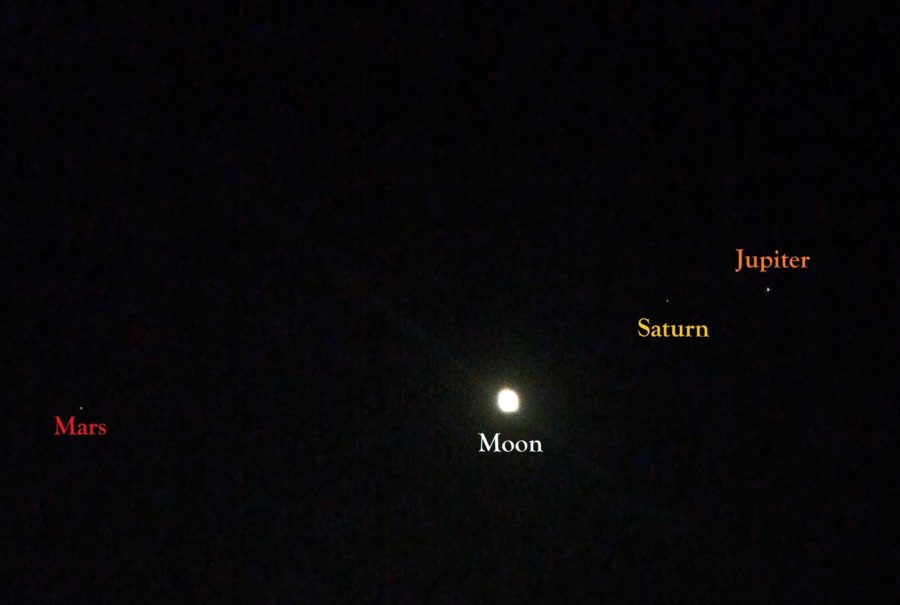
The current position of the comet is somewhere between the orbits of Jupiter and Mars, and its origin lies in the Oort cloud, an area near the edge of our solar system that houses multitudes of comets and icy objects. PanSTARRS is projected to reach its closest point to Earth on April 27. According to The Economic Times, PanSTARRS will be around 44 million miles from us at its nearest point (for reference, the moon is 239,000 miles from us). Even though the comet is still extremely far away at its closest point, it is still predicted to be bright enough for viewing. The perihelion, the comet’s nearest point to the sun, is forecasted to be April 20, where it will be around 47.4 million miles from Earth. The best time to view PanSTARRS is just before its perihelion, as stated by Live Science. It could be viewed in the constellation Pisces and below the Great Square of Pegasus, as stated by Space.com.
According to Green Matters, the comet could prove immensely useful for research purposes, too. Scientists are looking out for any extraordinary water signatures, organic molecules, or isotopic signatures that could lead to more information regarding planetary formations. Additionally, the path that PanSTARRS takes could lead to more details on ancient cosmic tales and the gravitational forces experienced by passing objects.
While it may be too early to concretely determine the brightness of the coming comet, it still has the potential to be a great celestial event of the year.