













































































































































When most people hear ‘mummified,’ they immediately think of Egyptian pharaohs, but the story of mummification is far richer and more complex than commonly believed. Mummification is the process of preserving a body by removing its fluids and tissues, a practice that became especially significant in ancient Egypt around 3600 BCE due to the rising beliefs about the afterlife. As Egyptian religious ideas developed through texts like the Book of the Dead, people believed that the soul needed its physical body to exist eternally and that the god Osiris would judge the dead by weighing their hearts. Therefore, preserving the body through mummification was deemed essential for achieving eternal life. While mummification in ancient Egypt was a deliberate, religious practice to prepare the body for the afterlife, preservation was not always carried out by humans. Occasionally, natural conditions can be used to preserve bodies. This is exactly what scientists believe happened in Saudi Arabia, where recent discoveries have discovered naturally mummified cheetahs that were preserved for centuries inside desert caves.
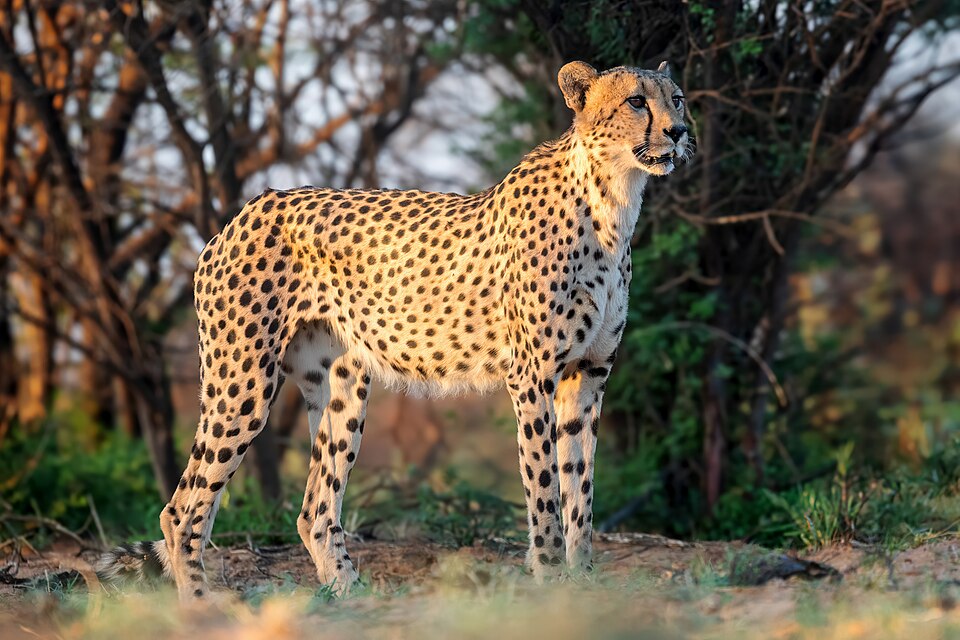
In a groundbreaking discovery, scientists recently uncovered seven naturally mummified cheetahs and the bones of 54 others inside caves near the city of Arar in northern Saudi Arabia. According to a report from CBC Kids News, scientists believe the dry desert climate and stable cave temperatures allowed the cheetahs to mummify naturally. Some of the cheetahs were dated to be more than 1,800 years old, while others were as young as 130-years-old. Ahmed Boug, one of the researchers involved in the discovery, said “cheetahs preserved to this extent have never been documented in this region before.” Additionally, scientists also said that the remains avoided scavengers such as birds and hyenas, explaining the perfect condition of the preserved animals. Genetic testing revealed that the cheetahs were most closely related to modern populations in Asia and northwest Africa, further revealing that cheetahs once had a much larger habitat range than they do today.
Furthermore, researchers believe the caves have served as protective dens where mother cheetahs would give birth since the caves hid them from predators and harsh weather conditions. This discovery of mummified cheetahs is particularly significant because cheetahs have not lived in Saudi Arabia for decades due to “habitat loss, unregulated hunting, and a decline in prey.” By uncovering these rare, ancient remains, scientists are not only learning about the past but are gaining insight to reintroduce cheetahs into parts of their former home.