
























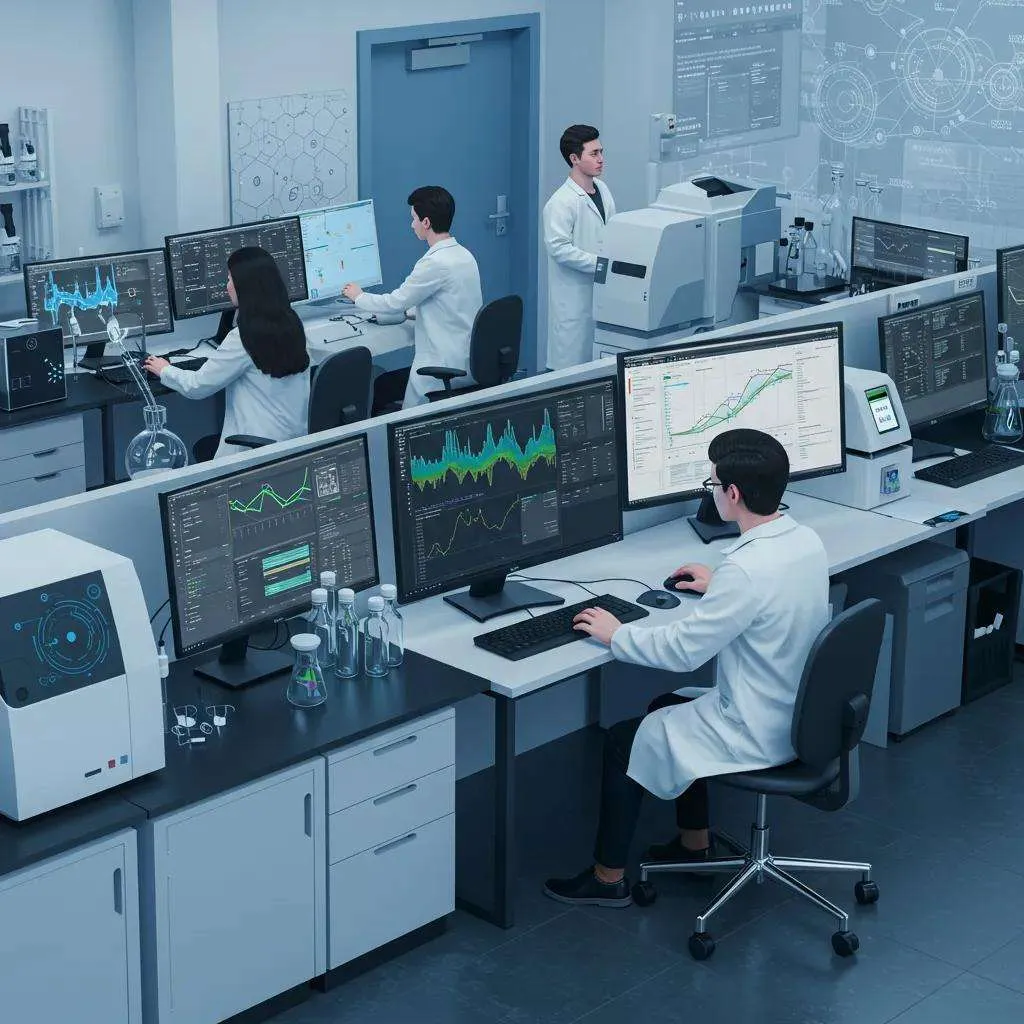






























































“Ninety-six identical twins working ninety-six identical machines,” Aldous Huxley writes in his dystopian novel Brave New World. This line illustrates the world that the novel warns against: a future where individuality is sacrificed for perfection. The novel shows a future where humans are genetically engineered and conditioned from birth and assigned predetermined roles to maintain societal stability, which is an overarching theme in the book.
At times, dystopian novels seem to be an accurate prediction of the world we are living in. With genetic editing technologies like CRISPR, scientists can now change DNA with precision, which raises the possibility of eliminating genetic diseases before a child is even born. On the surface, this seems undeniably great; preventing conditions like cystic fibrosis or sickle cell anemia could spare families from suffering, according to the Mayo Clinic. However, Huxley’s novel forces us to confront where the ethical line must be drawn. In the dystopian society of the World State, genetic engineering does not stop at just healing. It becomes a tool for shaping intelligence, temperament, and social value. This can be seen in the caste system. In the novel, from the moment embryos are created scientists decide who is allowed to be intelligent and who is not by determining the amount of oxygen that is supplied. This can be seen in the novel by the explanation given by Mr. Foster, a genetic engineer: “‘The lower the caste,’ said Mr. Foster, ‘the shorter the oxygen.’…‘But in Epsilons,’ said Mr. Foster very justly, ‘we don’t need human intelligence.’”
One of the most controversial consequences of genetic editing is the wealth disparity it threatens to deepen. Once genetic engineering gets to a point where parents can shape physical attributes, intelligence levels, and leverage biologically advantageous features, they will want to ensure that their children have these advantages that come with genetic improvement, as reported by Forbes. This consequence could lead to a hierarchy that is engineered into the body itself and a world where inequality is not questioned because it is biologically enforced.
“The result could become a Huxley-like dystopia with a class structure even more rigid than today,” Forbes reported.
Another risk with genetic editing is the gradual loss of individuality. If humans begin to change DNA to fit certain standards of intelligence, appearance, or behavior, difference stops becoming something celebrated but rather something that becomes another thing to correct. Brave New World shows where this mindset could lead to. “Ninety-six identical twins working ninety-six identical machines.” These identical twins are all designed to perform the same job, think that same way, and have no individual identity. Individuality is what allows people to grow in different directions, but if genetic editing is used to preselect traits, people are no longer discovering who they are; they are fulfilling a blueprint written before they are born.
Genetic editing has the potential to be a powerful medical breakthrough, but only if policymakers and scientists are willing to take a step back and draw firm ethical boundaries. When used responsibly, genetic engineering has the potential to prevent devastating diseases, reduce lifelong suffering, and give people a fairer start to life. There are 5,000 rare genetic diseases that are eligible to be genetically edited, according to Yale School of Medicine. That kind of innovation and progress should be celebrated. The problem happens when innovation comes faster than regulation. The danger is only when medical necessity is not clearly separated from enhancement, ensuring equal access and protecting individuality. If these lines are not drawn clearly and early as well as enforced seriously, we risk our society turning into the very world that Huxley tried to warn us about.