











































































Free soloing is a form of rock climbing in which climbers forgo all harnesses and protective equipment while scaling cliffs or vertical rock faces. To most, it may sound like a death wish, but to Alex Honnold, it was just another day, and in this case, a historic Sunday morning in Taiwan.
Watching the live Netflix broadcast or standing right below Honnold’s ascent of Taipei 101 was like witnessing an impossible TV stunt in real time, 1,667 feet in the air. Thousands of viewers sat in collective, suffocating silence as Honnold gradually ascended the dizzying skyscraper, the occasional gasp or hushed murmur as Honnold paused to chalk his hands and readjust his grip on the slick metal beams. The tense, almost electric atmosphere could’ve been felt from anywhere as the world watched Honnold make history.
Even though his stunt may seem absurd, he is no stranger to these feats. According to Honnold’s bio, he rose to global fame in 2017 as an American rock climber after successfully free-soloing El Capitan, a 3,000 foot monolith in Yosemite National Park. Widely considered one of the greatest rock climbers to have ever lived, Honnold has tackled numerous challenges throughout his career in locations such as Greenland and Antarctica, and more iconic peaks including The Nose, Mount Watkins, and Half Dome. Now, he is 40 years old with a wife and two children. While some have criticized Honnold’s continuous climbs as a father of two, Honnold has always maintained his idea that with meticulous preparation and practice, he can continue to pursue free soloing while providing for his family.
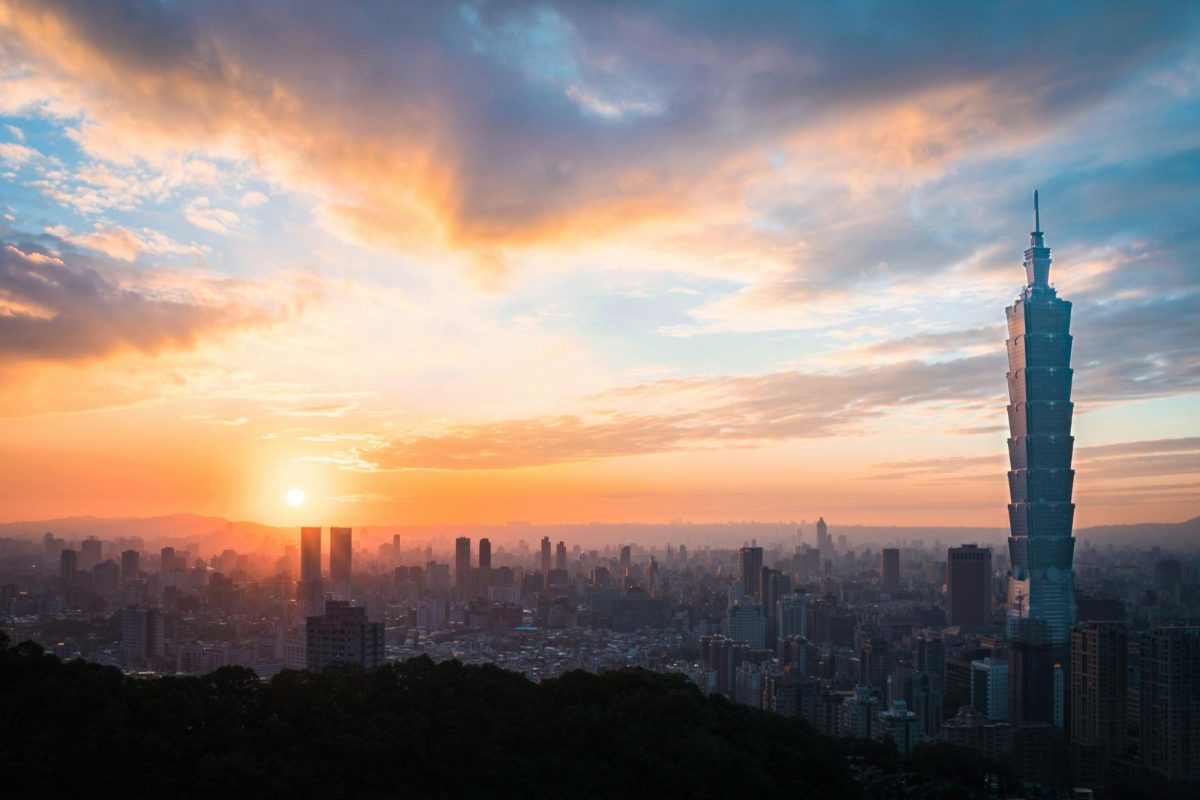
Despite his success in free soloing multiple natural monoliths, Honnold’s summit of Taipei 101 was truly unprecedented. According to USGBC, standing as the 11th tallest building in the world, the tower features exactly 101 stories to match its name, at an astonishing height of 1,667 feet (508 meters). The building, unlike the rough surfaces and porous textures of mountain and rock, is made of smooth glass and steel, making the surface nearly impossible to grasp. Honnold ascended the skyscraper via a vertical corner of the building, where he had to maneuver around outstretching architectural features and clamber up steep structural beams, according to NPR.
The ascent started with what could be considered as the easy part: pure “bamboo boxes,” which are rectangular shaped windows with pronounced outward ledges. According to Netflix’s Skyscraper LIVE, Honnold tackled these repetitive tiers with “two easy moves then one hard move,” placing his hands around the window frames then pulling himself up. After this first section, the skyscraper introduced the “dragons,” protruding features that forced Honnold to perform arm-stretching maneuvers. There were ten of these dragons to overcome, strategically spread across the tower’s eight sections. The tension peaked every time Honnold pressed himself against the dragons, seemingly hanging on by a few fingers. Once the eight segments were behind him, the climb transformed into a narrow tower with smooth metallic plating that left no margin for error. As the world held their breath for the last stretch, Honnold hauled himself up the final obstacle, reaching the pinnacle of the skyscraper.
After climbing for 91 grueling minutes, Honnold had completed the ascent and proudly stood upon the very top of Taipei 101. “What an incredible position, what a beautiful way to see Taipei,” Honnold said, according to NPR. Honnold’s achievement not only secured a world record for the highest urban free solo, but also captured the attention of millions around the world, displaying Honnold’s persistence and pure talent in the face of impossible odds. What may have seemed unthinkable in the past was accomplished by a man who refused to believe in limits.