























































































































Plane incidents capture public attention because they are rare and unsettling. When something goes wrong in the air, or the moments during liftoff, questions follow about safety, response, and what measure will be taken to prevent this from happening again. This week, an incident in Maine brought those concerns to the front, prompting officials and community members alike to seek answers. Aviation accidents often spark widespread concern not only because of the loss involved, but because they challenge public trust in systems designed to keep passengers safe.
At Maine’s Bangor International on Sunday January 25, multiple people were killed when a small business jet crashed and caught fire, which prompted a massive emergency response. On that day at 7:45 p.m., the Bombardier Challenger 600 crashed as it was taking off. A plane scheduled to depart ahead of them radioed to Air Traffic Control to report poor visibility caused by accumulating snow and ultimately decided not to fly that evening. According to CBS News, “airport officials say the plane went though the standard de-icing process and got in line with other jets that took off safely.”
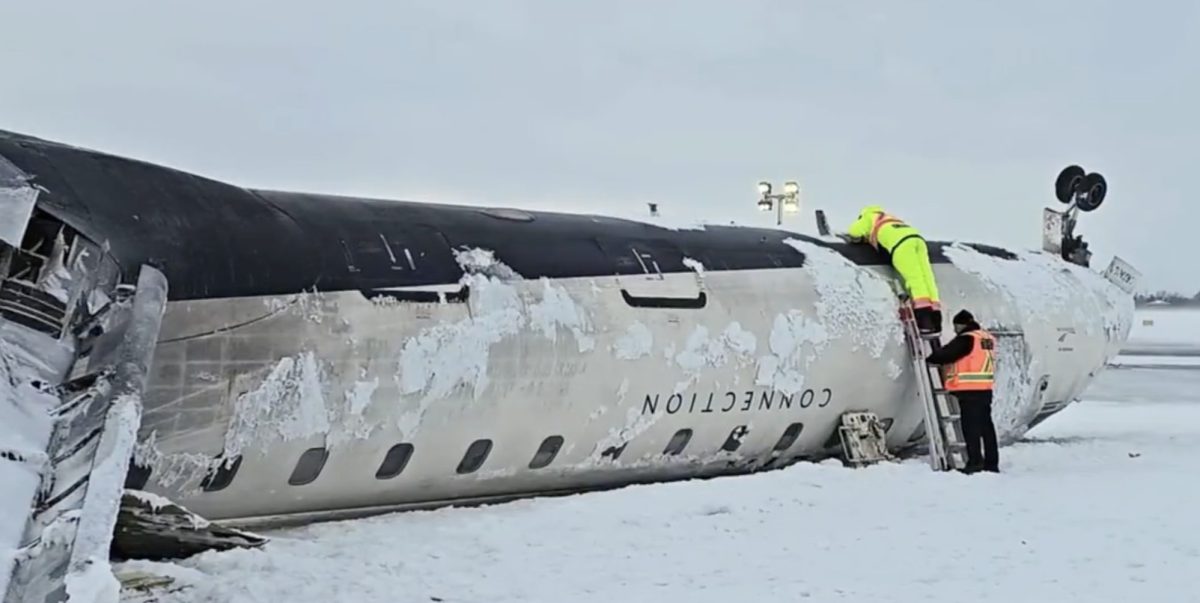
The Bombardier Challenger 600, however, crashed shortly after beginning takeoff, leaving the aircraft inverted and in flames on the runway, killing all individuals on board. Among them were four passengers and two flight crew workers. “First responders are still on scene and are expected to be actively working the site for several more hours before any additional information is available,” the Federal Aviation Administration (FAA) said shortly after the crash, according to People magazine. Emergency crews from multiple agencies responded quickly to contain the fire and secure the runway, temporarily halting airport operations. Officials emphasized that safety remained the top priority as investigators began documenting the scene.
The National Transportation Safety Board (NTSB) began its investigation on Tuesday January 27, as it was still unknown whether weather conditions, extreme weather, or another cause altogether played a role in the crash. Bangor police stated that they were waiting for the NTSB before being able to formally identify the victims, causing a delay that affected airport operations and caused dozens of flights to be disrupted. As a result, travelers and staff experienced significant uncertainty. “Passengers are encouraged to contact their airlines for information regarding impacts to their travel plans,” the FAA said in the People article. Moreover, the FAA said the plane crashed under unknown circumstances during takeoff, offering no further explanation than that.
Yet, Steven Marks, an attorney with the firm of Podhurst Orseck, stated the incident “should never have happened.” He noted two similar incidents in the past 20 years and past aircraft deicing problems, prompting the NTSB to consider deicing as an initial area of investigation. Nevertheless, according to City News, the agency will consider all possible factors. “Nothing is off the table,” John Cox, CEO of Safety Operating Systems, said to CBS News.
As investigators continue their work, officials stress that determining the cause of the crash will take time and careful analysis. While the loss has deeply affected the local community and hindered travel, the findings of the NTSB investigation may help prevent similar incidents in the future.