

















































































































































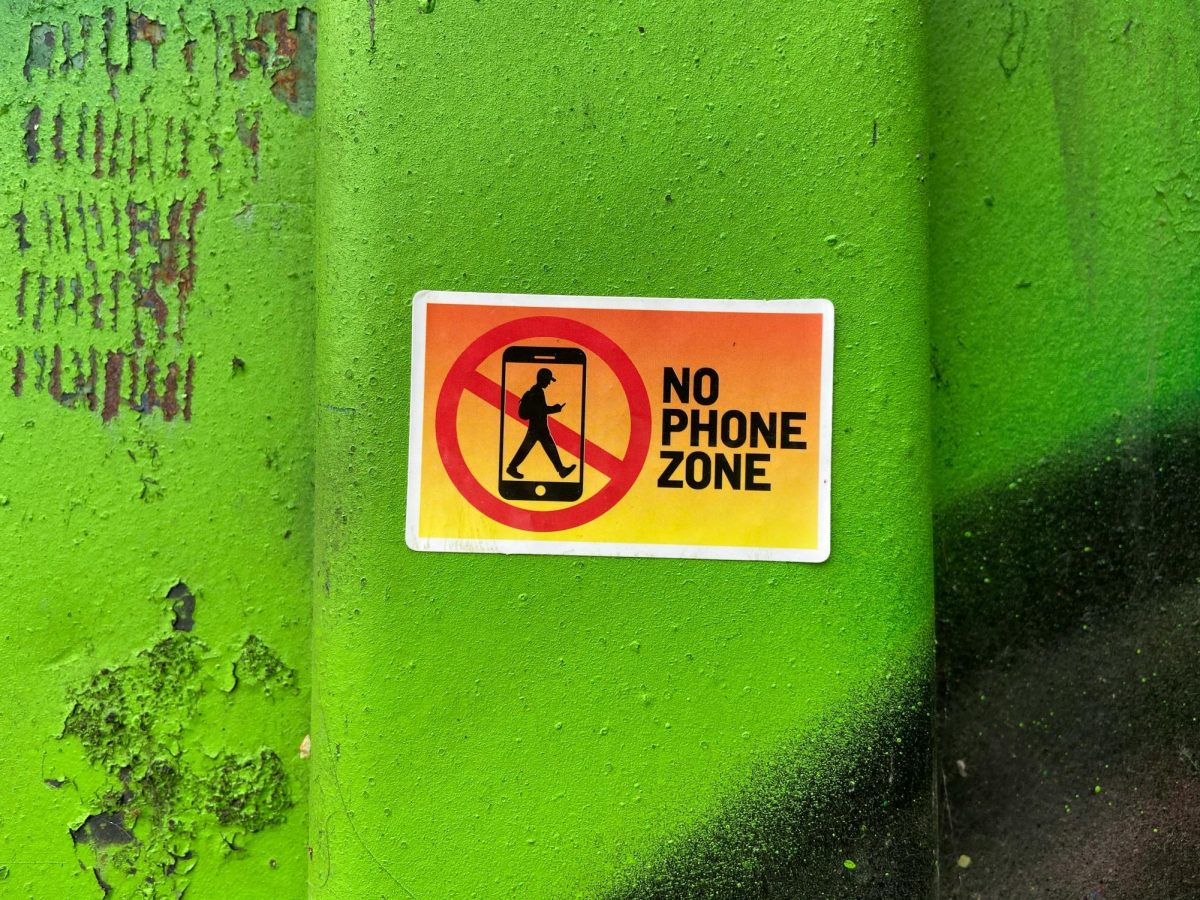
June 29, 2007, a seemingly innocent Friday, marked one of the most crucial dates in the history of technology, when the first iPhone was released to the public. This crucial advancement in communication, personal security, and global connectivity revolutionized the lives of young people. However, nearly two decades later, at the end of his second term as governor of New Jersey, Phil Murphy issued a statewide phone ban for students, forbidding cell phones in all New Jersey schools from bell to bell. While a phone ban might be beneficial to other schools that don’t have an open campus, Tenafly High School is debating how it could best implement the new law.
The first policies regarding cell phone use within school settings were strict, rather similar to the law they are trying to enforce now. Initially, personal digital devices were considered foreign and strange, being outright banned throughout schools across the country in the early 1980s. However, going into the early 1990s and 2000s, after the Columbine shootings and 9/11 attacks, it became a priority for parents to provide cell phones in order to ensure proper communication between students and their guardians in the case of an emergency. Naturally, as communities dove further into the endless stream of wireless phones, the technology which they were buying advanced along with them. By the 2000s, technology became increasingly more affordable and higher quality, with personal computers and laptops becoming widely used across workplaces and schools alike. However, cell phones continued to be banned in many communities across the world. Until, more and more, they were not.
Undoubtedly, there are both benefits and drawbacks to this phone ban.
“I think most professionals in our field will agree that there’s been a negative impact on children from the amount of time that they spend on cell phones,” Principal Morrison said. At the same time, security and safety are key concerns for any modern parent, especially with the fact that Tenafly High School has an open-campus policy. “We have an open campus, so that’s a little different from most schools where maybe a typical high school only has an open campus for seniors or for seniors at lunch,” Principal Morrison said. “But I think our parent community is going to have an expectation that if their child is going to have an IDT, they’re going to have access to their phone.”
Many students already feel stricter regulation regarding their phones in class. “I feel like there is pressure from the system,” Joel Revesz (’29) said. Overall, the student opinion on the current state of phones is that enforcement varies on a teacher-to-teacher basis. Freshman class president Richard Scolaro agrees with his fellow peer, stating, “I feel like some of the teachers are ramping up the security, while some others aren’t,” Scolaro said.
Moreover, students are raising concerns about how the restrictions will help prepare them for university. “I believe that the phone ban doesn’t allow students to prepare themselves for college as they are stripped away of their personal freedoms and independence,” Hila Litvin (’27) said. “[We] are treated as little children that can’t have the responsibility of a phone.”
In terms of how the ban will actually be implemented into Tenafly High School, it is still uncertain. “The short answer is we don’t know yet exactly how we’re going to implement this,” Mr. Morrison said. “There are different models that other schools have used. For example, I think Ramsey does the, ‘you lock your phone away until you leave the building’ model in some kind of a pouch. But we haven’t yet done the research to see what are the different options that we can use to implement this.”’
Over in New York City, where the ban is already in full swing, NEST+M’s student population—NEST+M being a famous citywide school for the gifted and talented—commented on the reality. “NEST uses a loophole where kids put their phone in a pouch that they have in their own bag–one they bought themself,” said Caleb Tucker, an avid volleyball player on the school’s boys’ team. “They can just take out their phone from the pouch as long as there’s no teachers there. Nothing is stopping them.”
“The phone policies didn’t make a difference,” an amused NEST+M student said in an interview on February 4. “We still play games and use Snapchat during history class just like before.” At La Guardia High School, students still appear to be virtually immune to any consequences. “Most teachers don’t care,” Noah Cohen, a proud theater program devotee at La Guardia’s music and arts program, said in an interview. “It could be because I’m a senior, but most teachers let us use our phones for stuff like music.” Ironically, Cohen even agreed to the interview through text message during his AP Chem class.
As for the parent community in Tenafly, the announcement is too recent for the school to have received significant feedback. However, Mr. Morrison imagines they will not be in favor, stating, “I think parents are going to expect that that their child has their phone during IDTs and/or lunch.”
Ultimately, the phone ban may even be permanent. “Phones are a part of our lives,” Mr. Morrison said. “We are in the business of teaching kids to be responsible and how to make good choices, which is part of the freedom we give students during their IDTs.” Whether or not the ban’s effect on the student population will be positive or negative remains to be seen. The final decision is now up to the superintendent and the the board of education.