





































































































































The Winter Olympics is a celebration of snow, ice, and the athletes who master them. But the 2026 Games in Milano Cortina revealed that, as winters get warmer, the Olympics are struggling to keep up. Rising temperatures and increasingly unreliable snowfall have pushed organizers to depend on artificial snow and energy intensive infrastructure to create the illusion of “winter.” That change brings about concerns for sustainability, athlete safety, and the future of the world’s most iconic cold‑weather event.
Milano Cortina did receive a welcome dusting of natural snow just before and during the Games. However, it was nowhere near enough. Organizers produced more than 56 million cubic feet of artificial snow after an unusually warm start to the season, according to TIME. Ski resorts have used snow machines for decades, but the scale required for the Olympics has grown dramatically as winters have become warmer due to climate change. For example, TIME states that the previous 2022 Beijing Winter Games were the first to rely one hundred percent on artificial snow.
The environmental impacts are staggering. A 2023 Canadian study cited by TIME found that generating 1.4 billion cubic feet of artificial snow over a typical winter demands about 478,000 megawatt‑hours of electricity, producing more than 130,000 metric tons of carbon pollution. This amount of electricity is the same as what almost 17,000 Canadian households consume every year. Water use is equally immense. NPR reported that snowmaking for the 2026 Games required nearly 85 million cubic feet of water, an amount comparable to filling roughly 380 Olympic‑size swimming pools. As the global climate crisis exacerbates, these resource demands raise doubts about whether the Olympics can continue to justify such practices.
Athletes are feeling the consequences as well. According to BBC News, artificial snow causes winter sports to become more unpredictable and dangerous, increasing the risk of injury and making training pricier and tougher. Because machine-made snow is denser and icier than natural snow, it becomes even more hazardous when warm weather softens the top layer. The combination of climate-driven slush and manufactured ice creates courses that many athletes, including former two‑time Olympic freestyle skier Philippe Marquis, describe as inconsistent and unsafe.
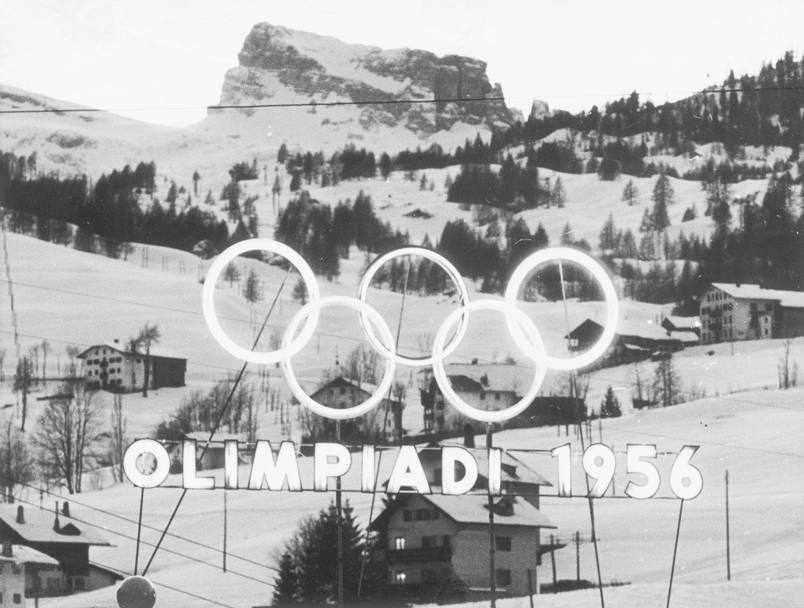
A look back at Italy’s first Winter Olympics shows just how much has changed. When Cortina d’Ampezzo hosted the Games in 1956, there were also early worries about a lack of snow, as stated by Britannica. Heavy snowfall on the first day eased those concerns, which shows that even in low‑snow years during that time, winter could still be counted on. That reliability has changed dramatically. According to WWF, average February temperatures in Cortine d’Ampezzo have risen by about 3.6°C, leading to 19 percent fewer days that stay below freezing. The contrast is especially striking because Cortina d’Ampezzo is once again the major host site in the 2026 Milano Cortina Olympics as the “Cortina” in the name refers to Cortina d’Ampezzo. Milan and Cortina d’Ampezzo, this year’s hosts, are not outliers because every city that has hosted the Winter Olympics since 1950 has experienced significant warming. Furthermore, projections prove that only 52 of the 93 sites traditionally considered for the Winter Olympics will still have decent conditions to host the Games reliably.
Thankfully, organizers of the host city and the International Olympic Committee (IOC) are trying to respond. PBS reported that this year’s organizers pledged to power venues and snowmaking operations with clean energy sources. Renewable energy significantly reduces carbon emissions from snowmaking, dropping them from around 200 grams to about 10 grams of CO₂ per kilowatt‑hour, University of Innsbruck researcher Robert Steiger explained. But even with the green energy, the massive water demands remain unresolved.
The Winter Olympics now stand at a crossroads. Since climate change doesn’t seem to be slowing down anytime soon, the Games must decide whether to continue manufacturing winter conditions at a significant environmental cost or rethink its model entirely. Maybe that means new rules for host cities, or more sustainable practices as technology develops. One thing’s for sure: winter isn’t a given anymore. The Olympics have always been about resilience and striving for the greater. Now it needs to use that same spirit and grit to preserve the very conditions that make the Winter Games possible.
Before anything else though, addressing and trying to preempt climate change itself must be the top priority. Without proactive actions, the question may soon shift from how to save the Winter Olympics to whether true winter will exist at all for this generation and future ones.