

































































































































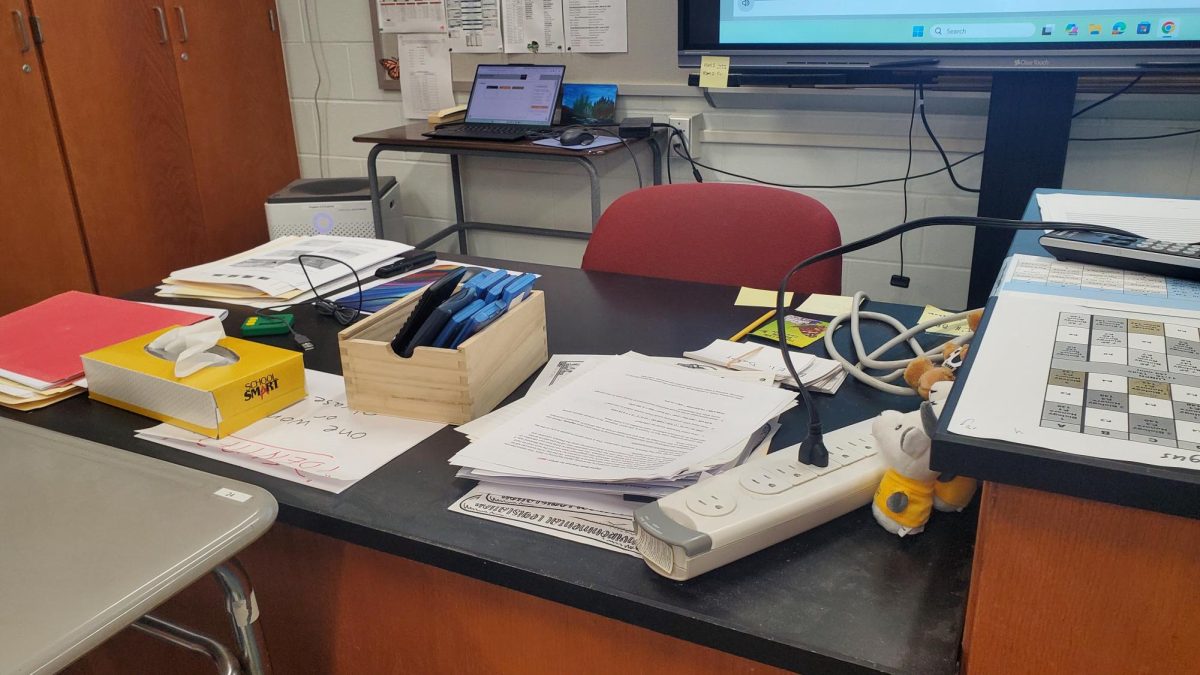
















At the helm of teenage life, cell phones rule all. With their addictive algorithms and invasive social media platforms, cell phones have surged in the teenage world. In the palm of everyone’s hand, what do you see? A cell phone has now become a necessity in everyday life. With such a significant influence on teenagers’ actions and ideas, how will students succeed in learning environments like schools, with an addictive and distracting tool by their side?
On January 6, Governor Phil Murphy signed the new bell-to-bell ban into law. According to ABC7, the law was officially identified as Senate Bill 3695, which is a state law, and will be put in place for the 2026-2027 school year. New York and New Jersey state laws require all public schools, from kindergarten to 12th grade, to prohibit students from using cell phones and other internet-enabled devices, such as smartwatches.
The law states that students are forbidden to use personal electronic devices from the first bell of the day until the final bell. These restrictions will only apply when on school property, such as the school building or courtyard.
This new law is an immense step towards the fight against electronics. The bell-to-bell ban will greatly benefit the well-being of each and every student. By not having the temptation or constant urge to use their cell phones, students will have an easier time focusing on schoolwork.
I myself have dealt with many situations in which my cell phone has led to unnecessary problems and distractions. Many times throughout my IDTs (Independent Decision Time), I have caught myself zoned out and glued to my phone. Doomscrolling on my phone while my thumbs subconsciously swipe up on the screen is a prime example of why phones should be banned during school hours. Instead of using my time wisely and finishing school work or getting an early start on my homework, I would waste beneficial time on nonsense. I noticed that the more I had my phone, the greater the damage it had on my academic performance.
Despite all the challenges cell phones can bring, especially to a student, there are some positives to having personal electronics throughout the school day. The main reason students have phones is to be able to communicate with their parents on a second’s notice. In case of an emergency during school hours, students have the ability to contact emergency services or their parents in a timely manner. Cell phones are also a great way to find instant and reliable information. Within minutes, students can research topics and access all types of learning tools, such as language translators with a click of a button.
In spite of all these benefits, cell phones decrease students’ morale and well-being. Cell phones can create an environment where dishonesty and lack of academic integrity can become the social norm. According to Common Sense Media, 35% of teenage students admitted that they use their cell phones in class to cheat. With the new bell-to-bell law, the rate of cheating will diminish and hopefully students will demonstrate academic integrity and honesty at all times.
Ultimately, the signing of the bell-to-bell law will greatly benefit students of all levels. It will help boost students’ mental and physical health while also eliminating major interruptions that can hinder learning. Faculty and students will see a major growth in class participation and academic progress because of the state ban.