

















































































































































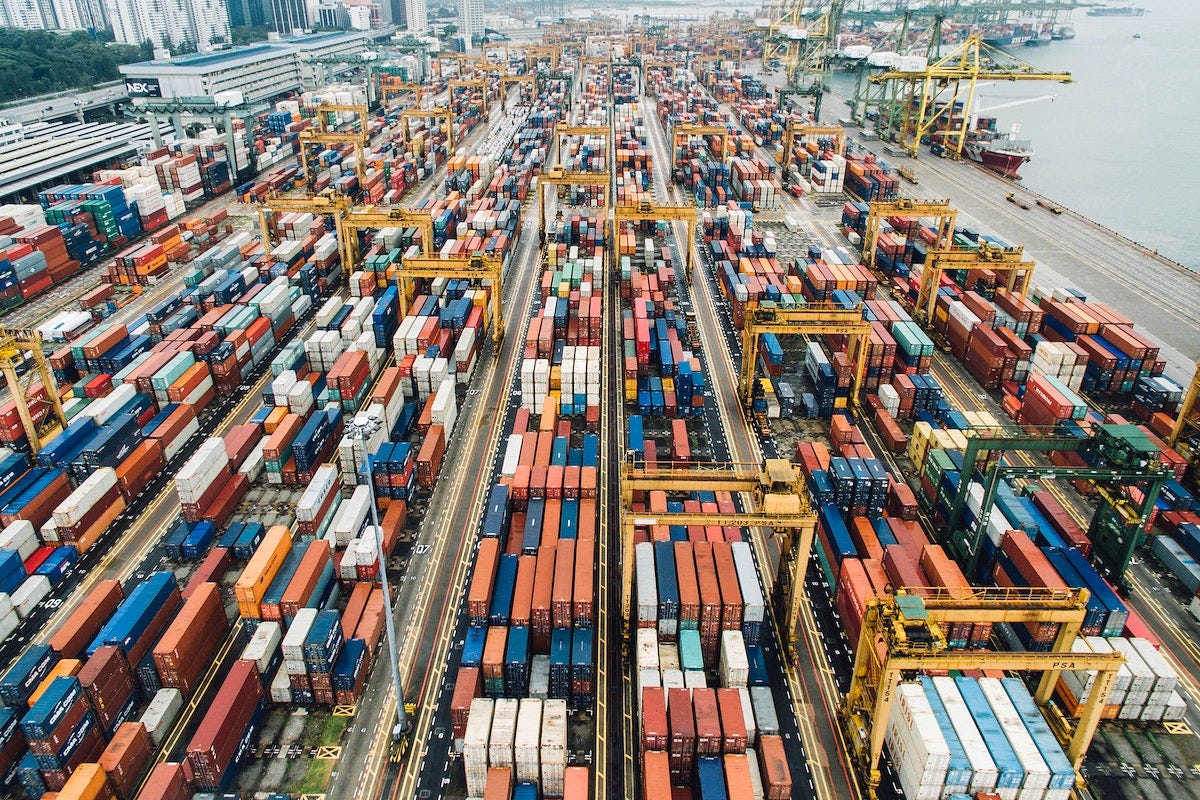
Every month, the Bureau of Labor Statistics (BLS) publishes a report called the Import and Export Price Indexes, and it tracks how much it costs to bring goods into the US from abroad. It rarely shows up on the news, failing to get the attention of the monthly jobs report and the Consumer Price Index release. But the numbers in these reports tell a story that helps explain something many Americans have been wondering recently: why does everything still feel so expensive?
The latest release, covering February 2026, is striking. According to the BLS report, the price of imports excluding fuel rose 2.5 percent over the past 12 months, the largest annual jump since October 2022, marking the post-pandemic inflation surge. That rise isn’t restricted to one category either; the February report showed prices climbing across machinery, raw materials, and everyday consumer goods all at once. A spike in one category might be a fluke, but a broad, sustained change across all product types is a signal.
This change has a clear cause. In 2025, the Trump administration imposed sweeping tariffs on goods from China and a range of other trading partners, framing the policy in terms of national security and reshoring American manufacturing. The effects were immediate. Research from the New York Federal Reserve found that import prices for goods subject to the tariffs rose roughly 11 percent more than prices for un-tariffed goods, and that American importers, not foreign suppliers, absorbed the majority of those costs.
Another, quieter force is also at work. To sidestep tariffs on Chinese goods, US companies have been shifting toward suppliers in Vietnam, India, and Mexico. But economists at the St. Louis Federal Reserve found that those alternative suppliers often charged more and raised prices faster than the Chinese manufacturers they replaced. On top of the tariffs, rewiring supply chains is itself pushing import costs higher.
For businesses, this has created a genuine problem. Many spent much of 2025 drawing down inventory they had stockpiled before the tariffs kicked in, which let them hold prices steady for a while. That cushion is now mostly gone. According to CNN Business, companies are increasingly facing the hard choice of passing higher import costs on to customers and risking losing sales, or absorbing them and accepting lower profits. Firms that rely heavily on foreign inputs—auto manufacturers, appliance makers, electronics retailers—are being hit the hardest. Some are also quietly increasing their prices a little extra to hedge against the possibility that tariffs shift again. Clearly, uncertainty itself is part of what is keeping prices up, not just the tariffs.
Households feel the effects further down the chain. The St. Louis Federal Reserve found that tariffs added roughly 0.5 percentage points to overall inflation between June and August 2025, with furniture, car parts, and electronics among the hardest-hit categories. The costs do not land evenly, though. Lower- and middle-income families spend a larger share of their budgets on physical goods than wealthier households, who spend more on services like healthcare and dining out. That means this particular kind of inflation hits people with tighter budgets harder. Additionally, because prices on big-ticket items like cars and appliances never really came back down after the 2021 surge, another round of increases feels especially frustrating.
This creates a problem for the Federal Reserve. The Fed fights inflation by raising interest rates, which discourages borrowing and cools spending; the Fed’s strategy works well when prices are rising due to overconsumption. It is less effective when prices are rising because imports cost more, since the root cause lies within the policy decisions being made in Washington instead of excess spending by consumers. Raising rates makes mortgages and car loans more expensive without actually fixing the underlying supply chain problem.
Yet, the Fed cannot just ignore persistent price increases either, because if inflation stays elevated long enough, people start expecting it to stick around and adjust their behavior accordingly, which could entrench it further. As a result, the Fed is stuck just watching import price data, unable to cut rates until the effects of the tariffs have fully worked their way through the economy.
None of this means the current tariff policy is outright wrong. Reducing dependence on Chinese supply chains has legitimate strategic logic, and some economists argue the short-term costs are worth it. But the BLS import price index tracks consequences, not intentions. Currently, those consequences include the largest nonfuel import price increase in over three years, a Fed that cannot cut rates, businesses repricing their entire cost structures, and households paying more for the goods that make up everyday life. The BLS is like a receipt for decisions made in Washington, and right now, that receipt is running higher than it has in years.