





























































































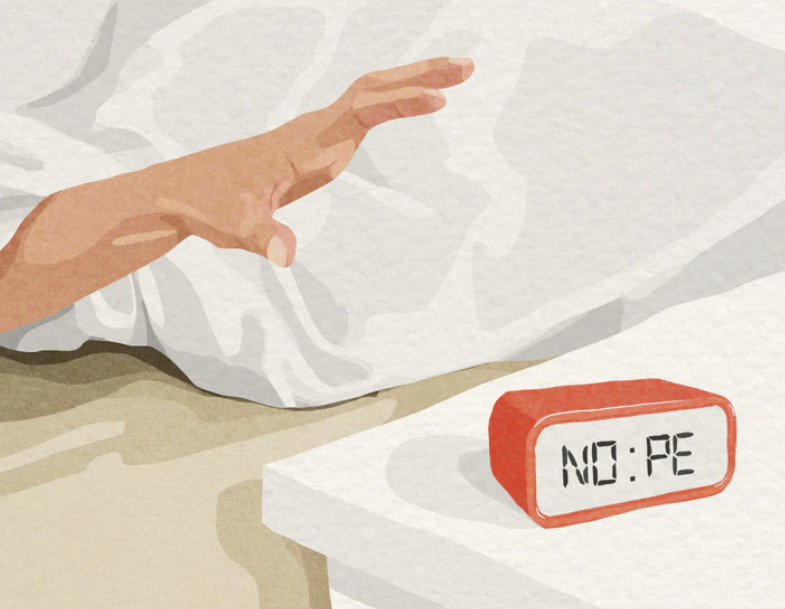
























































Being a high school student today is not easy. Every day, students are given heavy workloads that must be completed before the next class. Between completing homework, studying for tests, engaging in extracurricular activities, and trying to maintain a social life, it often feels like there are not enough hours in the day. As a result, some high school students at Tenafly are not getting enough hours of sleep, averaging only about 4 to 6 hours per night. According to an Echo article titled How Much Sleep Do THS Students Get?, “58 students reported that all 58 students sleep an average of eight hours or less. While a majority responded that they sleep 6 to 8 hours, more than 30% of students sleep even less, ranging from 2 to 6 hours.”
These are many reasons why students are sleep-deprived. One major factor is the amount of homework assigned. Students often stay up late trying to finish assignments, study for exams, or complete projects. Even when they finish their work, many struggle to fall asleep right away. Instead, they turn to their phones and begin scrolling through social media, watching videos, or texting friends. What starts as a short break can easily turn into hours of “doom scrolling,” pushing bedtime even later into the night.
However, regardless of the reason, the consequences of sleep deprivation are serious. A lack of sleep affects both mental and physical health. Students who consistently get only a few hours of sleep are more likely to experience lower GPAs because they have difficulty concentrating in class. They may find themselves zoning out during lessons, forgetting important information, or struggling to complete tests efficiently. According to the American Academy of Sleep Medicine on poor sleep, sleep-deprived students tend to get sick more often because their immune systems are weakened.
The emotional effects are just as concerning. Not getting enough sleep can increase stress levels, cause mood swings, and lead to feelings of sadness or anxiety. Over time, this can contribute to more serious mental health issues, including depression. There are also physical health risks, such as an increased likelihood of weight gain or obesity due to changes in metabolism and energy levels.
“Teens love to label themselves ‘night owls,’ trading stories of all-nighters and sleeping away an entire Saturday.” According to Johns Hopkins Medicine, “though teenagers and their sleep habits may be maddening to parents, they’re partly in response to physical changes that occur during puberty.”
Sleep also plays a key role in brain development and physical growth especially for teenagers. According to the CDC Archive, experts recommend that “high school students get between 8 to 10 hours of sleep each night.” This amount of rest allows the brain to process information, store memories, and function properly the next day. Students who get enough sleep tend to perform better academically, as they are more alert, focused, and engaged in their classes.
I have personally experienced the effects of sleep deprivation. On nights when I only got 5 to 6 hours of sleep, I felt miserable the next day. I could barely keep my eyes open, and it was difficult to focus on anything being taught in class. It felt like I was going through the motions rather than actually learning. This experience made it clear to me how important sleep really is.
Henry Soo (’26) shared his thoughts on getting enough sleep and how much it can improve a student’s day: “High school students should get 11 hours of sleep, because in the past couple weeks, I have not gotten enough sleep. I average around 6 to 7 hours a night. If I slept for 11 hours, I would perform way better in school, pay more attention, and answer more questions. I would also be in a much better mood to learn.”
According to Nationwide Children’s, “teenagers should go to bed and wake up at about the same time each day, in order to maintain a healthy sleep schedule. However, this can be difficult when students have many responsibilities and distractions. That is why both schools and students need to take action.”
Schools could help by being more mindful of the amount of homework assigned, which would allow students to get more rest. At the same time, students need to take responsibility for their own habits. Setting a consistent bedtime, limiting phone usage before sleeping, and managing time more effectively can all make a difference.
In the end, sleep is not something students can afford to ignore. It is essential for success in school and for overall well-being. If high school students continue to sacrifice sleep, they will continue to struggle academically, physically, and emotionally. It is time to recognize the importance of sleep and make it a priority rather than an afterthought.