






































































































































The March international break brought us many incredible moments and crazy upsets on the international stage, with the final spots for the 2026 World Cup getting secured. Not only that, but drama ensued as the winner of a competition was changed two months after the final!
The Africa Cup of Nations (AFCON) final was played on January 18 between Senegal and Morocco, and after a controversial penalty call, the Senegalese players left the field in protest. They returned after a 17-minute delay, and Brahim Diaz stepped up to take the penalty for Morocco. He attempted a panenka, which was saved, sending the game to extra time. Senegal went on to win 1-0 and were crowned AFCON champions. Two months later, on March 17, the Confederation of African Football (CAF) overturned this result and declared Morocco AFCON champions, according to CNN. Following the final, the Moroccan FA appealed the result to the CAF, which overturned the result.
The CAF said that “Senegal infringed on Article 82 of regulations of the Africa Cup of Nations, [which] states that if a team refuses to play or leaves the ground before the end of regulation time… it will be considered the loser and eliminated from the competition,” according to the BBC. In short, since the Senegalese players walked off the field before the end of the game, they forfeited the game and were eliminated from the competition. In the end, Morocco was awarded a 3-0 victory and the AFCON title. This situation sparked a huge uproar in the soccer world, with fans divided over whether the title should belong to Senegal or Morocco. This was the first time in history that the winner of a competition was overturned after the final was played.
Just a week later, the final matches for World Cup Qualification were played, and the last six spots were secured. Four of these came from the UEFA European qualifications and two from the intercontinental playoffs. In Europe, Turkey, Sweden, and Poland beat Romania, Ukraine, and Albania, respectively, while Italy, Denmark, and Kosovo beat Northern Ireland, North Macedonia, and Slovenia, respectively. Czechia also advanced past Ireland on penalties, while Bosnia and Herzegovina defeated Wales in a shootout. The final matchups were now set. In the first game, Turkey beat Kosovo 1-0 to qualify for their first World Cup since 2002, denying Kosovo their first-ever appearance at a World Cup. Sweden also qualified after a thrilling game against Poland in which Viktor Gyökeres scored the winner in a 3-2 win for the Swedes. This meant that Robert Lewandowski would not feature this summer, likely his last chance to play for Poland on the world’s biggest stage.
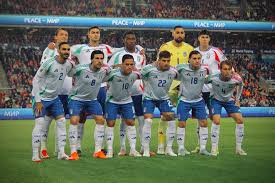
In the third game, Czechia beat Denmark 3-1 on penalties after a tense 120 minutes, qualifying for their first World Cup since 2006. The fourth and final game was between Italy and Bosnia and Herzegovina. Italy has historically been one of the best nations at World Cups, playing in 18 editions and winning four of them, the second-most in history. Recently, though, they have failed to qualify for both the 2018 and 2022 World Cups after losses to Sweden and North Macedonia in the final rounds of qualifying. This year, after going down to 10 men following an Alessandro Bastoni red card, they went to penalties against Bosnia and Herzegovina. Shockingly, they lost 4-1 on penalties, meaning they will now miss out on their third World Cup in a row. The last time Italy made it to the knockout stage of a World Cup was in 2006 when they won their fourth title. Since then, they’ve only played in the 2014 edition, where they were eliminated in the group stage.
In the intercontinental playoffs, Iraq beat Bolivia 2-1 to qualify for their first World Cup since 1986, while the Democratic Republic of the Congo beat Jamaica 1-0 after a 100th-minute goal to qualify for their second-ever World Cup and their first since 1974.
The international break brought us many great matches and crazy upsets, and the next time we see the national teams in action will be this summer at the 2026 World Cup. Now that club soccer is back, all eyes are set on the final stages of the Champions League and the title races in Europe’s top five leagues.