



































































































































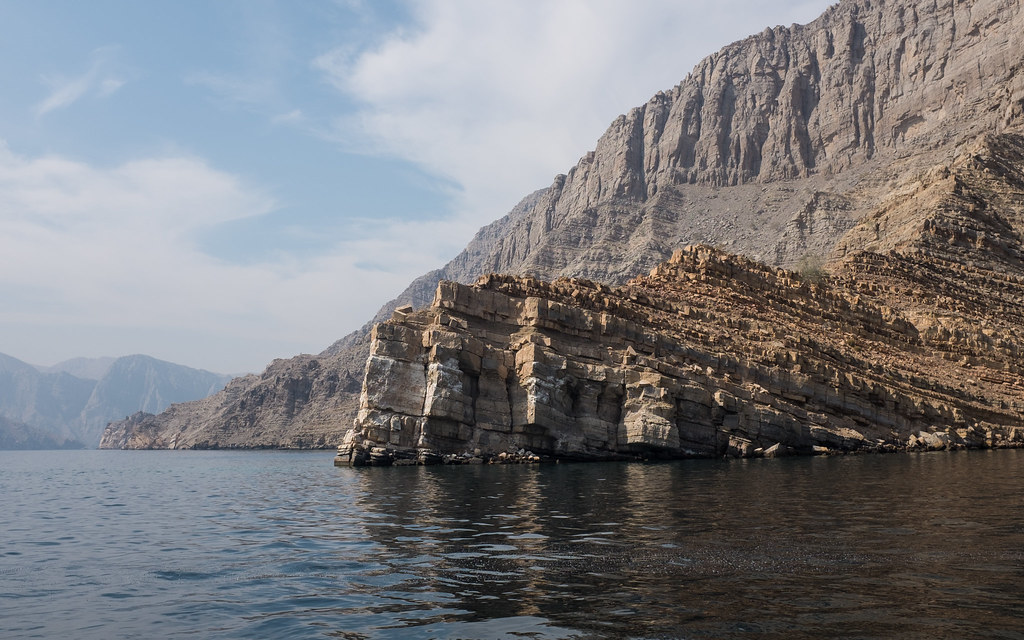
The Strait of Hormuz has long been and still is one of the most crucial areas of trade today. Stretching between Iran and Oman, this narrow channel connects the Persian Gulf to the open ocean. Today, it is essential for global oil transportation; however, its importance did not begin in the modern era. For centuries, powerful empires have fought to control it, recognizing that whoever dominates this passage holds influence over trade, wealth, and geopolitical power.
The Strait of Hormuz is a natural chokepoint. The Wall Street Journal reports that shipping lanes at their narrowest are only about two miles wide, making it easy for nearby powers to monitor or disrupt traffic. This geographic feature has made the Strait of Hormuz incredibly valuable throughout history. It serves as a gateway linking the resource-rich Persian Gulf to various global markets. Long before oil tankers filled their waters, the strait was a center of global commerce. Goods such as spices, silk, and precious stones traveled through the region from India and Asia toward trade hubs like Baghdad and later Europe. Consequently, the surrounding region became one of the wealthiest in the world. Efforts to control the Strait date back to the era of ancient Persia. Over time, other empires sought influence in the region. Travelers such as Marco Polo documented the risks and rewards of maritime trade through Hormuz, while Chinese admiral Zheng He visited the area during his famous voyages in the 15th century, The Wall Street Journal reported.
By the 16th century, European empires entered the competition for control. The Portuguese were among the first to establish dominance, building forts and using naval power to control trade routes. However, they faced strong resistance from the Ottoman Empire, which also sought to control the region. In the centuries that followed, competition intensified as European traders expanded their presence. By the 19th century, the southern coast of the strait, now part of the United Arab Emirates, became known as the “Pirate Coast” due to frequent attacks on commercial ships. However, the importance of the Strait of Hormuz increased dramatically in the 20th century with the discovery of oil in the Persian Gulf. In the 1930s, major oil reserves were found in countries like Saudi Arabia and Bahrain, transforming the region into a global energy hub, The Wall Street Journal reported.
As oil became essential to industrial economies, the Strait evolved into a crucial part of the world. Today, it serves as the main route for transporting energy from the Middle East to the rest of the world. Any disruption to shipping through Hormuz can have immediate consequences. Modern geopolitics has continued the long history of conflict over the strait. After the Iranian Revolution of 1979, tensions between Iran and the United States increased sharply. American leaders began to view the strait as a vulnerable yet essential passage. During the Iran-Iraq War in the 1980s, attacks on oil tankers, known as the “Tanker War,” highlighted how easily the strait could become a battleground, History reported.
Today, the Strait of Hormuz remains at the center of global conflict, particularly in rising tensions involving Iran, the United States, and their allies. Following recent military strikes in early 2026, Iran has responded by targeting ships and threatening to restrict access to the strait, demonstrating how geography can still be used as a powerful political weapon. Because a significant amount of the world’s oil supply passes through the strait, even small disruptions have caused prices to surge and raised fears of economic instability. Much like in earlier centuries, when empires fought to control the flow of spices and silk, Iran is now leveraging its position along the strait to exert pressure on the international community, The Wall Street Journal reported.
The Strait of Hormuz is more than just a passage for ships. It is a symbol of how geography can shape history. For centuries, it has stood at the crossroads of trade, conflict, and global power, and it continues to do so today.