

















































































































































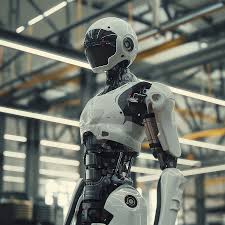
On Sunday, April 19, 2026, in Beijing, a bright-red humanoid named “Lightning” left 12,000 human runners in its wake during the Beijing E-Town Half Marathon, raising questions about what machines may now be capable of. Lightning blazed through the streets of Beijing, crossing the finish line of the marathon in a time that no human has ever matched.
This newly built humanoid robot, developed by Honor, a Chinese smartphone company, finished the entire 13-mile course in just 50 minutes and 26 seconds, “besting all 12,000 human competitors and even surpassing the human world record,” reports NBC News. It broke the current world record set by Jacob Kiplimo, a Ugandan long-distance runner, by almost 7 minutes.
The result marks a stunning reversal of fortunes. Compared to last year’s half-marathon, which ended in complete humiliation for the machines with several of the 21 robot competitors running into problems from the starting line things couldn’t have been more different this year.
Lightning’s design was “on elite runners, and its motors were cooled with a liquid-circulation system adapted from the smartphones of its maker,” reports Scientific American. The engineering achievement drew widespread attention online, where footage of the robot’s fluid stride spread rapidly. However, this victory was not without drama. Towards the end of the finish line, Lightning fell, crashed into a barricade, and had to receive help from its handlers.
“I felt very nervous,” said Ma Huaze, a captain of the Honor team. “The biggest challenge was having the courage to perform and test large-scale upgrades on a major competitive stage like this,” reports NBC News. Despite last year’s big upset, this year’s results show a huge growth in technology.
Despite the enormous victory achieved, experts such as Yanran Ding, an assistant professor of robotics at the University of Michigan, cautioned against reading too much into the result. “It’s really hard to make robots run robustly for such a long period of time,” he said, according to Scientific American, adding that the bigger feat was heat management. Jonathan Hurst of Agility Robotics additionally notes that the difference between a humanoid robot that can run an already mapped, pre-prepared course and a robot that can go through a course just like a normal runner is extensive. He offered a pointed analogy for those tempted to see the race as a turning point.
“It’s like looking at the first cars and being like, ‘It doesn’t fly,'” Hurst said. “It’s a pretty high bar.”
This race has more than what meets the eye, as it carries wider geopolitical significance. China has made humanoid robotics a cornerstone of its 2026–2030 economic plan, explicitly positioning the sector as part of its technological rivalry with the United States, according to NBC News. Robot sporting competitions have proliferated across the country over the past year, serving as public proof-of-concept moments for the industry.
In the end, whether Sunday’s result represents a genuine milestone or a carefully staged spectacle, one thing is clear: the machines are getting faster. However, whether they are getting smarter is a question that will take much longer to determine.