




























































































































































The familiar noise of an incessant, metallic rattling rings in your ears. It’s a melody you’ve come to cherish over the years. Amidst a bustling crowd of customers and a bit more clattering, your shopping cart reaches its chorus as you step into the produce aisle. Immediately, you’re confronted with a vibrant skyscraper of bell peppers, broccoli, and what seem like thousands of varieties of greens. Beside you, the hanging roll of plastic produce bags accelerates as hands scramble to rip a piece. Enveloped in a cool mist, the vegetables, flanked side by side, watch you. Immersed in this produce utopia, you’re already muddled, but you persevere, determined to buy the cucumbers you drove thirty minutes for. Two typical, visibly identical bags of cucumbers are in your hands; however, upon further inspection, you find that only one bears a badge reading “organic.” Suddenly, the cucumbers become distinctly different from one another, and the bag without the organic sticker starts to look a bit more unattractive. Organic food, a standout item in grocery markets, has garnered a devoted following since its debut. Acclaimed for its supposed superiority in maintaining health, organic food has cemented its place in the supermarket industry. Customers have chosen it as a marker of wellness, but the ambitious claims about it raise a question: Is organic food really healthier?
What Does It Mean to Be Organic?
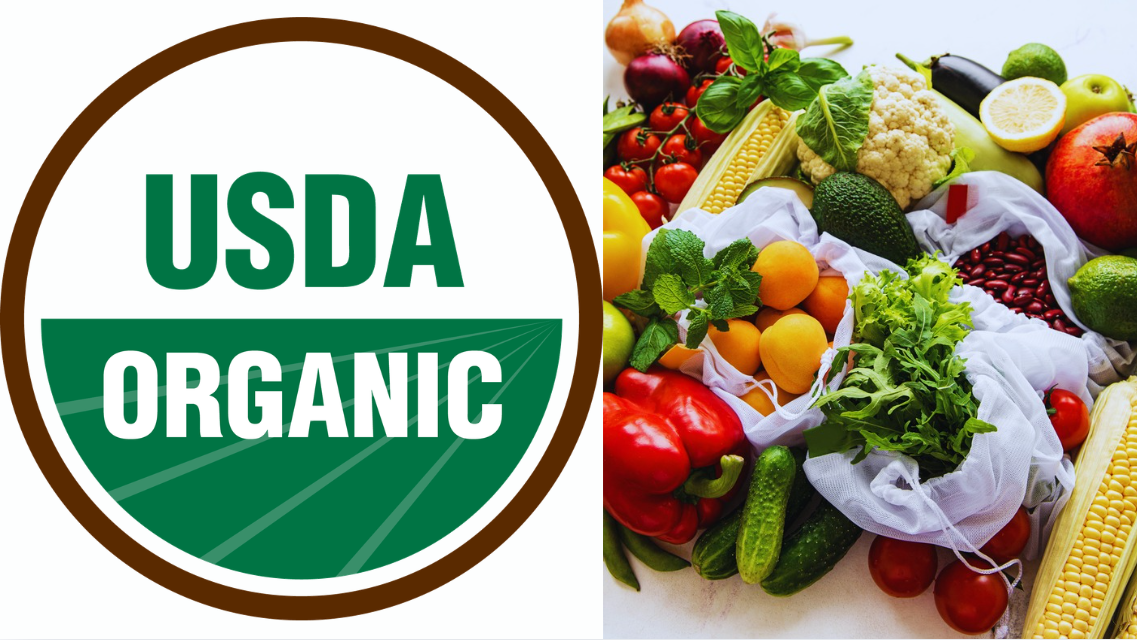
The U.S. Department of Agriculture defines “organic” as a label that indicates a product’s alignment with approved farming methods and organic production standards. To carry this exclusive emblem, production must strictly adhere to a set of rules, including the prohibition of genetic modification or engineering, natural controls for crop pests, weeds, and diseases when possible, and that the “land must have had no prohibited substances applied to it for at least 3 years before the harvest of an organic crop.” Livestock and poultry standards are upheld to demanding criteria as well, requiring livestock to be fed 100% organic products and have year-round outdoor access. When diseased, livestock are to be medicated in accordance with the National List of Allowed and Prohibited Substances, which, unlike popular belief, permits a number of approved synthetic additives and pesticides. During packaging and shipping, products labeled as “organic” must have at least 95 percent certified organic content, while products represented as made with “organic” must have at least 70 percent certified organic content.
A Nutritional Breakdown
Yet the mystery surrounding the extravagant organic label remains nutritionally ambiguous to even its most avid followers. In recent years, wrapped in health guarantees, organic products have reached their pinnacle as clean-eating begins to dominate social media platforms. According to “Are Organic Foods More Nutritious Than Conventional Foods?”, the nutritional superiority of foods hinges more on the foods themselves rather than how they were produced. In an assessment, the carbohydrate levels of conventionally grown goji berries and strawberries were higher than those of their organic counterparts. However, organic kiwifruit were observed to have higher carbohydrate levels than their conventionally grown variants. Despite being grown in different farming settings, nutritional trends were not consistent with a particular method. These results highlight the limited advantage of growing practices on a food’s overall nutritional value.
The Verdict
You pick up the two bags of cucumbers, this time with a redefined idea of what constitutes “organic.” In a supermarket full of cucumbers, you choose the bag that fits your personal priorities and goals. “Organic” is a label that promotes food in a more natural state, and since its introduction, it has earned a devoted base of regular grocery shoppers and health-conscious consumers. Organic produce does have a slight edge in food safety; the restrictions on organic growing practices lower exposure to certain heavy metals, pesticides, and synthetic additives, which are highly beneficial for people with sensitivities. At the same time, the noticeably cheaper cost of conventionally grown foods seems to better accommodate tighter financial situations.
Let’s make one thing clear: organic products are certainly beneficial in some respects, but they aren’t the only option for eating healthy. The decision you make at the supermarket should consider your needs, wants, and budget. If you’re buying organic for nutrition, rather than chasing organic labels, consider the broader context of what is in your cart. Grabbing a well-balanced array of foods featuring fruits, vegetables, and the occasional treats offers benefits that organic labeling alone cannot promise.