









































































There is a difference between political disagreement and something far darker. Lately, that line feels ignored.
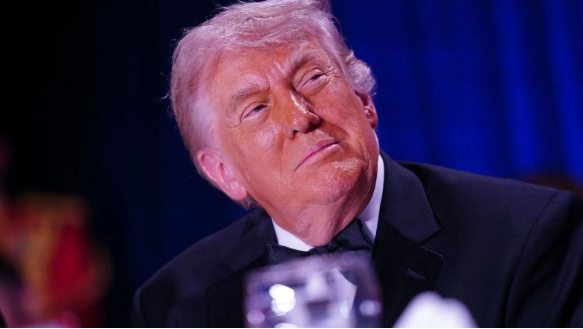
He has survived a bullet grazing his ear at a Pennsylvania rally. He has survived a gunman hiding in the bushes of his Florida golf course. Now, President Donald Trump has survived a third assassination attempt at one of Washington D.C.’s most glamorous annual traditions: the White House Correspondents’ Dinner.
Saturday, April 25, began like any other black-tie gala. More than 2,000 guests in tuxedos and ball gowns filled the ballroom at the Washington Hilton, gathered for an evening of entertainment and tradition celebrating freedom of the press. President Trump, Vice President JD Vance, and members of the cabinet were in attendance. No one could have anticipated that the night would end with the echo of gunfire and guests diving under their tables.
Cole Tomas Allen, 31, a teacher and engineer from California, had not come to Washington for the festivities. According to The New York Times, he arrived with “a pump-action shotgun, a .38-caliber handgun and three knives.”Allen had checked into the hotel the night before the event with all of his weapons, and he himself “expressed surprise” that he had been able to do so. That alone should concern anyone paying attention. It suggests not only intent, but a failure in the systems meant to prevent exactly this kind of situation.
Minutes before the attack, Allen sent a note to family members and a former employer. NBC News reports he believed it was “his duty to target Trump administration officials,” prioritizing them from highest-ranking to lowest. It was a chilling indication that the attack was carefully and deliberately planned. That is not a protest. That is not activism. That is extremism.
According to the Department of Justice, at approximately 8:40 p.m. on Saturday, Allen made his move. He ran through a security checkpoint one floor above the ballroom, shotgun in hand. A Secret Service agent was shot in the chest but survived thanks to a bulletproof vest. The agent fired back five times, and Allen fell to the ground and was arrested. Despite the violent confrontation, he suffered only minor injuries.
Down in the ballroom, chaos erupted. Guests crouched under tables as the sound of gunfire rang out above them. Trump and his administration were swiftly evacuated, unharmed. In the aftermath, the White House was direct. According to Fox News, White House spokeswoman Allison Schuster said, “President Trump remains completely undeterred despite the multiple attempts on his life by cowardly individuals. The president will not allow deranged lunatics to change the fabric of this country and dictate the American way of life. President Trump and the entire administration will continue to stand strong and fight for the American people.”
The facts are not complicated. The response should not be either. Political violence is wrong—not sometimes, not depending on who the target is, but always. You do not have to support Trump to recognize that attempting to kill a political figure in your country is an attack on democracy itself. Former President Barack Obama came out on social platform X and said “…it’s incumbent upon all of us to reject the idea that violence has any place in our democracy.”
Three attempts on one person’s life are not a coincidence. It is a pattern, and patterns mean something. It suggests that a small number of people have convinced themselves that violence is a reasonable response to political disagreement. Political violence is wrong. That should be the easiest thing in the world to say, and yet it has somehow become normalized. You don’t have to like Trump. You don’t have to agree with him on anything, but the idea that harming him could ever be justified is not ok.
According to CNN, Allen appeared in federal court on Monday, April 27, and has been charged with attempting to assassinate the president. He has not entered a plea and is anticipated to remain in custody for an indefinite period. Acting attorney general Todd Blanche sought to reassure the public about the security response, noting that Allen never made it into the ballroom and that there were “hundreds of federal agents” standing between him and the president.
Despite those assurances, the incident has raised serious questions about security protocols surrounding the event. According to the New York Times, “the White House chief of staff [Susie Wiles] plans to meet this week with officials from the Secret Service, the Department of Homeland Security, and other agencies to review security practices for presidential events in the coming months.”
There is also something worth saying about the tone of public life more broadly. Politics has always been loud and contentious, and that’s fine. Satire has always had a place. Criticism is healthy. But somewhere along the way, the temperature rose to a point where cruelty started passing for commentary, and jokes about people’s deaths started getting laughs instead of discomfort. As reported in the BBC, “Late-night host Jimmy Kimmel…called Melania Trump an ‘expectant widow.’”
The Harvard Crimson revealed that a Harvard Youth Poll released in late 2025 found that nearly “40 percent of young Americans” believe “political violence is acceptable in certain circumstances.” The student chair of the organization, Jordan Schwartz, called the findings a “five-alarm fire,” and he wasn’t wrong. The fact that four in ten of his peers have opened the door to political violence, even a crack, should stop everyone cold. The events at the Washington Hilton are proof of where that thinking leads.
This country has disagreed before, fiercely, loudly, and at times bitterly, and that is not new. What is new is the growing sense that words, votes, and protests have somehow failed, and that violence is the next logical step. It is not, and it never has been. What Allen did is a slap in the face to every person who ever fought for change the right way. Political violence does not change minds, shift policy, or honor the generations of Americans who earned progress through courage and conviction rather than weapons. And perhaps most importantly, it is entirely unnecessary. The First Amendment guarantees every American the right to speak freely, to protest, to criticize those in power, and to demand better without ever picking up a weapon. That freedom is precisely what makes this country different. We do not have to resort to violence to be heard. We are better than this.