

































































































































When you use Google Docs or Microsoft Word, perhaps to write your 2026 New Year’s resolutions, with just a few key strokes, you can easily edit a specific part of your writing. A word can be deleted, replaced, or rearranged within seconds. With a biotechnology called CRISPR-Cas9, scientists can make similarly precise edits to something much more fundamental: the human DNA.
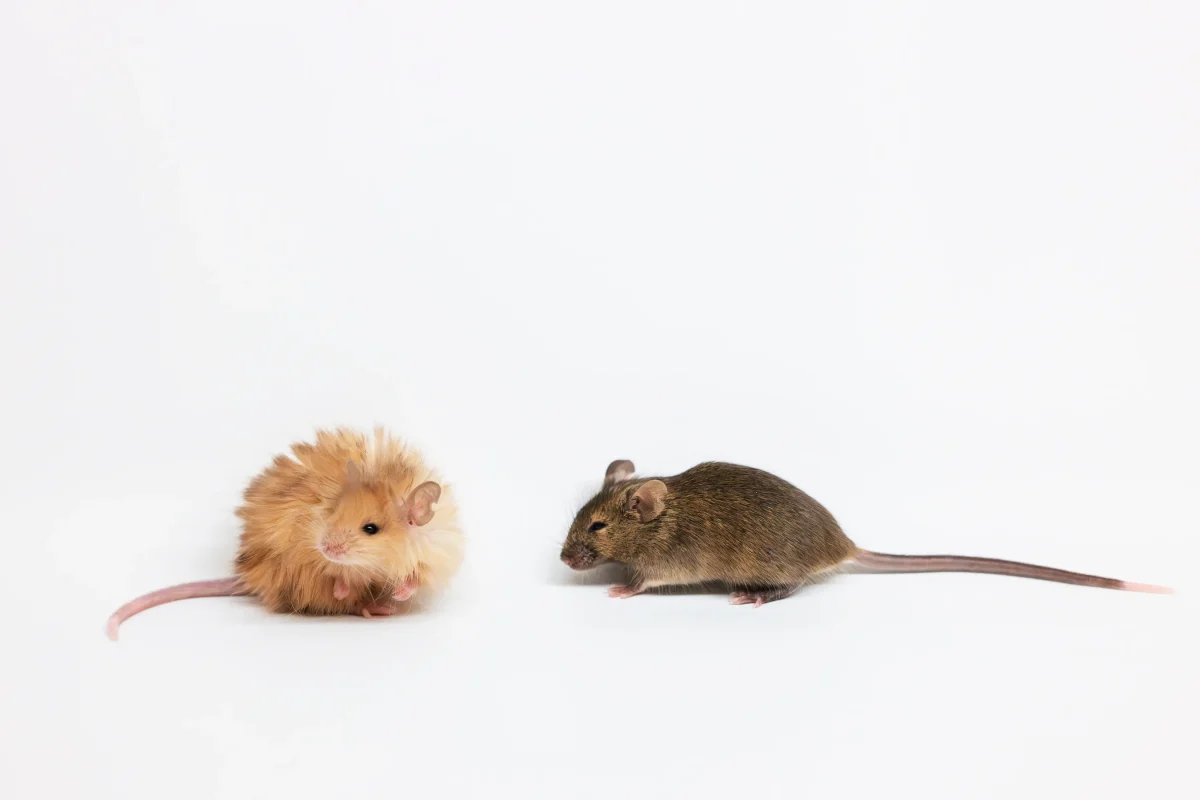
The CRISPR-Cas9 gene editing is one of the most significant breakthroughs in modern biotechnology. The Echo has covered the various applications of CRISPR-Cas9 since 2019: defeating antibiotic-resistant bacteria, transplanting a pig kidney into a human patient, and creating wildly woolly mice.
In 2018, Chinese scientist Jiankui He modified the genome of baby twins before they were born using the CRISPR-Cas9 tool, creating the first ever human genetically edited babies, according to the Science History Institute. The incident led to huge ethical and legal controversies worldwide. The Echo has also previously covered the promises and dangers of gene editing.
Setting the controversies aside, this article will cover the fascinating mechanism behind the CRISPR-Cas9 in depth.
To start, our body fights back against diseases by using our immune system. Amazingly, a bacteria consists of a single cell and also has their own immune system. Researchers from Johns Hopkins University found that, when bacteria survive an invasion of a virus, some bacteria keep the record of the virus’s DNA in their own DNA, very much like saving a file on a USB drive. Those portions of the DNA holding the “files” of previously infected viruses are called CRISPR (clustered regularly interspaced short palindromic repeats).
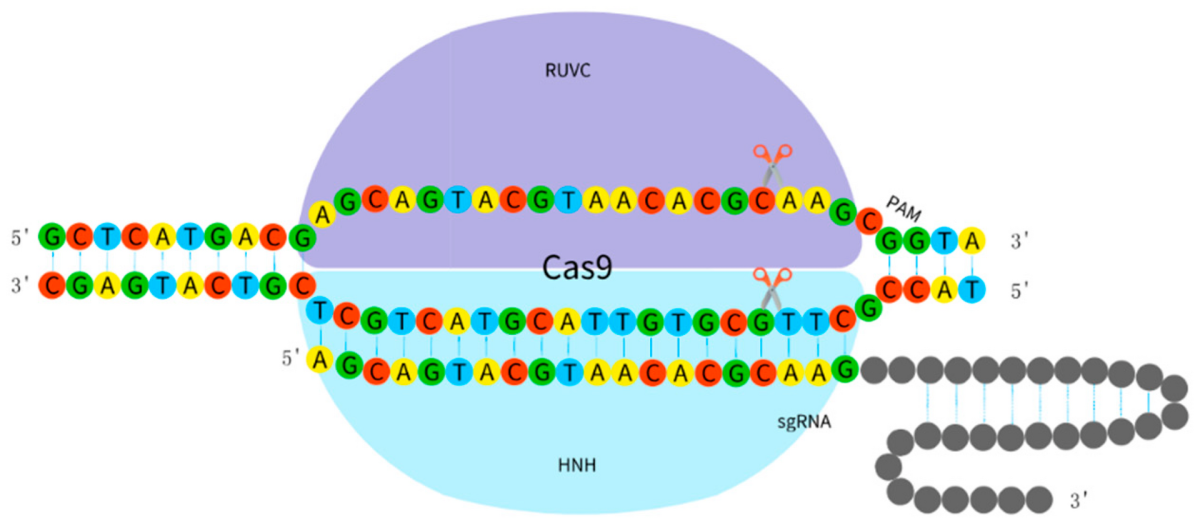
However, saving the snapshots of viruses is not sufficient for an immune system. This is where the Cas9 (“CRISPR-associated protein 9”) comes in. Cas9 is an enzyme that can recognize and slice up the DNA sequence recorded in CRISPR, according to the National Library of Medicine. But Cas9 cannot find the DNA targets on its own. It pairs with a molecule called guide RNA, which carries the genetic instructions needed to identify the target DNA. If Cas9 is the scissors, the guide RNA is the instructions manual that tells it where to cut. This way, the bacteria can quickly kill the same kind of virus that invaded previously. Because of the complementary natures of CRISPR and Cas9, they are called the CRISPR-Cas9 system.
Then, how is the bacterial immune system related to editing human DNA? Scientists found a way to load Cas9 enzymes with a synthetic guide RNA, according to the National Library of Medicine. This synthetic guide RNA is designed by humans and contains the information of where the scientists want to cut the DNA. When scientists inject the synthetic Cas9 into living cells, it cuts the matching DNA at the desired locations, thinking that the part of DNA is the virus to fight with. In short, Cas9 is fooled into cutting a specific DNA sequence that scientists want to cut. Once the part is cut, it is replaced with a modified DNA or naturally repaired in the cell. According to Synthego, while genome editing has been possible with other methods since 1980, the CRISPR-Cas9 technique is far more efficient and accurate for large-scale implementation. As a result, scientists Emmanuelle Charpentier and Jennifer Doudna were awarded the Nobel Prize in Chemistry in 2020 for their development of the CRISPR-Cas9 genome editing technique.
You might wonder whether other CRISPR-associated proteins exist besides Cas9. They do! Proteins such as Cas12 and Cas 13, according to ScienceDirect, are also promising tools for editing genes. They are also being studied for gene editing, especially in cases where Cas9 is less effective. However, their applications are more specialized, and Cas9 remains the “workhouse” of genome editing today.
CRISPR-Cas9 was originally discovered as a simple bacterial defense trick, but it has opened a new chapter in how humans reshape life itself. While scientists are still learning how to use this tool safely and responsibly, its potential seems enormous. A discovery that started in tiny bacteria may end up changing the future of medicine and biology.