






















































































There is something very human about wanting to be remembered. As Hemingway once wrote, “Every man has two deaths: when he is buried in the ground, and the last time someone says his name.” Yearbooks, in a sense, are an attempt at immortality—they ensure that names, faces, and stories are not forgotten.
Long before cameras, before printing presses, before schools and yearbooks and photographs taped into albums, people still tried to leave something behind. Names were carved into stone, and initials were scratched into desks to serve as proof that someone existed and mattered. Yet, these traces were never meant to stay only in the past. They were messages to the future and reminders that someone once existed and that someone else, someday, might care enough to notice.
Similarly, it is almost natural to think of the yearbook as something you open years later, sitting on the floor of an attic, flipping through pages of people you once knew and places you once walked through every day. But how each page preserves a living moment indicates that the yearbook is not just for looking back; it is a message to those who will open these pages years from now, trying to imagine what life felt like, what students dreamed of, and what made them care.
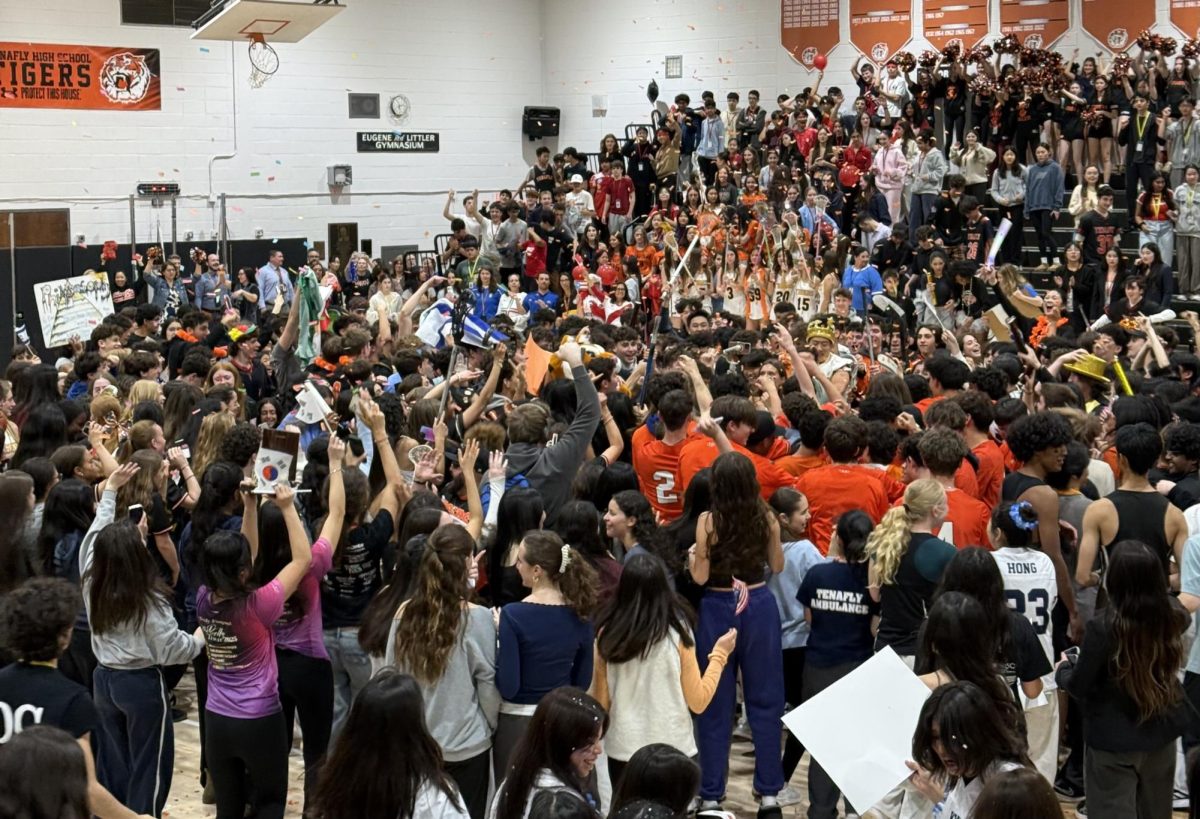
“Tenakin is a time capsule,” Tenakin advisor Mrs. Amanda Oppedisano said, referring to THS’s yearbook. “It’s a way to hopefully have as many people represented. It’s a way to freeze time and allow anyone looking through it to go, ‘Oh yeah, I was there.’”
A volume begins as 216 blank pages and ends as evidence that a specific constellation of students, teachers, clubs, and teams once shared the same roof, calendar, and even fire drills. Each edition joins a century’s worth of others, lining shelves like stacked layers of time.
“I love looking through really old yearbooks and seeing that student life was thriving a century ago as it is now,” Mrs. Lucine Kinoian, a former Tenakin advisor, said. “The world might have looked different, but the daily life of a teenager was still filled with friends, clubs, and academics.”
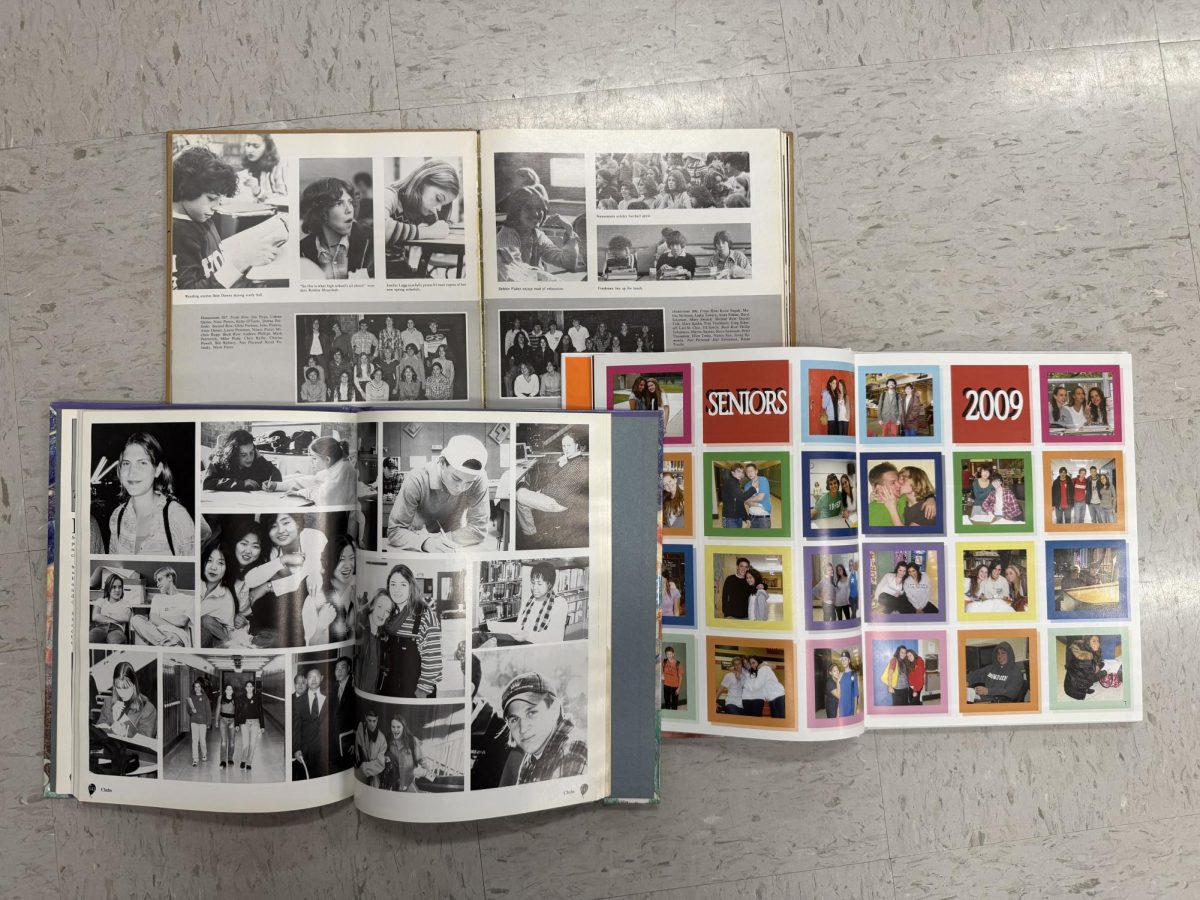
Open a book from the 1920s, the 1950s, the 1980s, and the familiar architecture of school returns. (To put this into some literary and historical perspective, THS was already welcoming students the year The Great Gatsby made its debut in 1925 and had existed when WWII began in 1939.) Despite the depths of time, for each year, the underlying impulse remains the same. Teenagers then were teenagers now with the same friends, clubs, laughter, assignments, and milestones. It’s just that their lives are frozen in black-and-white pages, preserved for the future.
“Sometimes those moments stay with us, and we realize they’re still the ones we look back on in yearbooks,” Oppedisano said. “When you look at a photograph of a path you walk to school, it might be nice to just remember that that’s always going to be there for you. Like before you a piece of the past that maybe you can take with you.”
The evolution of the yearbook reflects broader societal changes. In the 1970s and 1980s, more writing appeared alongside photographs, giving students a voice beyond the images. By the 1990s, a “reality-TV” feel emerged in candid photography—students captured mid-laugh, in hallways, or at school events. Those pages feel loose and alive, as if the photos were taken in motion and the laughter might spill out if the page was turned too quickly.
“I would love to bring more of that back,” Oppedisano said, reflecting on a recent shift toward posed photographs. “Just more candid images and what they actually imply.”
The way Tenakin is made has transformed just as dramatically. In the past, everything was done on paper, glued into place, and black and white. Now, the work unfolds on screens. Staff members drag and drop portraits into digital templates, adjust fonts, and nudge image boxes along invisible gridlines. Regardless, the intention is the same: to take a year that feels unwieldy and fast and translate it into something that can rest gently on a shelf.
“There are so many details in a day that can get lost in time,” Oppedisano said. “Can we flip to a page and just be brought right back? That’s what makes Tenakin special […]. Hopefully, [Tenakin] is a way to give people a chance to say what day they can send into nostalgia and memory, and we’ll do our best to give them a chance to do that.”
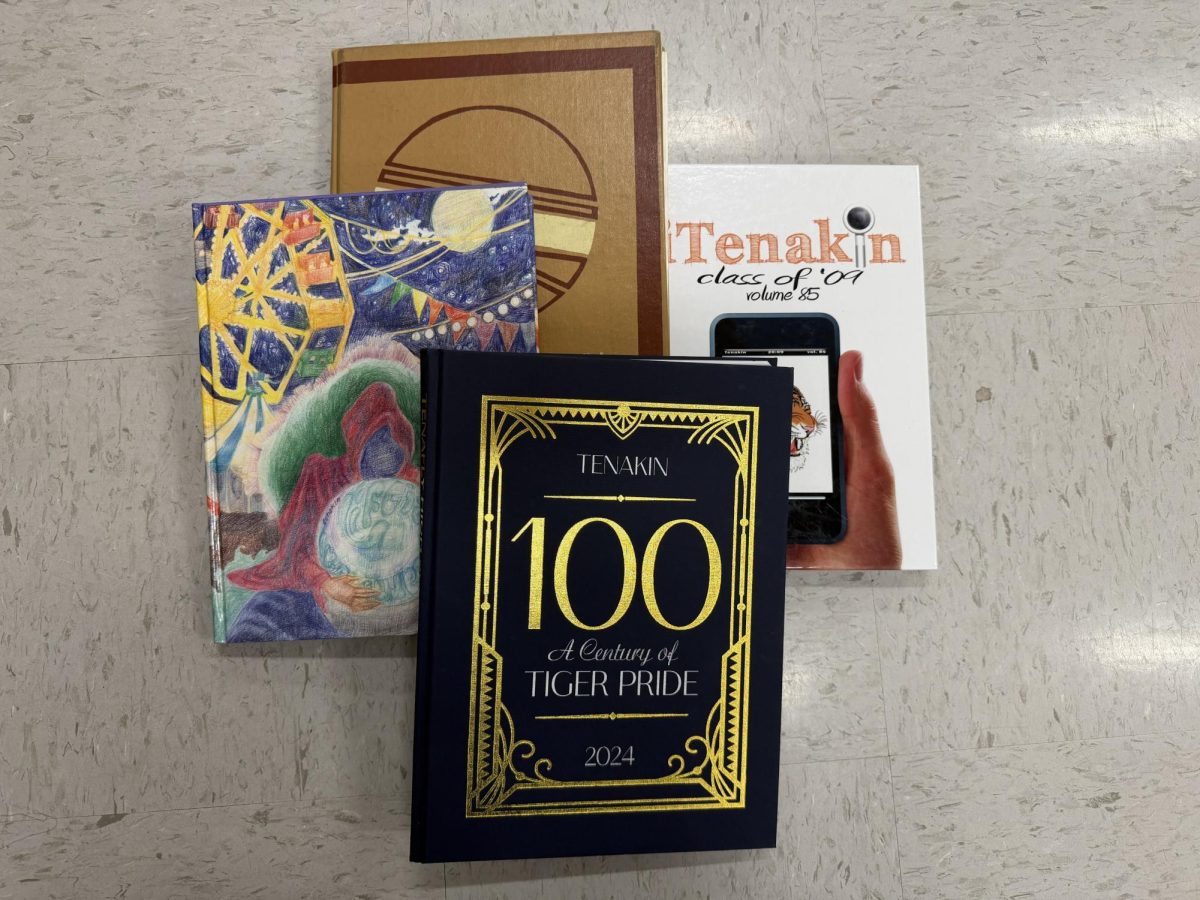
The Tenakin also mirrors the rhythms of life and history. The centennial edition of 2024, for example, intentionally blended the past with the present, a conversation between the first books and the latest.
“We spent a lot of time going through the archives of old Tenakin books to learn about Tenafly’s history,” Kinoian said. “While every yearbook is special in that it is meant to preserve a little slice of history, working on the 100th edition of the Tenakin made us feel like we were part of something bigger than ourselves.”
Nonetheless, a yearbook does not become a time capsule of its own. Behind every page is the Tenakin staff planting countless memories in the folds of the yearbook. Head over to “Capturing Tenafly over the Years (Part II): Inside Tenakin” to see how the book comes to life.