



























































































































































During any season, there is always some type of sports playoff happening, but none come close to the intensity of March Madness. In September, it’s baseball; in June, it’s the NBA; but in March, the NCAA college basketball tournament takes over. For a few weeks, the entire country is locked in, filling out brackets and watching every upset unfold. This tournament is not only thrilling on its own, but the addition of brackets makes every game even more meaningful. Whether it’s my family hosting our annual bracket challenge or watching our favorite teams go on a run, the madness of March cannot be topped.
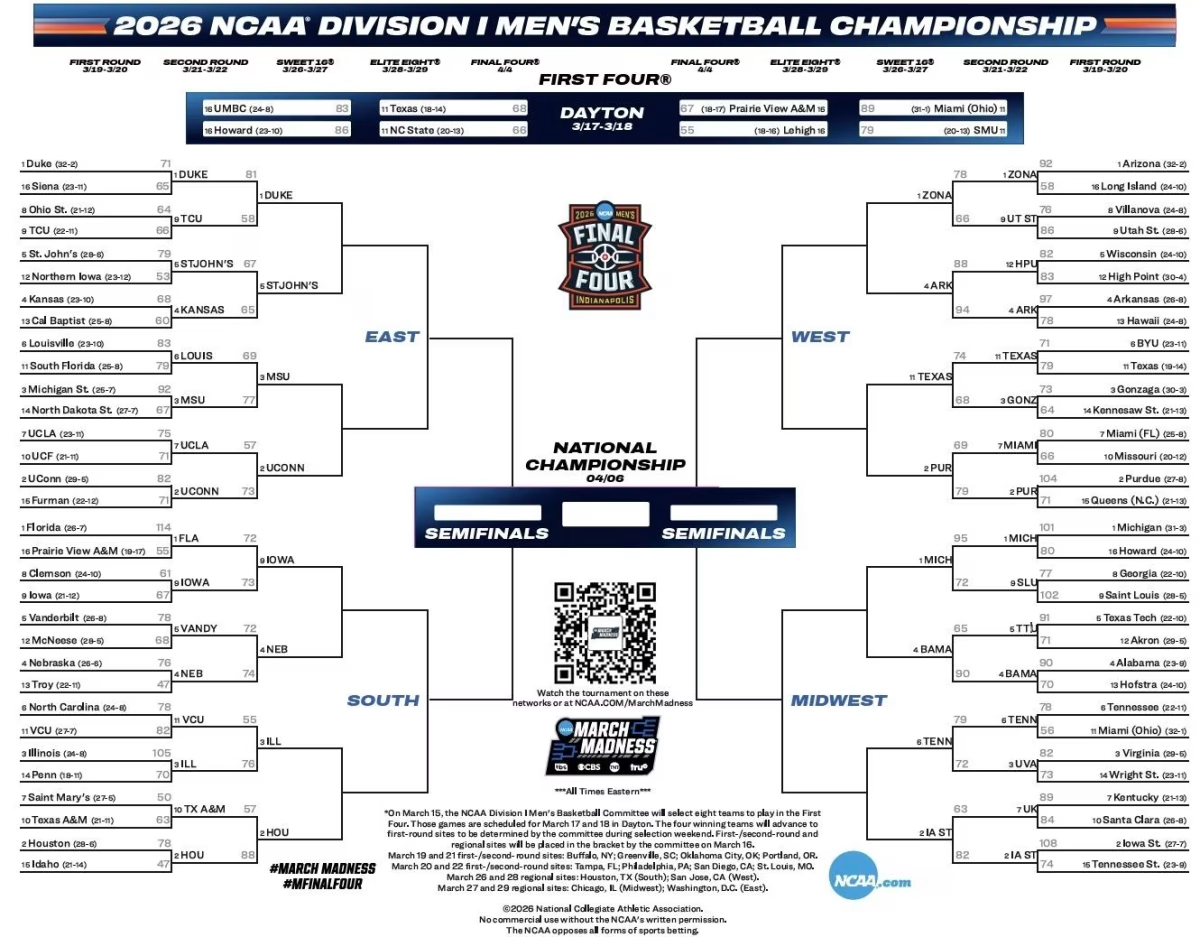
This tournament has been played since 1939. It started as only an eight-team event and has expanded into today’s format with 68 teams. It begins with Selection Sunday, where teams are chosen and seeded. The following week, four teams compete in play-in games, where the winners earn a spot in the main bracket. After one weekend of constant gameplay, the tournament is cut down to only 16 teams. The next weekend, the Sweet Sixteen takes place, and the winners move on to the Elite Eight. The top teams then advance to the Final Four, and the winners of those games compete in the national championship, where one team takes it all.
With its single-elimination format, every game is intense since one loss means elimination. Unlike the NBA playoffs, where teams play multiple games in a series, March Madness requires teams to perform at their best every single night. There are no second chances, which creates a level of urgency and excitement that other playoff systems simply cannot match. Every possession matters and even a single mistake can end a team’s season, making each game feel high-stakes.
In most professional sports playoffs, underdog victories are rare. However, one of the best parts of March Madness is when a low-seeded team upsets a higher seed and makes a deep run in the tournament. These teams are known as “Cinderellas.” Instead of top seeds dominating the bracket, smaller schools, ones many people may have never even heard of, get a chance to shine on the national stage. This unpredictability makes it nearly impossible to accurately predict the outcome of the tournament.
Another factor that makes March Madness so unique is its ability to keep fans highly engaged through brackets and widespread participation, even among people who do not usually watch sports. Even if you are not a basketball fan or know little about college athletics, filling out a bracket becomes part of the experience. Although a perfect bracket has never been recorded, it still gives people a reason to root for different teams. Trying to predict underdogs, first-round upsets, and the so-called “bracket busters” allows everyone to take part in the excitement.
Nonetheless, some critics argue that the tournament is too random and does not always result in the best team winning. However, that unpredictability is exactly what makes March Madness so riveting and different from other playoff systems. Rather than being a flaw, this aspect creates opportunities for a wider range of teams and keeps fans invested. After all, few people would want to watch a tournament where the top seeds win every game.
Ultimately, March Madness stands out as the best playoff system in sports because it mixes intensity, opportunity, and fan engagement in a way no other tournament can. Its single-elimination format makes every game meaningful, its underdog stories bring buzz, and its bracket culture brings people together across the country. While other playoffs may be more structured or predictable, none capture the same level of energy and national attention. For a few weeks every year, March Madness proves that in sports, anything can happen, and that is what makes it truly unforgettable.