



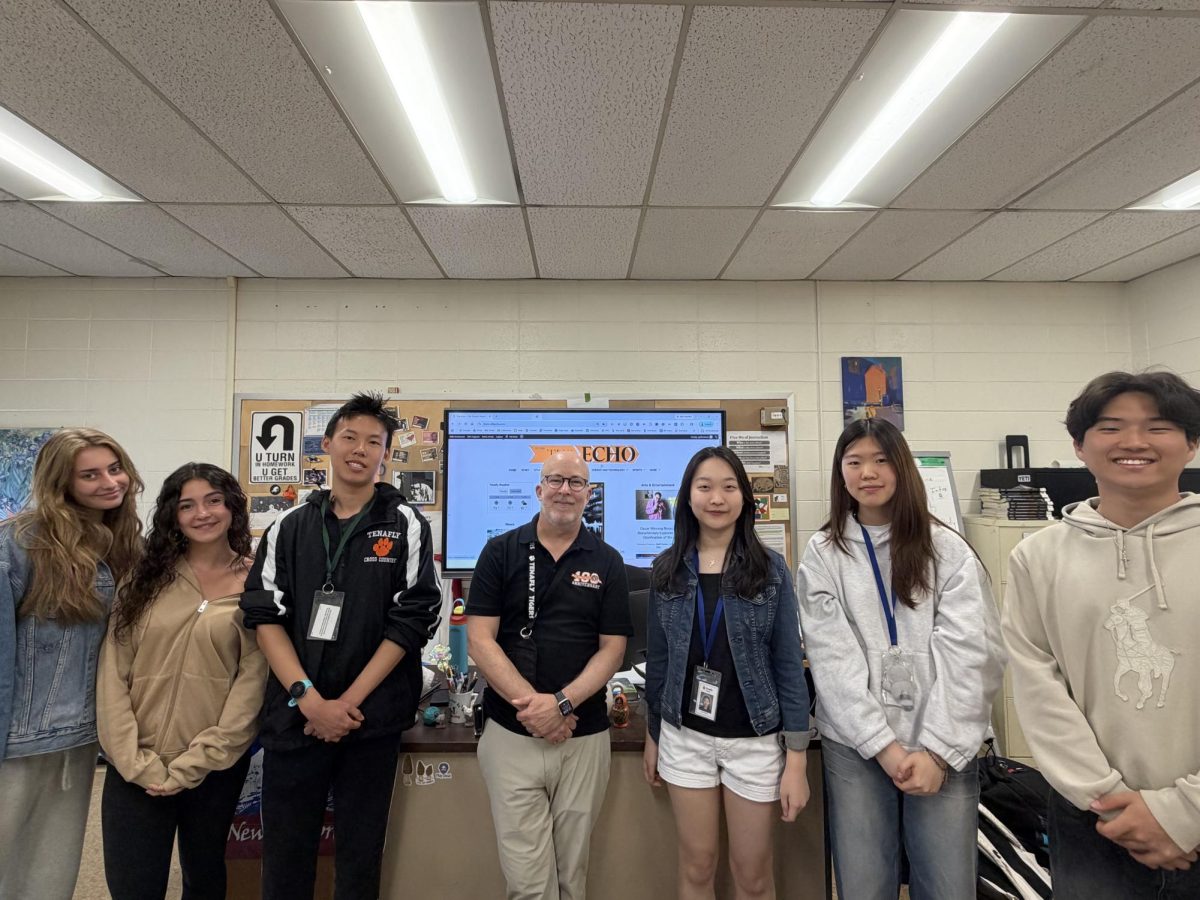






























































































Ladies and gentlemen, you know I spend most of my time typing away at my Macbook, carefully assembling the scrappy, earnest, and occasionally chaotic headlines of teen life into a presentable bundle of hyperlinks and ambition we call a student newspaper—triple-checking quotes, chasing down sources between bells, and polishing each sentence until it’s just respectable enough to be published. But sometimes, just sometimes, instead of sifting through the familiar halls of Tenafly High School, the news spins wildly out of control, vaults over state lines, rockets onto national television, and lands squarely under the bright studio lights of The Late Show with Stephen Colbert. That was how the students of Mr. Whitehead’s journalism class found themselves featured on one of America’s most iconic late-night programs.
It began, most improbably, with an assignment.
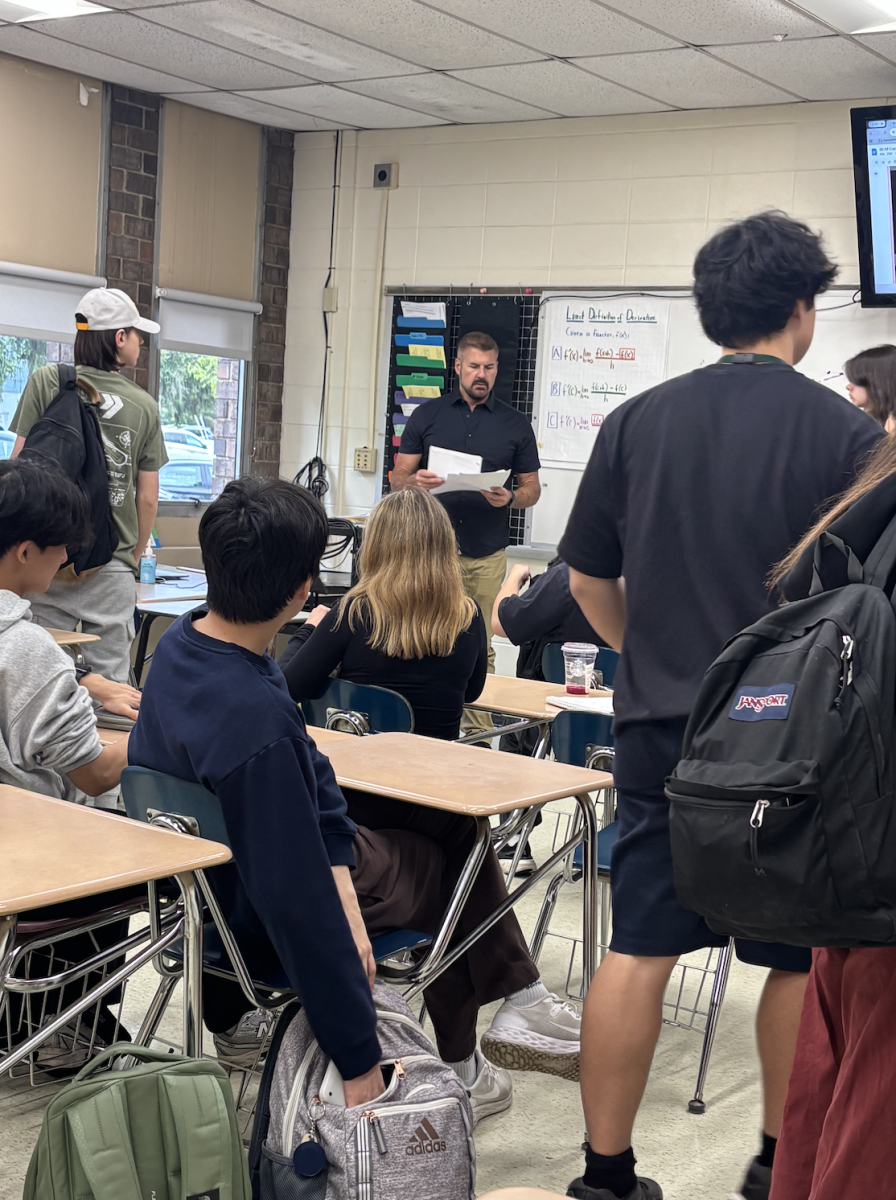
The prompt had surfaced in the plainest of ways, tucked between the familiar thrum of a Monday bell and the soft thwap of backpacks hitting the floor. The class was climbing out of its third-period lull as the air buzzed with the metallic tap of Chromebooks stirring to life. Their lines, written for a grade, emerged in that morning calm—unassumingly modest, yet destined for a stage far grander than the four beige walls that birthed them.
The initial spark came during one of Whitehead’s nightly rituals. “My wife and I are huge fans of Colbert,” he explained. He had long admired the intricate, labyrinthine metaphors that introduce the Meanwhile segment, those clever little verbal contraptions that seem to gleam as if powered by their own particular logic. One night, as Colbert sailed into another rhetorical flourish, an idea slipped quietly into place: what if his Journalism Honors students wrote their own?
He mentioned it to his wife, expecting a polite nod. Instead, she urged him to send the finished clips to the showrunners themselves. “I thought she was crazy,” he admitted. “But it turns out she was right.”
What followed was a crash course in both precision and performance. Damian Geana-Park (’29), a student whose imagination stretched across the page and into the spotlight, faced a test that lived squarely in the writing itself. As he explained, “coming up with the complex metaphors and analogies provided a significant challenge,” demanding clarity, rhythm, and language weighty enough to feel Colbertian without collapsing under their own cleverness.
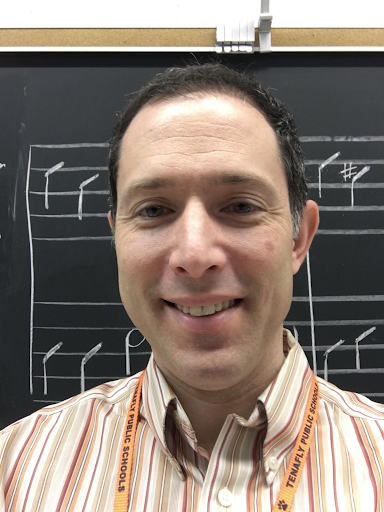
Behind the scenes, Orli Rosenstein (’26) took on a role that was just as crucial to the segment’s success. A seasoned presence in Tenafly’s media landscape, Rosenstein navigates MTV class and anchors for The Tiger Rundown with practiced ease, treating cameras as second nature. That familiarity was what allowed her to turn the chaos of multiple takes and the fickle rhythm of a teleprompter into a flowing choreography of fluidity, subtly dazzling in a way that morphed the careful orchestration of each moment into a completely effortless segment. The recording came together through coordinated effort with MTV teacher Mr. Rispoli, in which “he was filming all the clips while [she] ran the teleprompter for everyone.”
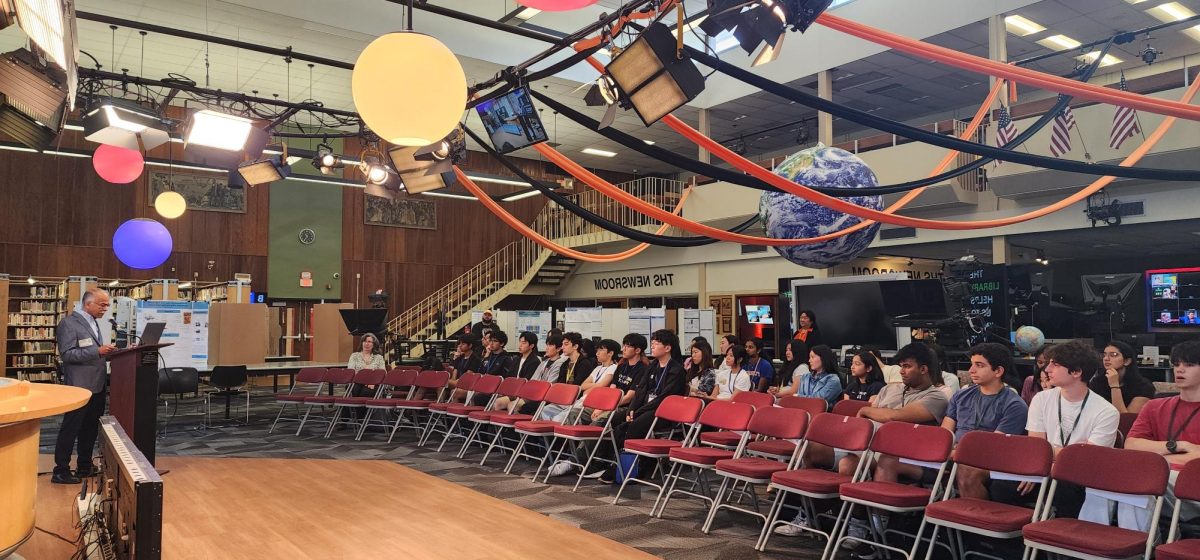
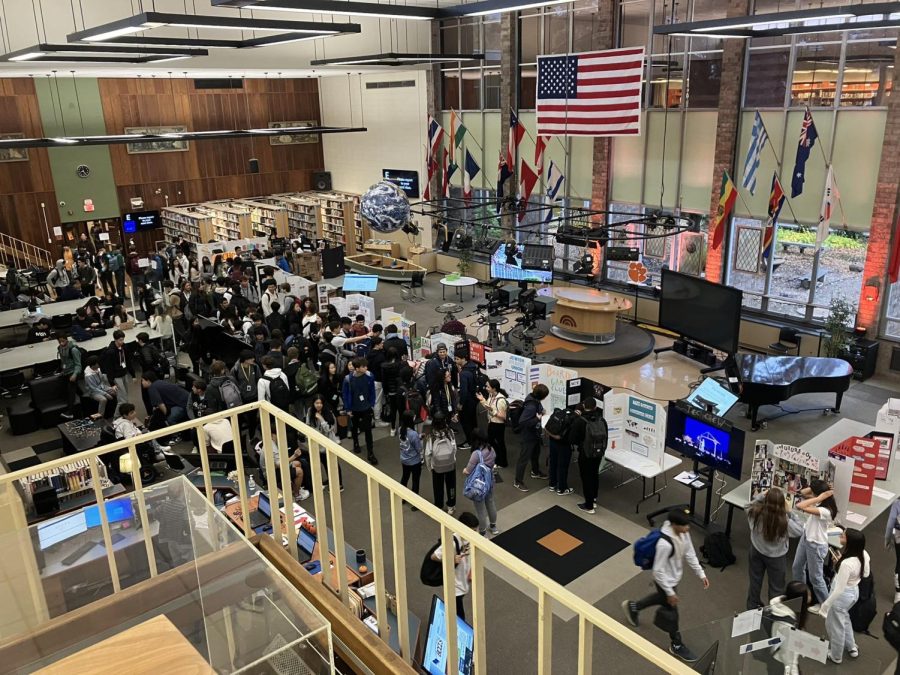
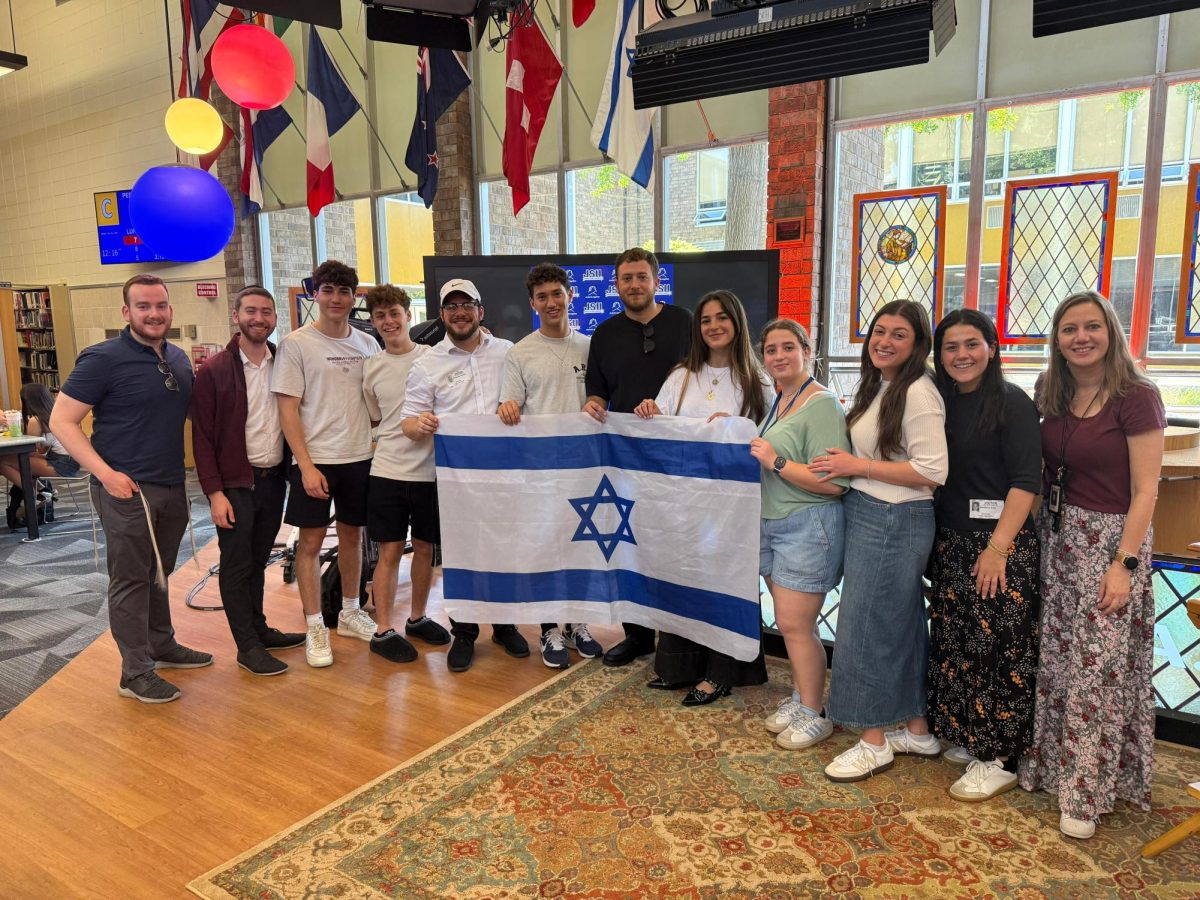
With the push of a button, the cameras began to roll, and the students-turned-hosts watched as the library materialized into something that felt suspiciously like a late-night set. Whitehead, ever the instigator, couldn’t resist stepping into the fray himself, recording one of his own intros while exaggerating Colbert’s signature gestures and pauses with just the right touch of theatrical flair.
“It was fun pretending to be Colbert in front of the camera,” he said. “I tried to use some of the same mannerisms that he exhibits, and I had us all hold blue index cards, which is part of his signature style.”
As the students followed suit, timing wavered, words stumbled, and the occasional nervous laugh sneaked into takes, though these “small flubs made the videos all the more charming,” an observation made by Whitehead.
For nearly two weeks after hitting “send,” the clips existed in a kind of narrative limbo, filed away mentally under probably not happening. The videos, after all, had been sent into the digital void, a place not known for timely validation. As Victoria Vernay (’29), one of the project’s key participants, later admitted, “I didn’t really think a cold email from a teacher would have been that effective,” and with each passing day of silence, that quiet skepticism only seemed more reasonable. Until, suddenly, the improbable became undeniable.
The revelations surfaced at inopportune moments, as most life-altering news does.
On a gymnasium afternoon, redolent of the lingering truce between sweat and deodorant, the hour stretched lazily, as if even the clinical fluorescent lights had softened their glare in sympathy. Vernay’s phone buzzed against her palm, a small interruption in a day already crowded with notifications, each one blending into the last like indistinct footsteps across the gym floor.
“When I heard the news, I was in gym class and just saw the notification on my phone,” she recalled, the ordinary rhythm of laps and attendance colliding with the jarring, dizzying realization that something much larger—national television, no less—had found her work. Shock came first, then pride, a particular combination that arrives when effort, once confined to notebooks and class assignments, finally escapes into the wider world.
“I mean, just thinking about it is sort of crazy that so many people have seen my face,” Vernay reflected.
For others, the revelation was no less startling, though it traveled along a more circuitous route. Rosenstein recounted the experience with a sense of amusement, explaining how “a girl [she babysits’] mother sent [her] the clip saying ‘you’re famous!’ and [her] grandparents actually thought it was AI.”
Fame, it seems, does not announce itself with brass fanfare, more often slipping into group chats or family threads to reshape another Friday with delightful absurdity.
Amid the unfolding chaos, some were already imagining the possibilities. Ella Plotkin (’27), longtime writer for The Echo, found herself reconsidering what her journalistic endeavors could reach. “This experience made me more open to media and television—possibly even sports media—and helped my goals feel more achievable,” she explained.
The lesson, however, wasn’t to do with their run onto a national broadcast, but the very first step that made the sprint possible. As Whitehead put it, “I hope that seeing me … actually take the time to send the edited video to Colbert through three different avenues showed [the kids] that imagination and initiative are important traits.” Plotkin offered the practical footnote: “I give all the credit to Mr. Whitehead for taking the initiative to send our work to the show.”
Turns out, keeping up with classwork isn’t such a bad idea after all.